
Introduction
Arbitrum has done well to prosper throughout a tumultuous 2022 and into 2023. The number of active addresses using the L2 has increased by 333% from the start of the new year (and >2,600% from the same time last year) and the number of daily transactions has risen by as much as 3,361% since 2022. Part of this was due to the number of quality dApps building on the protocol growing, with 12,475 new contracts deployed in February (a 14,751% jump YoY), and part of it was because of the speculative rumors surrounding the potential ARB token airdrop intensifying. On March 16th, Arbitrum officially confirmed the token drop and opened claim checks on its website. Five days later, a gaming-focused project called TreasureDAO shared that they would become one of the largest recipients of the ARB airdrop.
TreasureDAO is the 5th largest entity on Arbitrum by transactions and log occurrences. This decentralized gaming ecosystem, which includes a number of different games, NFT projects, and tools, has amassed 100k unique active wallets, over $250M in trading volume on one of Arbitrum’s largest NFT marketplaces, and represents 95% of all gaming and NFT transactions on the network. This report will outline the past, present, and potential future for one of the most promising Web3 gaming ecosystems you may have never heard of.
Where It All Began
Throughout the rest of this report, we will use “Treasure” to refer to both the DAO and the ecosystem they are creating. But before we talk about the organization and how it has become the leading gaming and NFT ecosystem on Arbitrum, it is important to reflect back on what was, at the time, a pivotal moment for NFTs. The launch of Loot and its novel approach toward development sparked a new meta throughout the late 2021 NFT industry. The meteoric rise of Loot, an NFT collection created by Vine Founder Dom Hoffman, spawned a series of derivative projects looking to either adopt the same grassroots philosophy and build on top of Loot’s blank canvas format or make a quick buck by riding its coattails. This was the origin of Loot and Treasure.
Bottom-Up Philosophy
Loot was launched in Q3 2021 as an 8k collection of Loot bags that were minted for free directly from its smart contract. The collection minted out within 4 hours and reached 30,705 ETH in trading volume within the first five days despite there being very little information on the project. All we knew was the contents of each bag, which could include: a piece for an adventurer’s chest, foot, hand, head, neck, ring, waist, and weapon.
LOOT
– randomized adventurer gear
– no images or stats. intentionally omitted for others to interpret
– no fee, just gas
– 8000 bags total
opensea: https://opensea.io/collection/loot-rng…
etherscan:https://etherscan.io/address/0xff9c1b15b16263c61d017ee9f65c50e4ae0113d7…
available via contract only. not audited. mint at your own risk
— dom (@dhof) Aug 28, 2021
Unlike similar blue chip-like NFT collections at the time such as BAYC, Loot had no roadmap, no end goal, and no top-down authority. Loot was designed to be completely community-driven. This bottom-up approach put the project’s future into the hands of the community to see what, if provided with the right tools and very few limitations, they would come up with. The NFTs, which appeared as nothing more than a card and some text on a black background, were deliberately vague in design to further inspire the community to use these basic building blocks to create a composable fantasy universe.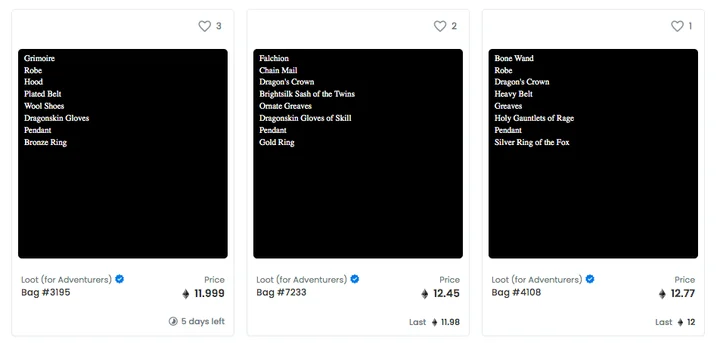
Due to Loot’s sudden spike in notoriety, which was helped by floor prices spiking roughly 13,000% in just one week, it didn’t take long for a host of derivative projects to pop up and capitalize on this new meta. However, most lacked substance and quickly faded away. One derivative project that gained significant traction was Treasure. Treasure originally set out to create a composable set of building blocks for Loot, but it didn’t take long before the project grew large enough to stand on its own.
The Beginnings of Treasure
Treasure minted its 10k collection of Treasure cards for free on Ethereum in late 2021. Inspired directly by Loot, the project wanted to follow a bottom-up approach where value was created by working hard and making cool stuff that the community enjoyed. Aesthetically, Treasure cards looked the same as Loot cards and, at the time, were intended to be resources used within the Loot ecosystem. Post-mint, the team soon added MAGIC into the mix, a fair launch ERC-20 token that could be earned by staking a number of different Loot-associated fungible and non-fungible tokens such as Treasure cards, Loot cards, n NFTs, or AGLD tokens.
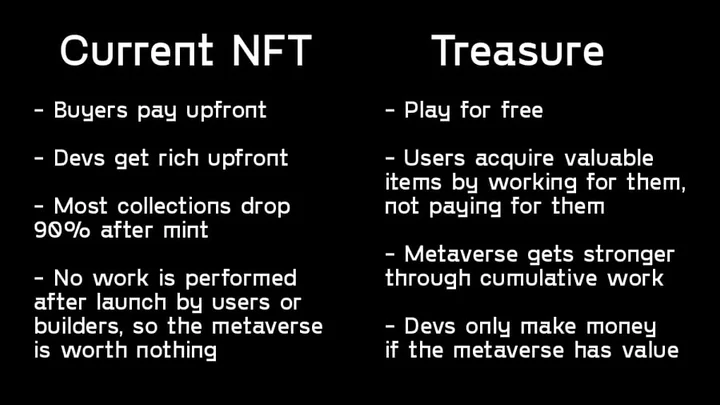 The original plan was for MAGIC to be adopted as Loot’s reserve currency. When AGLD ended up taking this role, instead of giving up, the Treasure team took a step away from Loot, bridged their collection to Arbitrum, and went about building their own gamified collection of experiences. The team would continue to leverage the same foundational principles of Loot but made some slight changes in areas they believed to be holding the Lootverse back. Treasure’s initial vision was to create several composable liquid assets that external developers could use to create new and unique on-chain experiences within one shared ecosystem. To achieve this vision, Treasure had to first create an economic foundation that could support an ever-evolving ecosystem of games.
Treasure → TreasureDAO
Treasure “v1.5” was a GameFi protocol that utilized a proof of work framework for MAGIC token farming that gamified liquidity and incentivized long-term growth over the typical pump-a
Read the full report
This report is part of Delphi Pro.
- 800+ Pro reports across every major sector
- Talk directly with our analysts
- Private community of funds and builders
Already a Pro member? Log in
0 Comments