
Brazilian assets are cratering this morning after a surprise win by the incumbent Luiz Inácio Lula da Silva (Lula), who is considered the more “market-unfriendly” candidate.
We got bullish Brazil back in mid-summer given a) overstated political risks around the Lula admin maintaining power were dragging down asset prices and b) Brazil is natural resource rich: agricultural powerhouse, net oil exporter, 2nd largest rare earth reserves after China.
We re-flagged this in October after Brazilian assets popped on the back of an excepted win from the more “market-friendly” candidate Flavio Bolsanaro.
We’ve been bullish EM vs DM equities for most of the year, but specifically flagged the attractive opportunity in Brazil $EWZ in our 2H outlook this July due what we saw as overstated political risks. https://t.co/9LIUA5yMM5 pic.twitter.com/xHJVVhS9mj
— Unknown (@unknown)
We recommended taking profits as speculative positioning in Brazilian stocks was stretched, but also because risk assets got ahead of their typical behavior in election cycles.
LatAm elections tend to see large risk premiums ex-ante, which are resolved after the results (even if the less “market-friendly” candidate won). We believe that this sharp correction in Brazilian assets is a buying opportunity given LatAm elections are typically “buy the rumor, sell the fact” events.
LatAm: elevated risk premiums into elections
LatAm is famous for its swings to populism and back.
More frequently than any other region in the world, LatAm elections showcase a contrast between opposing economic ideologies: a market-friendly candidate favoring economic orthodoxy and another embracing populism.
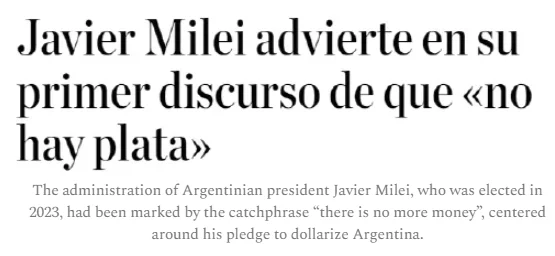
Interestingly, even if the market-unfriendly candidate wins, the worst fears are usually not realized as these administrations opt for a gradual approach, rather than introducing drastic changes at the onset of their term. Often, they end up implementing market-friendly policies. As the saying goes, “political power is like playing a violin, you grab it with the left, but play it with the right.”
This has created a frequent “buy the rumor, sell the fact” pattern, where financial assets sell off and risk premium increases in the months leading up to “contentious” elections, only to reverse course post-election.
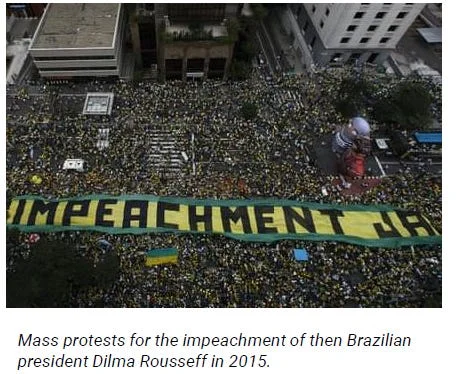
For the rest of this analysis, we define a contentious election as one market “unfriendly“ (think populist) and “friendly” (think economic orthodoxy) candidate receive > 25% of vote.
FX most sensitive to economic mismanagement risk
In LatAm, the FX rate is often the primary gauge of the government’s economic management performance.
Locals often save in USD or will start buying USD at the first sign of economic turmoil. FX also plays a more influential role in EM inflation and there are feedback loops to USD-denominated debt.
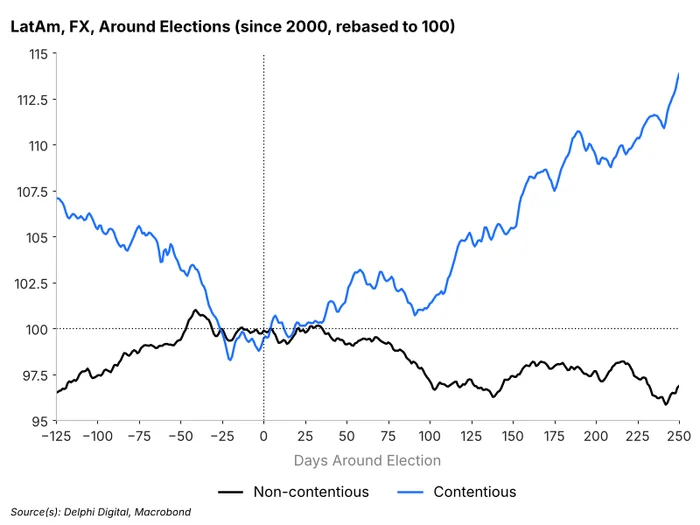
LatAm FX behavior leading up to the election is equally as important as the post-election period.
On average, LatAm local currency begins to depreciate against the USD 6 months prior to the election (blue line in chart).
The currency tends to stall out the month before election day followed by a significant rally the following year.
Non-contentious elections tend to follow the opposite pattern, albeit on a more muted scale (black line in chart).
Equities also conform to “buy the rumor, sell the fact”
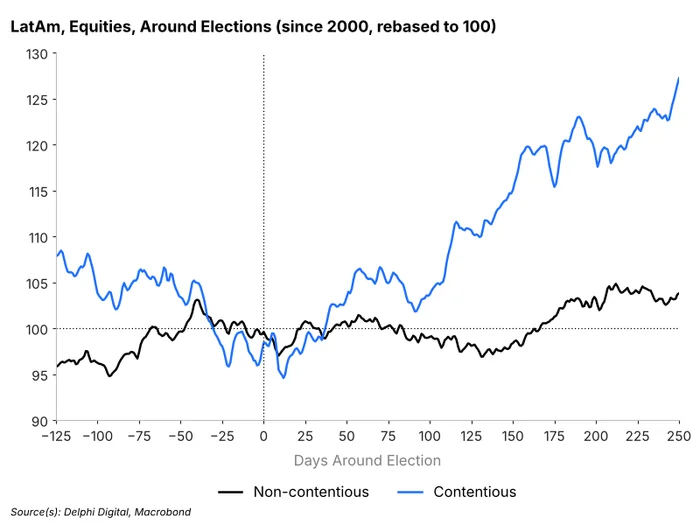
LatAm equities follow the same pattern around contentious elections as FX, starting to sell-off 6 months prior, stalling the month before, then rallying the following year (blue line in chart).
However, LatAm equity performance differs from FX in that no clear pattern emerges around non-contentious elections (black line in chart).
Perceived risk premium is the driver of equity returns; the realization post-contentious election that market-unfriendly policy changes are unlikely benefits risk assets the same way pre-election jitters harms them.
Non-contentious elections are between candidates with the same agenda, therefore the political impact on risk premia is already priced in.
Brazil follows the pattern
Brazilian assets follow the same pattern as LatAm as a whole. This “contentious” election cycle between Lula and Bolsanaro saw the BRL weaken then rally (once it was thought Bolsanaro would win)…
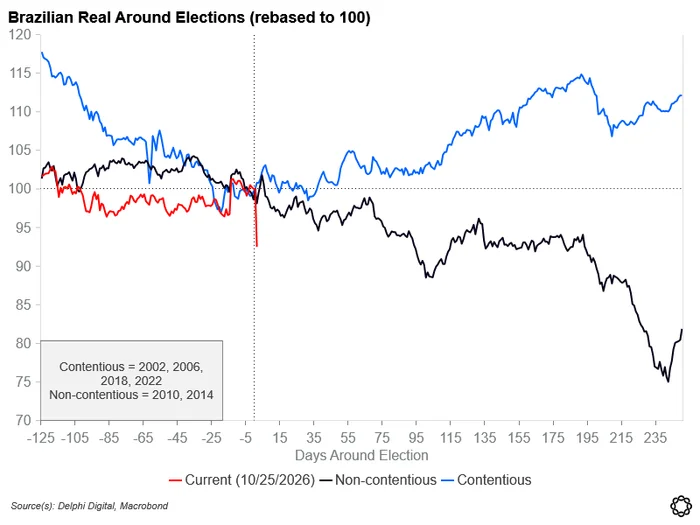
… while equities sold off, then rallied, and are now selling off aggressively (alongside the BRL).
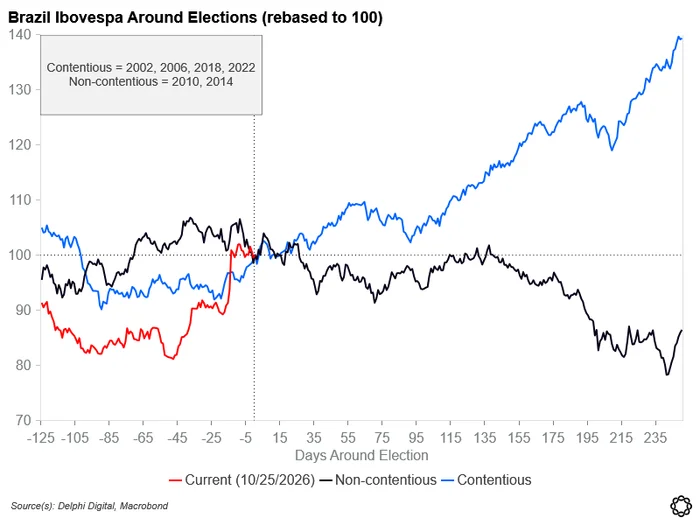
If history is to repeat, we would expect the BRL to strengthen and equity markets to rally in the coming months. Especially given the bullish structural tailwinds we continue to see in the Brazilian economy.