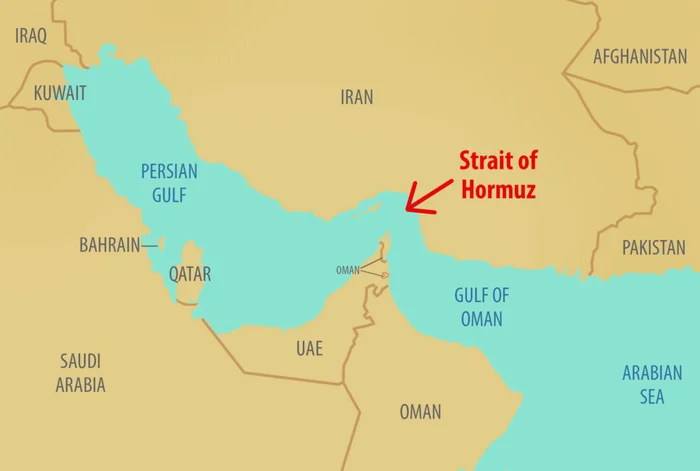
The Strait of Hormuz is about 21 miles wide at its narrowest point. Roughly a third of all seaborne crude passes through it. Earlier this week, Iran moved to restrict access to the Strait. That’s a lot of pressure on one choke point, and markets noticed quite quickly. Gold ran, the dollar ran harder, and crypto got hit again.
The reflexive take from the community has been frustration. I honestly think that’s understandable. The narrative for years has been that BTC is digital gold, a non-sovereign, apolitical store of value that thrives precisely when the world gets messy. And yet, when a real geopolitical shock takes place, crypto sells off faster than almost anything else. That’s something to really think about.
What actually happens mechanically when something like the Hormuz situation unfolds is pretty straightforward, once you trace through the chain. Oil price pressure raises energy costs, and Bitcoin mining is deeply energy-intensive. When operating costs rise, miners have less margin and some will sell into market to cover running costs rather than hold.
At the same time, any macro shock tends to tighten dollar liquidity, and BTC has become quite correlated with the broader liquidity cycle. Add to that the fact that institutional participation has grown substantially through spot ETFs, and those institutional hands are a lot more sensitive to macro risk compared to long-term holders. ETF outflows this month have reflected that clearly.
None of this means the digital gold thesis is wrong in the long run. But it does surface a timing problem that the market hasn’t fully resolved. Gold and BTC may share a similar ideological origin story (hard supply, no central issuer), but their liquidity profiles and their investor bases are structurally different right now. Gold has a long term institutional playbook around it. Crypto’s playbook is emerging. So in a crisis moment, capital rotates toward the asset class where the playbook is clear, not toward the asset class where the narrative is still forming.
What makes the current setup worth watching is that the tariff rollback from the Supreme Court this week and the ongoing Iran situation are pulling in opposite directions simultaneously. One is a structural liquidity tailwind, the other is an inflationary and risk-off impulse. Crypto is caught between them, and the market right now is essentially trying to price which force wins. That’s not a comfortable position to be in. It probably explains why the fear and greed index has been sitting in fear territory for most of the month, while BTC consolidates sideways rather than making a clean directional move.
The thing I keep coming back to is that this environment is actually clarifying. The idea that crypto functions as a geopolitical hedge only holds over long time horizons and only when the dollar itself becomes the source of the problem rather than the flight-to-safety destination. When Iran closes a shipping lane and the dollar rallies, crypto is on the wrong side of both trades in the short run. More than anything, this is a liquidity and narrative maturity problem that resolves as the investor base deepens and the correlation with high-beta equities fades. We’re just not there yet.