
While the future of Web3 gaming, as most of you remember it, remains fairly bleak, the traditional gaming market continues to experience YoY growth. Interestingly, one high-growth-rate sector in particular has been getting a lot of attention in recent years and shares many traits with what we call play-to-earn. As this sector continues to evolve, I believe it will inevitably reach a point where most, if not all, of the major incumbents turn to the blockchain as their primary financial rails. Below is a brief overview of the state of rewarded user acquisition (UA), loyalty platforms, and the future of rewarded play.
For anyone paying, it is already well established that rewarded UA is where a large portion of VC attention has been focused on over the past few years. Now that peak throth is likely behind us, we are starting to see signs of consolidation throughout the rewarded rollup space. The most recent sign of this was via NCsoft’s recent 70% investment in JustPlay for $204M.
Rewarded UA has cemented its place within the UA stack. Moreover, there is a clear structural advantage given to publishers who can vertically integrate their own rewarded engagement engine, allowing them to more effectively drive attention across a portfolio of games and build a robust player data lake.
For some additional context on the sector’s growth, the number of rewarded platforms has increased approximately 5x over the past 5 years. Although tracxn puts the total number of active competitors to one of this sector’s most well-established incumbents, Mistplay, at 884, a more grounded figure for the total number of rewarded UA platforms is 37.
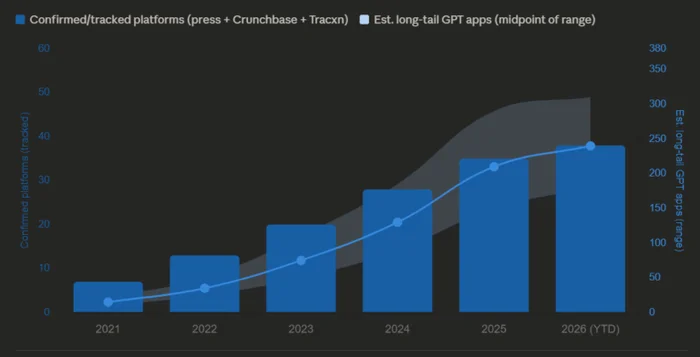
There has been almost $500M in publicly disclosed VC and M&A activity over the past 5 years, and total payouts to players across tracked entities were $187M in 2025, up 20x since 2021.
Assuming that we are now in fact at the beginning of the consolidation phase for rewarded platforms, my guess is that publishers and VCs will start to look at rewarded play as the next “new” thing to throw money at. This is primarily due to two reasons:
- Rewarded UA is soon to be normalized in the eyes of both publishers and players
- Rewarded play perfectly complements rewarded UA
To briefly expand on the latter, it is first important to distinguish between rewarded UA and rewarded play.
The main function of rewarded UA is to attract players into games with real-world incentives (typically gift cards, in-game currency, or cash) in exchange for completing tasks, such as creating a profile or reaching level 100 (these are usually delivered to users via offer walls in other apps). The value proposition for players is clear and evidently works, as many studios are allocating as much as 40% of their UA budget to rewarded. However, the main challenge is in keeping players engaged once a campaign ends.
Consensus across most rewarded UA platforms at the moment is that by leveraging a robust database of player preferences and sophisticated ML algorithms, platforms can pair the most appropriate games and rewards with the highest affinity players. Thus, increasing the chances that a player truly resonates with the game they are incentivized to play, leading them to continue playing even when the rewards dry up.
But what happens if the rewards continued to flow post campaign? One would assume that if the studio can embed in-game rewards that have a similar or equivalent real-world value, players would have even fewer reasons to leave. These two incentive models are not just compatible; they are complementary to one another.
Note that this is different from rewarded platforms and loyalty platforms. With rewarded play, players remain immersed in the game for longer, and app developers maintain more control over the player experience – both factors should lead to higher retention and engagement.
This is where rewarded play shines. By allocating between 10% and 20% of a game’s revenue back to players, games such as Bitcoin Miner and Idle Mine demonstrate drastically higher retention and engagement metrics than they would without rewards. Importantly, rewards are there to enhance a good game that can be profitable without incentives, not fix a weak one that rewards more than it earns.
In my opinion, the most important factors in what makes a good rewarded play infrastructure partner will be:
- Are the rewards embedded natively within the gameplay
- What types of rewards can be offered
- Can they handle nanopayments, or must they adhere to traditional banking constraints
- The quality of user data (or ability to easily integrate into existing frameworks)
- Flexibility in reward design and delivery
Unsurprisingly, I think infrastructure partners that leverage blockchain technology are uniquely positioned to win here. Blockchains are objectively better payment rails for cheap, fast global transactions of value under $0.01.
If you’re operating a hyper casual game with an average player LTV of $0.03, where else can you stream 10% of that value back to the user in real time other than on a blockchain-based stack? ZBD has already been doing this for the past 5+ years, but the recent launch of Circle Gateway, which enables gasless nanopayments of USDC down to $0.000001, also couldn’t have come at a better time.
This market transition from rewarded UA to rewarded play is inevitable; the remaining question is whether or not a web3-native firm like ZBD will win the lion’s share of attention, or if the Web2 incumbents will be given enough time to launch their own blockchain-powered solutions.