The vibes in D.C. this past Tuesday were somewhere between a corporate merger and a bar fight. After months of the CLARITY Act sitting in legislative gridlock, the Trump White House locked the banking industry and the crypto heavyweights in a room for another round of talks.
Spoiler: still no deal.
The real kicker today wasn’t just the lack of a deal. It was the paperwork. The banks showed up with a “Prohibition Principles” document that essentially tries to nuke any form of financial reward for holding stablecoins. They’re terrified of “deposit flight,” or the idea that you’ll move your cash from a 0.01% savings account to a 5% USDC reward program. Standard Chartered claimed recently that $500B could leave traditional banks by 2028 if stablecoin yield becomes standard. To them, stablecoins should be boring payment rails, and not competitors.
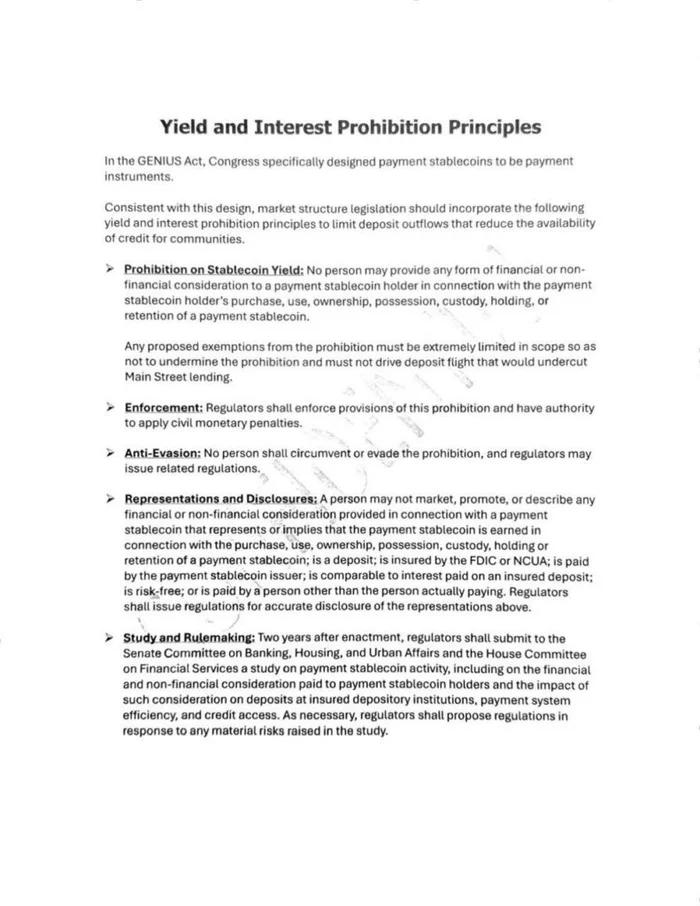
On the political side, Treasury Secretary Scott Bessent has started playing hardball, publicly calling Coinbase a “recalcitrant actor” and accusing some in the crypto industry of being “nihilists” who would rather have no rules than compromise. It’s a classic political squeeze: the Trump Administration wants the win of passing a “crypto bill,” but the banks want to keep deposits protected from stablecoins.
Why does this matter for you? If the banks get their way on these “prohibition principles,” the rewards you earn on platforms like Coinbase or through various DeFi integrations could be legislated out of existence in the U.S. to protect the big banks. Ripple Chief Legal Officer Stuart Alderoty, who attended the meeting on Tuesday, noted in an X post that “compromise is in the air.” But for the average user, the air still feels pretty thin.
Productive session at the White House today – compromise is in the air. Clear, bipartisan momentum remains behind sensible crypto market structure legislation. We should move now – while the window is still open – and deliver a real win for consumers and America.
— Stuart Alderoty (@s_alderoty) February 10, 2026
We’re essentially watching a fight over who gets to keep the interest on your digital dollars. March 1st is the date to watch. If one side doesn’t blink by then, this “clarity” might stay blurry for a long time to come, and a massive legislative opportunity would be lost.