More Than Just Governance: Unpacking Value Accrual Mechanisms
OCT 24, 2023 • 27 Min Read


Introduction
Traditional equities confer specific rights to their holders, such as voting power and dividends. In contrast, tokens offer distinct advantages, including implementation versatility, the potential for composability across various use cases—especially within DeFi—and a plethora of unique functionalities unattainable with traditional securities.
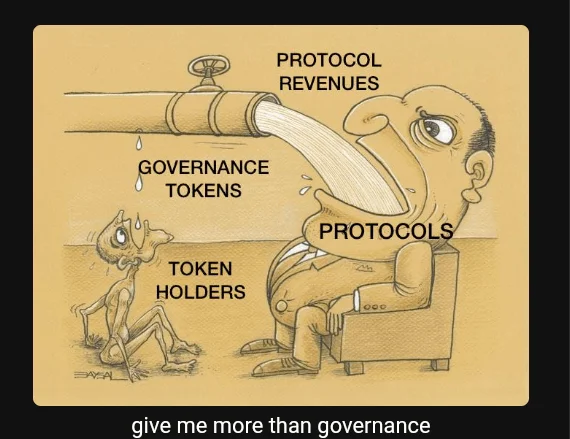
The innovative designs of tokens play a pivotal role; they not only channel value back to the token holders but also exert a direct impact on the token’s market value. Beyond the scope of mere governance tokens, these digital assets offer more than just voting rights; they represent a vital share in the token’s broader ecosystem.
Nevertheless, the mechanisms for value accrual can differ significantly across various tokens. This report aims to scrutinize four distinct models of value accrual implemented by tokens, draw comparisons among them, and assess their respective implications on the tokens’ value.
Buyback and Burn
The ‘buyback and burn’ strategy involves a protocol using its revenue to repurchase its tokens, which are then sent to a burn address, effectively reducing the total supply. This mechanism indirectly rewards token holders by sometimes creating buying pressure and deflating the total token supply. This section will delve into what BNB, OKB, MKR, and RLB do.
Binance (BNB) and OKX (OKB)
Binance and OKX are at the forefront of the buyback and burn strategy, though their mechanics differ.
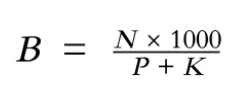
Binance employed a quarterly buyback and burn system, purchasing BNB from its treasury and burning them quarterly. They have since moved away from that into a quarterly auto-burn using this formula:
Source: Binance Academy
B = Amount of BNB Burned
N = Number of Blocks Produced in a Quarter
P = Average Price of BNB
K = Constant Price Anchor set at 1000
The BNB Auto-Burn mechanism adjusts the burn quantity, considering both the BNB price and the number of blocks generated on the BNB Smart Chain (BSC) during the quarter. Its ultimate aim is to pare down the total BNB supply to 100M.
Further additions from Binance include the BNB Pioneer Burn Program. Aimed at enhancing user experience, this program compensates users for tokens inadvertently lost due to errors. These mistakenly lost coins are then factored into the official burn count, with users being reimbursed in BNB.
In addition, BNB incorporates a real-time burning procedure tied to gas fees. A fixed ratio of the gas fee collected is burned in each block, with the ratio decided by BSC validators. Notably, the volume of BNB tokens impacted by this mechanism pales compared to the auto-burn initiative.
OKX adopts a straightforward buyback and burn approach. They allocate 30% of their spot trading fee revenue to repurchase OKB from the secondary market for its quarterly burning.
Binance and OKX have impacted their token supplies through their respective burns. Binance’s burn rate reached its zenith during the bull market of Q4 2021, incinerating nearly $900M in BNB. However, this pace has moderated since then.
Conversely, OKX’s burn activity has been on an upward trajectory. Their burns escalated from approximately $75M in Q3 2022 to roughly $264M by Q3 2023, signaling an uptick in revenue from their spot trading fees.
To date, 23.8% of the total BNB supply has been burned, with the lion’s share resulting from its quarterly burn activities. Given its present burn rate of ~1% per quarter, it’s projected that BNB will hit the 50% reduction milestone in around 4.5 years.
Parallel to that, OKX has seen a 23.4% reduction in its total supply. Over the past year, OKX’s average quarterly burn stands at about 1.8%, with the most recent quarter accounting for a 2% reduction. Given these rates, OKX is on track to diminish its supply quicker than BNB.
Let’s see whether these buybacks and burns impact BNB and OKB prices.
Since transitioning to the Auto-Burn mechanism in Q1 2022, BNB has ceased buybacks tied to its revenue. Furthermore, there’s no discernible correlation between burns and price movements. This could be attributed to BNB’s practice of buyback and burning from its treasury, which potentially neutralizes any buying pressure that might have influenced prices if it was done through secondary markets.
OKB’s approach to buying from secondary markets appears to have a pronounced effect on its price dynamics. There’s a noticeable uptrend in prices leading up to each burn announcement, though the impact seems to have diminished in recent quarters. This strategy has allowed OKB to notably outperform BTC, especially during 2022, when the overall market outlook was bearish. However, it is difficult to draw concrete conclusions other than burns helping boost OKB’s narrative in good market conditions.
MakerDAO (MKR)
MakerDAO introduced its Smart Burn Engine (SBE) on July 5, 2023, designed to ‘burn’ MKR by leveraging protocol surplus. The mechanics activate when the protocol surplus exceeds $50M. Here’s how it works:
- Surplus DAI is used to
Read the full report
This report is part of Delphi Pro.
- 800+ Pro reports across every major sector
- Talk directly with our analysts
- Private community of funds and builders
Already a Pro member? Log in
0 Comments