Brands & NFTs: How Web3 Is A Game Changer For Brand Growth
NOV 02, 2023 • 37 Min Read


Introduction
It’s tough to be a brand today.
In today’s hyper-connected, digital-first world, brands face a plethora of challenges as they vie for consumers’ attention. There are more brands than ever before, each trying to be the loudest voice in the crowd. Consumers are more informed, demanding and skeptical. Brands need to sell a story, a purpose — not just a product or service. And privacy laws are making it harder for brands to truly understand their consumers.
So… what do?
A Greenfield Opportunity For Brand Growth
Consumer brands need to think outside the box. Paid ads on Facebook or influencer marketing will only get so far, and it’s getting very expensive to continue on this strategy.
Enter Web3 and NFTs — a green field opportunity for forward-thinking brands. It can create win-win opportunities for brands and consumers:
-
Tap into new user bases they haven’t been able to connect with before
-
Build an engaged community around the brand
-
Co-create and co-own things with their community, at scale

How are Web3 & NFTs unique and different compared to other technologies? In our view, it is a game changer for brands in 3 fundamental ways:
-
Digital property rights & ownership with NFTs. With true ownership, users gain a sense of agency, which in turn, aligns their behavior more closely with the brand’s ethos. Verified ownership can significantly enhance the value of digital assets.
-
On-chain activity will be a treasure trove for understanding customer behaviors deeply. Brands can observe actual user behaviors on-chain, beyond just their brand, and offer consumers highly personalized experiences that were not possible before. NFT metadata can chronicle real-world purchases and consumption experiences by users.
-
Enables open ecosystems to form, breaking down the walled gardens of today. This unveils immense opportunities for brands to tap into other ecosystems, reach new audiences, and foster collaborations.
Let’s not forget other unique properties of NFTs:
-
Verifiable scarcity: Unlike traditional items, where the actual supply is often shrouded in mystery—even in the case of high-end luxury goods like Hermès Birkin bags—NFTs allow for transparent verification of how many units exist. This transparency can elevate the perceived value of an item.
-
Representation of intangibles: This includes identity, goodwill, and culture. Brands can leverage this to create a deeper emotional connection with consumers — something that is increasingly valuable in today’s experience-driven market.
Where We Are Today

We are in the very early days of brands & NFTs. It’s been less than 3 years since the earliest initiatives began.
Some brands were early to recognize this opportunity — Adidas, Nike, TIME, Gucci. They initiated their Web3 experiments during the hype phase of the NFT bull market in 2021 – 2022. And it appeared that many have achieved early success, at least in terms of revenue generated.
-
Nike (via its acquisition of RTFKT) sold $93M of NFTs and made another $92M from royalties.
-
Dolce & Gabbana sold $23M of NFTs in early 2022.
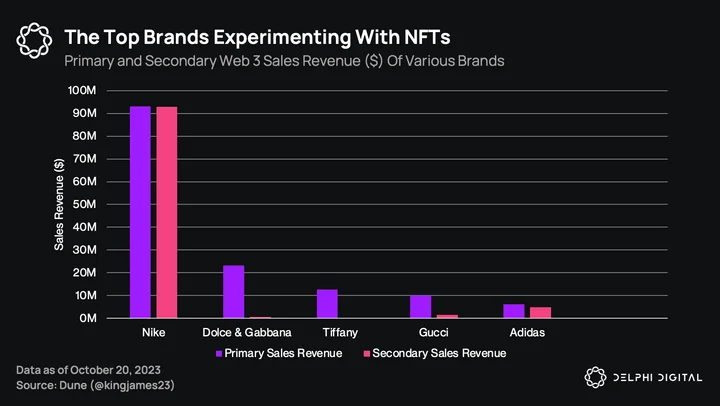
Yet in retrospect, most of their early “success” was from being at the right place at the right time — riding on the NFT bull market and speculative fervor. Today, many of these 2021-early 2022 vintage projects appear to be dead: no secondary trading volume (a proxy for demand), few new developments, and a discord server that’s akin to a ghost town.
This tweet exchange in December 2021 perfectly encapsulated the FOMO felt by brands to get involved in Web3:
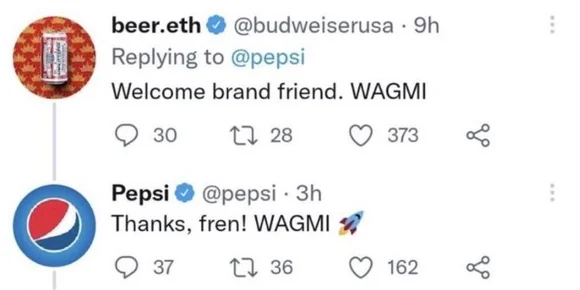
Brands should not worry about having missed the boat. In fact, we believe that the next generation of brands embracing NFTs — those that sprung up this year or launching in the coming months — will have a greater chance of achieving long-term success. They can draw valuable insights from previous brand experiments, learning from their successes while avoiding their mistakes.
We spoke with Diego Borgo for this report, a Web3 & Metaverse advisor for Fortune 500 brands, and he had this insight to share:
One of the major mistakes that major brands have made so far is their predominant focus on targeting Web3 natives only. With that said, brands should instead leverage Web3 technology (on the backend) to engage with their existing audience, addressing current business challenges, and capitalizing on new opportunities.
For me, the winners of the next 12-24 months will be the ones that understand that, and will be in a really good position for the long-term strategy that innovations like Web3 provide.
The 4 Pillars of Brand Engagement
Engaging with potential and loyal customers is the cornerstone for brands aiming to maintain relevance and drive repeat business. By crafting novel customer experiences, brands don’t just sell—they build relationships.
We’ve pinpointed four fundamental pillars that can propel brand engagement in the real world. And how NFTs are powerful tools that can enrich each pillar:
-
Storytelling through content
-
Community building
-
Collaborations & Limited Edition drops
-
Loyalty programs
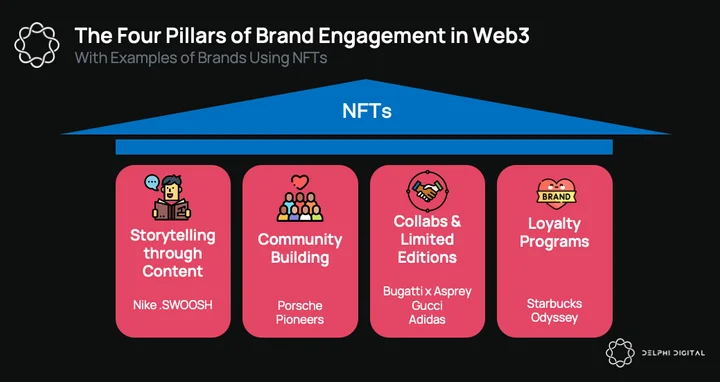
These pillars are interdependent and often amplify one another. For instance, compelling storytelling can both fuel and be enriched by a vibrant brand community. A well-rounded Web3 brand strategy should ideally incorporate multiple, if not all, of these pillars.
In our report, we’ll explore each of these facets in greater detail, supplemented by real-world brand case studies to illustrate the key concepts.
Before we continue…
At Delphi Digital, our team has had the opportunity to consult with and advise strong teams building crypto protocols as well as renowned brands & artists.
If you (or anyone you know) are interested in having a conversation about this, please reach out to [email protected]
Storytelling Through Content
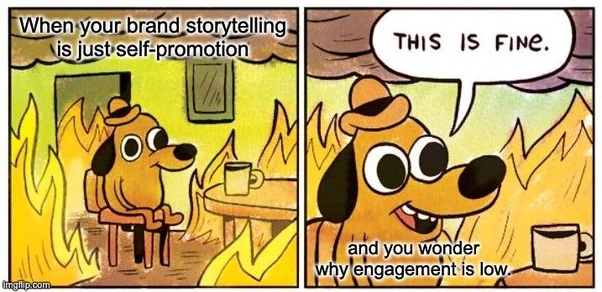
Imagine a world where brands just shouted facts at us. Boring. Now, imagine a world where brands share tales of triumph, hardship, innovation, and vision. Feels different, doesn’t it? Storytelling is like the heartbeat of a brand, giving it life and personality.
When a brand tells its story, it becomes relatable, almost like a friend sharing an anecdote. Stories also have this magical power to stir emotions. Emotional reactions make us care. And when we care, we remember. That emotional bond can often be the very reason we choose one brand over another.
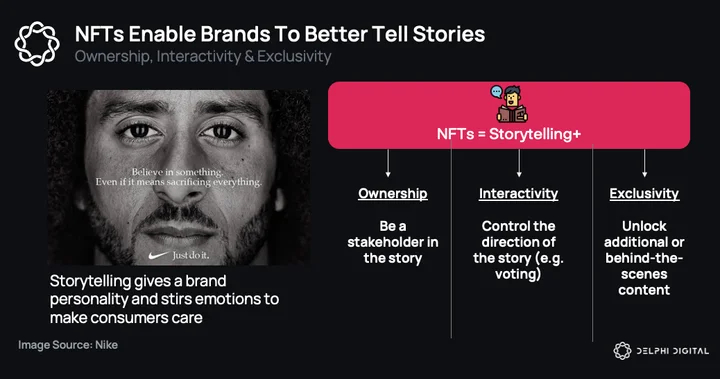
NFTs amplify storytelling, adding layers of interactivity, ownership, and value to traditional content
-
Ownership makes consumers feel like genuine stakeholders in the brand’s story
-
Consumers can use NFTs to unlock exclusive stories and behind-the-scenes content
-
Facilitating interactive storytelling elements like decision points, voting, or unlocking additional plotlines or characters. NFT holders can vote, and thus become co-authors in the storytelling process.
BRAND 1: Nike .SWOOSH — Storytelling in the Metaverse
Nike consistently inspires consumers to push boundaries and overcome obstacles with their i
Read the full report
This report is part of Delphi Pro.
- 800+ Pro reports across every major sector
- Talk directly with our analysts
- Private community of funds and builders
Already a Pro member? Log in
0 Comments