
What’s on your mind? Like right now, what are you thinking about? Perhaps I have you hanging onto every word. But I’m not vain enough to think that’s true. Your mind is probably a storm — family, friends, work, sex, drugs, rock and roll.

Whatever you’re thinking about, it’s not just this riveting research report. You’re scattered. That’s okay, so am I. We’re all drowning in digital stimulation. Price alerts. Emails. Telegrams. Tweets. Texts. Calendar invites. Browser tabs. DMs. FaceTimes. Such is life in 2024. We have more technology but less control.
Staying present is hard, especially in our land of magic internet money. Here, markets trade 24/7, blocks don’t take weekends, and Twitter never sleeps. Keeping up with crypto often feels like a Sisyphean task. It’s a war we all wage but rarely talk openly about.

Almost everyone sees the importance of attention on a personal level, but few see how it shapes everything around us. Attention is the most valuable yet misunderstood resource in the world. This report explores the role attention plays in our economy, markets, and minds. We will focus on three big dimensions — the past, present and future:
- how Big Tech monetized attention
- how crypto tokenizes attention
- why AI will disintermediate attention
So, grab a coffee or stiff drink, whatever you need to lock in, and let’s talk attention.

Attention Must Flow
In Dune, the great Houses struggle over spice. To control spice is to control the universe. But here on Earth, our spice is attention. And the great Houses — the Big Tech companies — engage in a bloodless war over it.
 The Big Tech Bene Gesserits have ruthlessly iterated, A/B tested and honed the Internet into an attention-warping machine. They employ legions of highly paid PhDs who devote their lives to ensuring that you never escape the digital matrix. If it were up to them, you would scroll, click, and add-to-cart forever.
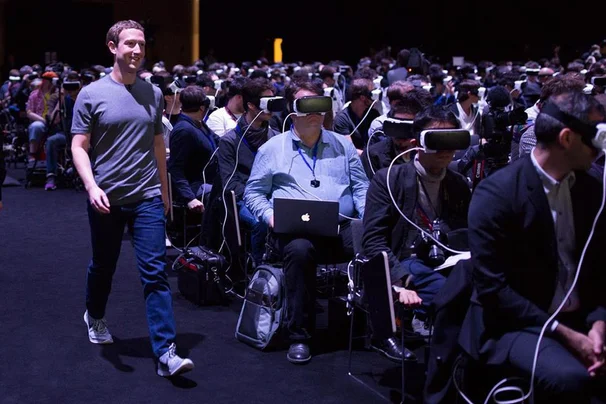
Their ultimate creation is algorithms that monetize our attention. It’s probably the closest we’ve ever come to alchemy — attention in, profit out.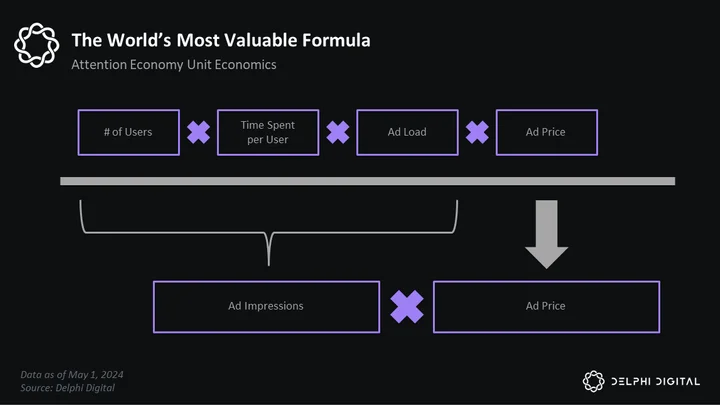 Netflix’s CEO, Reed Hastings, wasn’t kidding when he said the streaming giant “competes with sleep” for users’ attention. Every second counts when your business model is putting ads in front of eyeballs.

The game for Big Tech is threefold:
- capture attention
- retain attention
- monetize attention
Remarkably, these three bullets built much of today’s Internet. Consider Google. These guys gave us an entire suite of free software — Gmail, Maps, Docs, etc. — all to serve more ads. More recently, these companies have invested billions to build some of the world’s most advanced AI — all to better analyze and predict our attention. We wanted flying cars, instead we got the ‘for you’ page.

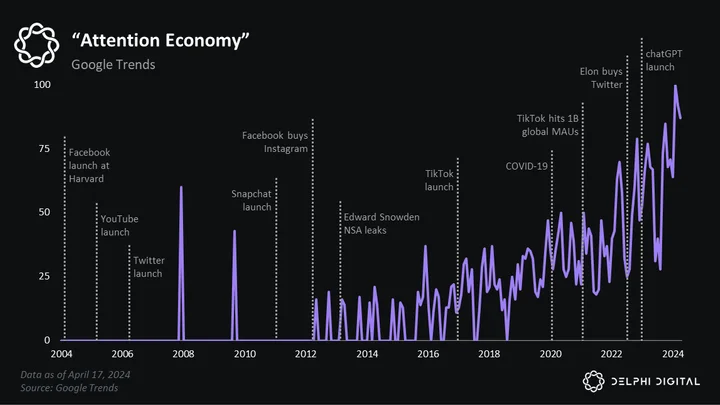
The term ‘attention economy’ gets thrown around so much that it’s become cliché. But that doesn’t mean it’s not real. It very much is — Big Tech proves that.
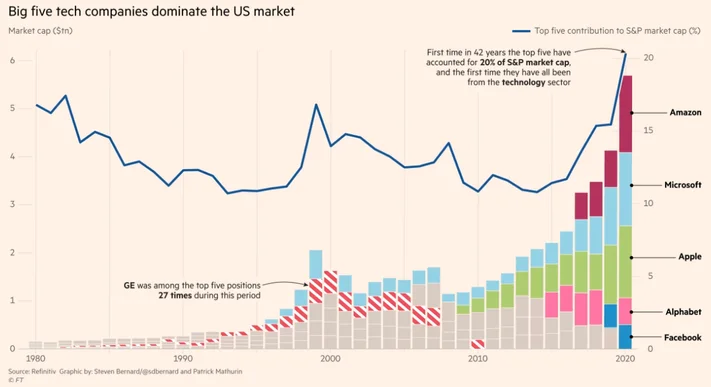
Note: chart is from 2020. Big Tech’s market dominance has only grown since then. Financial Times
We’re talking about the most valuable corporations ever. And all they do is monetize our attention via industrial-grade spice harvesting machines. All the “connect the world” and “do no evil” doublespeak just obscures this reality.
If Big Tech is the aggregator and distributor of spice, then every other company under the sun is the buyer. Consider Alo — the athleisure brand that competes with Lululemon. Alo makes money by selling clothing. And it does so by producing cool and comfy clothes. So, a big part of their operating strategy is to “make doper stuff than Lulu.” But similar to a tree falling in the woods, if Alo makes a better product and no one knows, does it even matter?

As a result, Alo is forced to play the attention game. It’s why they pay big bucks to influencers like Jimmy Butler to wear their stuff and why they pay Zuck even more to serve ads. Anyways, the point is, they got me. After seeing a cool Jimmy Butler ad on Instagram for like the 20th time, I finally capitulated and bought some underwear. Alo won my attention — and my moolah.
The point of this riff is just to say — the real economy has totally reoriented itself around attention. Every time I talk to friends in marketing, I’m always amazed at how much of their job comes down to “muh Instagram clicks.” It’s all one big machine. And everyone is competing for the world’s scarcest resource — our attention — whether that’s Zuck, Alo, or anyone in between.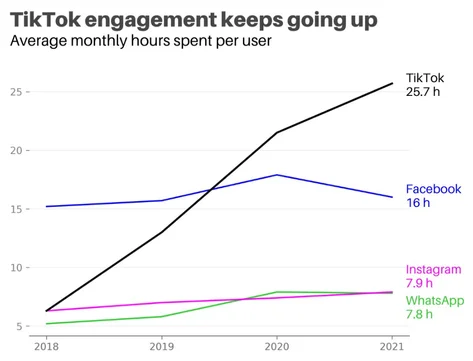
Naturally, the financial markets have woken up to the attention game. If you listen to a Meta earnings call, all the analysts talk about is time spent on platform. Zuck usually throws them a bone with some compliance-approved lingo on MAUs and retention. But these are mere abstractions. The real fundamental drivers of Meta’s business are shown in the chart below — Ad Impressions x Ad Price. If you were valuing META stonk from first principles, these would be the two model drivers.
In the non-tech world of spice buyers, things function in a similar way. The market is laser-focused on Alo, Lulu, or any ‘real world’ company’s ability to convert attention → sales. While this might sound overly reductive, it really isn’t. At the end of the day, all the marketing, ads, and influencers are designed to do one thing: capture our attention. Attention = sales. Don’t believe me? Well, this was the first analyst question from Lulu’s most recent earnings call:
“Great. Thanks so much for taking the question. I just wanted to hone in on the comments on the challenging consumer behavior. Just wondering, are you seeing that in some pockets of the business more than others, or is it broad-based? Is it a traffic or a conversion problem, or how do you see that?”
On the surface, it concerns the strength of the c
Read the full report
This report is part of Delphi Pro.
- 800+ Pro reports across every major sector
- Talk directly with our analysts
- Private community of funds and builders
Already a Pro member? Log in
0 Comments