Wemade is far from the typical Web3 game studio story. Best known for their contributions to the Legend of Mir franchise, the South Korean team was in the business of publishing and developing traditional games before widening its scope to blockchain in 2020. That move led to the birth of WEMIX, a blockchain gaming platform designed to experiment with new ways to monetize users.
Since venturing down this path, Wemade has experienced extreme volatility in both directions. From 2019 to 2024, gross revenue grew from ₩113.6 billion ($87 million) to ₩711.9 billion ($547 million), driven by the explosive success of their MMORPGs, which helped position the company as a leader in web3 gaming.
However, even after recording a ₩308.1 billion ($237 million) net profit in 2021, the company posted steep losses in 2022 and 2023, at -₩185.8 billion (-$143 million) and -₩206.7 billion (-$159 million), respectively. This illustrates just how dramatically performance can swing when the cyclical revenue of gaming meets the cyclical nature of crypto.
Two product milestones defined Wemade’s expansion and reflect our broader thesis that ecosystems succeed when they anchor around a true killer app. The 2021 global launch of MIR4 marked the first time a successful MMORPG embedded a crypto economy into its core loop. This was followed by the 2024 global debut of Night Crows, which generated $10 million in sales within the first three days of release. Today, the company runs on a three-pillar business model. The legacy development & publishing business, IP licensing, as well as the blockchain gaming department, hosted under the WEMIX brand.
Core Game Portfolio
Wemade’s core strength lies in MMORPGs. After two decades of building titles in the genre and now experimenting with how web3 layers can enhance it, they have consistently shown that this is the format they understand best. Their long-term focus on the genre has shaped the foundation of their current portfolio and strategic direction.
MIR4
MIR4 marked the breakthrough moment for Wemade’s experimentation with web3 mechanics. Launched globally in August 2021, it quickly became one of the first play-to-earn (P2E) titles to achieve scale. The game is a fantasy MMORPG that gained popularity due to its strong IP (at one point, the Legend of Mir mobile game was generating around $100 million a month in China alone) and, arguably, its P2E integration. Within just three months, the game’s concurrent user count surpassed 1.4 million, supported by a global rollout across over 170 countries in 12 languages and localized payment rails.
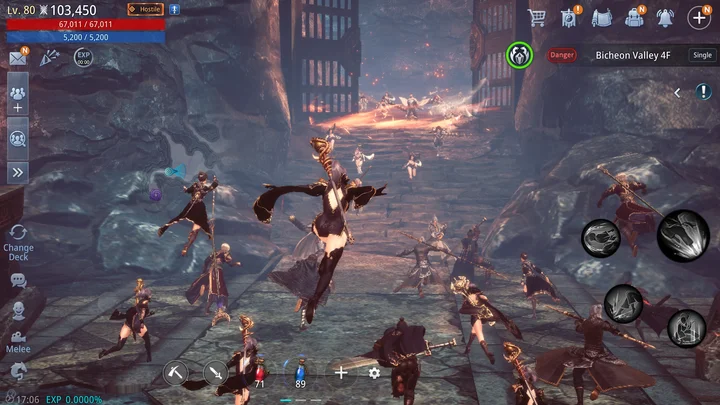
As of June 9th, the game remains operational. It recently hit a 24-hour peak concurrent user base of ~14,000 on Steam. Based on the platform breakdown shared by the company in 2021, where 11% of total players came from Steam, this implies a total peak concurrent player base of around 127,000 if we assume a similar platform distribution today. The WEMIX PLAY platform reports around 132,000 concurrent users, suggesting that MIR4 likely still maintains north of 100,000 concurrent players, four years after its global release.
Economy
Complex doesn’t begin to describe the totality of this game’s economy. What began as a simple one-token system quickly evolved into a multi-layered structure designed to regulate value flows and player progression. DRACO, tied to player mining activity, served as the base layer of tokenized value; h
Read the full report
This report is part of Delphi Pro.
- 800+ Pro reports across every major sector
- Talk directly with our analysts
- Private community of funds and builders
Already a Pro member? Log in
0 Comments