
The Second Wind in Generative Art
Let me highlight why I believe it is worth paying attention to generative art now. While most of the financial and crypto sphere has been dealing with a bear market and down-trending asset prices, generative art clearly didn’t get the memo. In fact, interest is booming.
What could be driving this new narrative?
-
Mindsets are changing around NFTs. Until now, many NFT collections (PFPs, game assets, virtual lands) have been valued, at least partially, based on their utility or potential utility in the future. For example, a Moonbird has value partially on the expectations that it will be entitled to future airdrops by PROOF and benefits the upcoming metaverse that Kevin Rose and his team are building. In bull markets, expectations of utility can be very exuberantly priced, and we are now experiencing a sobering reality check.
-
On the other hand, generative art is beautiful and easy for many people to appreciate. NFTs fit in particularly well with this use case. This has not changed, no matter whether markets are up or down.
-
The prices of many collections, in USD terms, have fallen significantly closer to what one would pay for contemporary art in the physical world: a few thousand dollars for good art by a branded artist is quite reasonable. This makes it attractive to old & new collectors.
-
Several new private NFT funds/DAOs have been established in recent months, and we can reasonably expect them to be deploying their capital to scoop up NFTs that they believe will have substantial cultural value in the future.
If you’re a collector looking to add to your art collection, there is a flurry of activity and opportunities to find great pieces at this time. And if you’re new to generative art, it’s definitely a fun and exciting moment to get started. With this backdrop in mind, let’s dive in.
Introduction
Generative art is not a new art form. In fact, generative art has been around since the 1960s with the advent of computers and coding. At its core, generative art refers to visual artworks created using computer code instead of paintbrushes and oil canvases. It’s an eclectic mix of art and technology and until recently a niche subset of art with a small number of practitioners.
NFTs have given a new lease of life to generative art, making it accessible to a new group of collectors and enthusiasts. The primary product of the generative artist is an algorithm: a ‘printer’ capable of generating unlimited works of art where the output is different each time the algorithm is run. NFTs lend themselves naturally to this art form because it allows each output to be tokenized & unique. Scarcity is introduced. In a typical mint, the algorithm is run a set number of times and stopped once the minting limit is reached.
The minting process often induces a sense of anticipation and wonderment. During the mint, the generative art code takes a random input (a transaction hash, for example) and produces a unique output that is not known beforehand to the artist or minter. To put it simply, the artist gives up the power of curation to the algorithm. Good generative art algorithms can produce an interesting range of outputs across a large number of iterations.
Every century, there are new art movements that make a lasting impact on society — for example, Impressionism in the 19th century or Pop Art in the 20th century. I believe that generative art is going to be a defining art movement of the 21st century, especially in a world that is becoming increasingly oriented around technology. It’s exhilarating to be at the beginning of this cultural revolution.
Market Size
The first real inflection point in generative art NFTs was in the middle of 2021. During the months between June – September, we witnessed a parabolic rise in the prices of most generative art collections. In hindsight, prices probably front-ran the cultural value of the art amidst all the hype and noise around NFTs. Subsequently, interest in art waned and remained muted until recently.
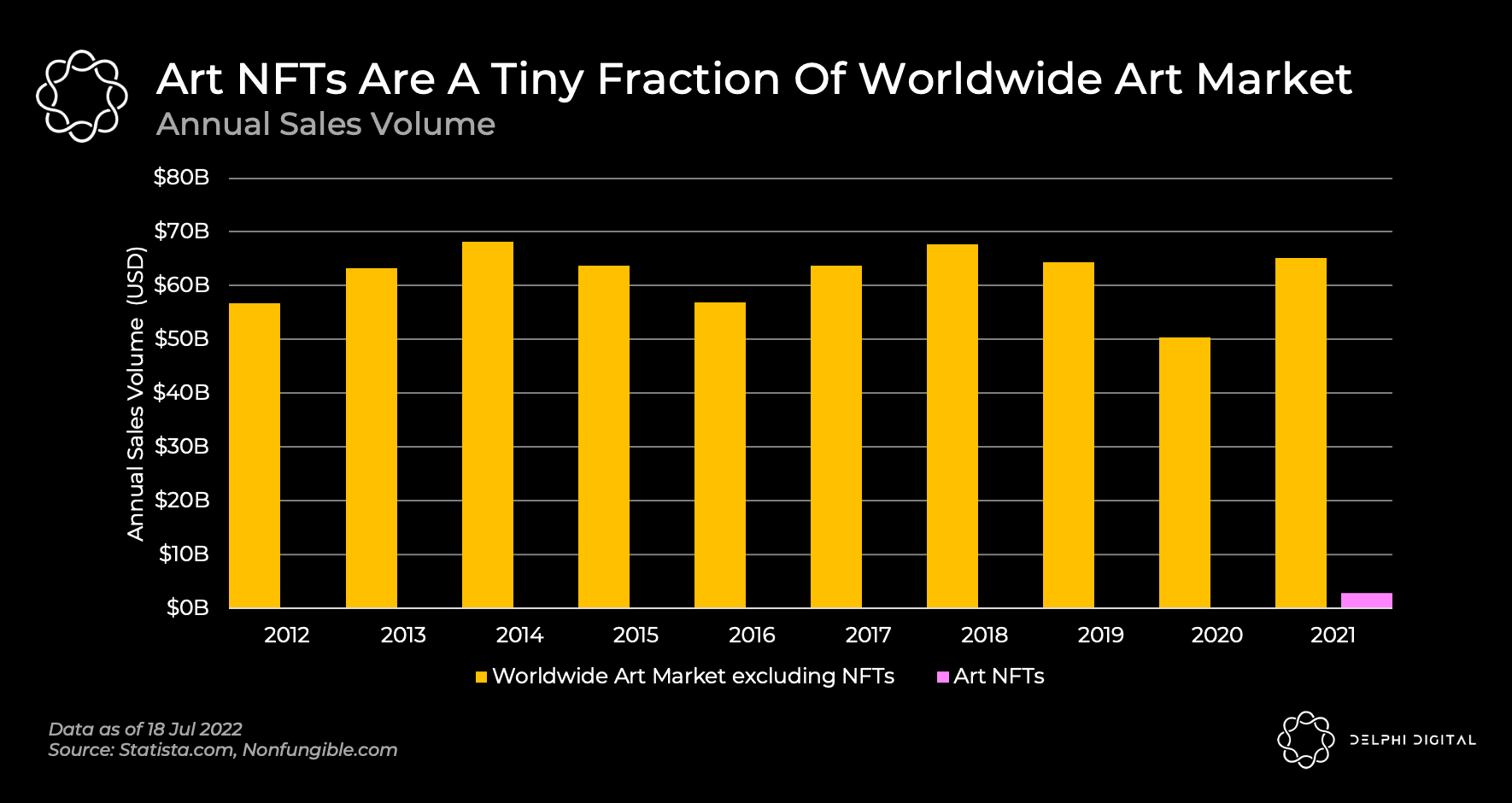
There is a lot of room for generative art NFTs to grow. The sales value of the worldwide art market bounced up strongly to $65.1B in 2021, while Art NFT sales in 2021 represented just $2.8B (both generative and digital art), or 4.3% of the worldwide art sales volume. It is not a stretch to imagine that art NFTs will occupy a more significant part of the market. Generative art is a very significant subset of art NFTs.
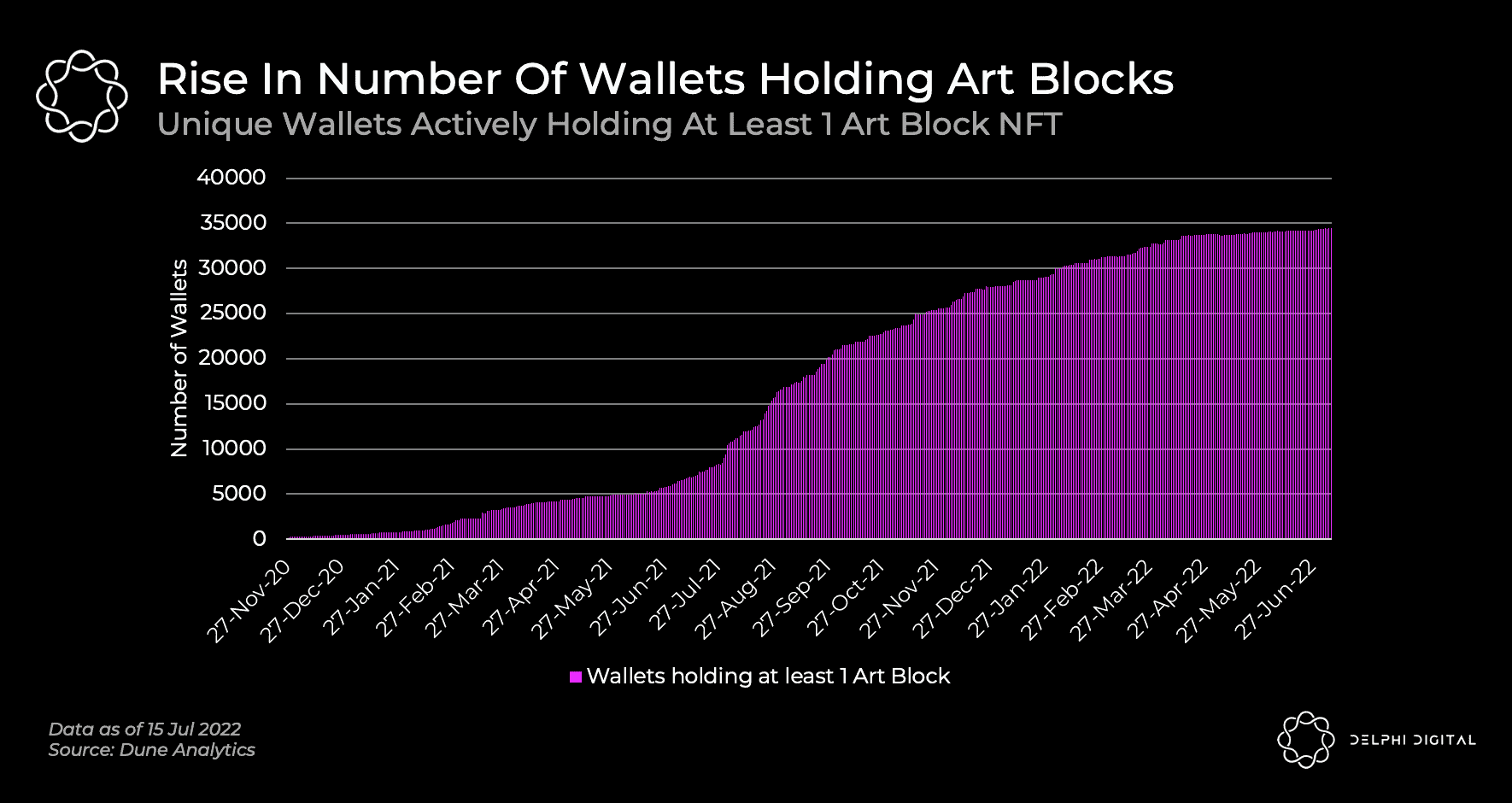
It is difficult to measure the number
Read the full report
This report is part of Delphi Pro.
- 800+ Pro reports across every major sector
- Talk directly with our analysts
- Private community of funds and builders
Already a Pro member? Log in
0 Comments