Appchains Have Struggled Thus Far
Appchains are expensive and time-consuming to maintain. They require validators who need to be paid through inflation, block explorers, wallet integrations, and a bunch of dev ops stuff.
The current RaaS (Rollup-as-a-Service) such as Caldera and Conduit offer minimal customization, providing just pure rollup infrastructure, and don’t include everything else that devs and users need and get from other ecosystems (e.g. wallets, oracles, native bridges, native stablecoins, incentives, cross-marketing initiatives, liquidity, block explorers, etc).
Unlike these, Initia could be the ultimate appchain solution—offering customization without the usual downsides thanks to having an opinionated view of how a multi-chain system should evolve. If the appchain thesis holds and every major app launches its own L2, they’ll need more than just pure infra; they’ll need a full-stack solution.
Cosmos recognized this early, pushing the appchain model before anyone else, but without strong incentives for collaboration, it fell into fragmentation—apps prioritized expansion over specialization, leading to competition instead of synergy. DeFi, NFTs, gaming, and other verticals became battlegrounds rather than an interconnected ecosystem.
Much of the fragmentation is not only the assets and visions of teams but the “backend” as well. This is illustrated by the rise of competing EVM L2s all with different standards. At least on Cosmos they had IBC on all of them.
The appchain thesis is different from the general-purpose chain (GPC) thesis. Though Cosmos was potentially right, the thesis played out poorly due to a lack of incentives for collaboration, with predatory apps expanding to cannibalize others. Instead of specialization, appchains began competing in DeFi, NFTs, gaming, and beyond.
When everyone launches a chain, why should the social consensus converge to a view of the multichain world that encourages collaboration? This led to Cosmos teams inter-fighting. The missing piece was a framework that could unify apps without sacrificing autonomy.
This is where the general-purpose chain (GPC) thesis gained traction. The GPCs era was inevitable. The missing piece was a framework that could unify apps without sacrificing autonomy.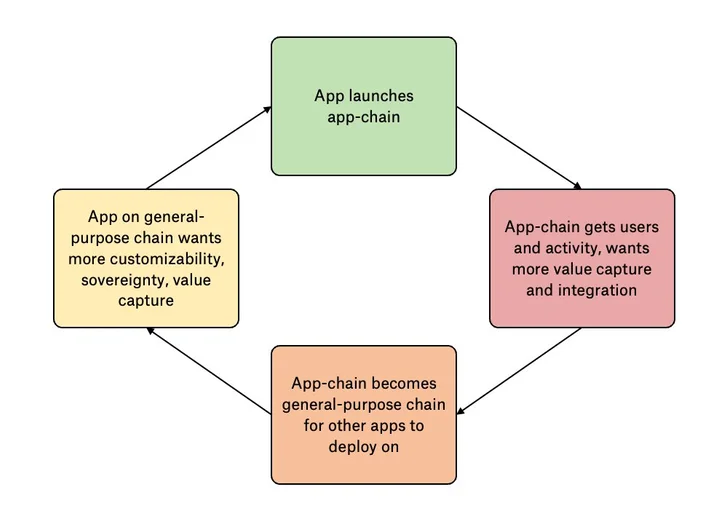
source.- jon charb
How do you solve this? Initia joins the game.
User And Dev Experience as North-Star
Developing a fully integrated ecosystem before the mainnet launch is crucial for Initia’s success. It ensures that users and devs have everything they need from day one: cross-rollup communication, major external infra, and an entire unified product suite.
- Standardized Cross-Rollup Communication: Built-in interoperability using IBC, and LayerZero.
- A fast confirmation layer with Single Slot Finality: Low-latency confirmations between L1 and L2s.
- Liquidity enshrined in L1 and Minitswap, fixing rollup fragmentation issues.
- Gas abstraction via JIT: Allowing gas to be paid with any token
- Native USDC via Noble and Circles CCTP
- Full ecosystem ready before launching on mainnet
- Developer-focused: AgnosticVMs and Opinionated Rollup Framework with BlockSDK to reduce dev burdens.
Other rollup stacks give teams only the basics, leaving them to figure out critical infrastructure on their own. Unlike rollup stacks like the OP Stack or RaaS solutions like Caldera/Conduit, which limit devs with basic tools, Initia provides everything needed from the start— wallets, bridges, native oracles, MEV infra, block explorer, native USDC, and a bootstrapped ecosystem.
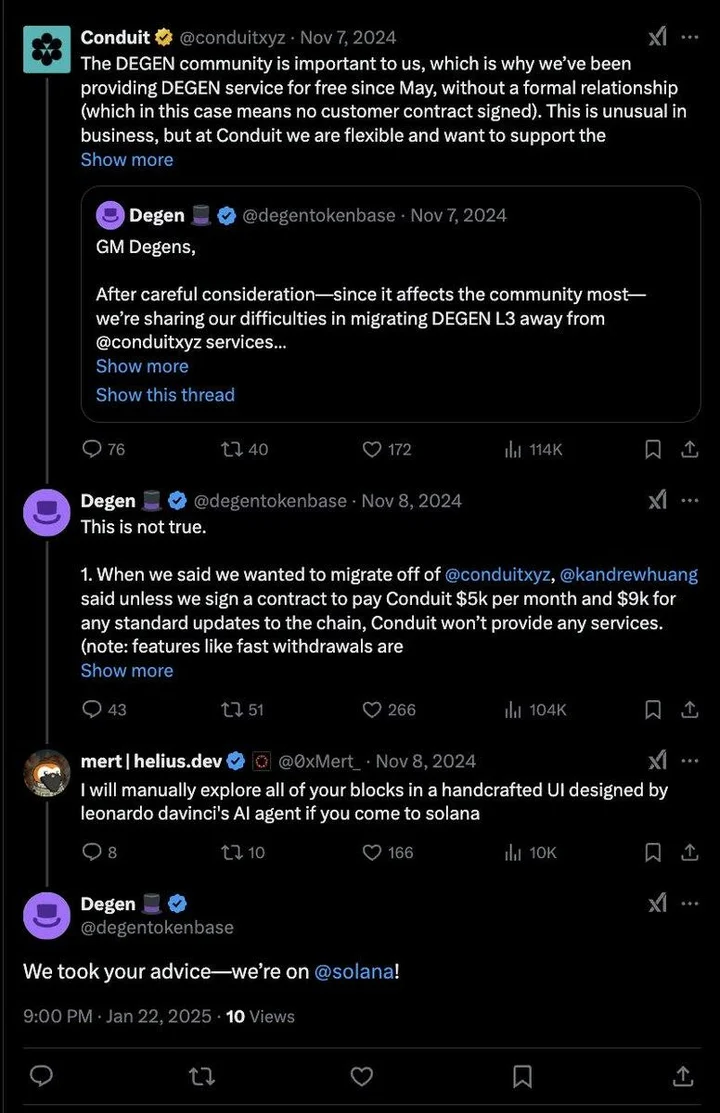
After all, deploying a rollup is just the tip of the iceberg; teams still have to integrate key infra and pay substantial money for that. For example, remember Degenchain, built on Conduit? They wanted to migrate but had to pay to do so. Not so great.
Initia is very opinionated. It makes concrete decisions when it comes to which DA layer, native bridge, messaging standard, liquidity at L1 level, security, and incentives (VIP) all L2s on top of Initia will use. This isn’t just about great UX for users, it’s also about making life easier for teams.
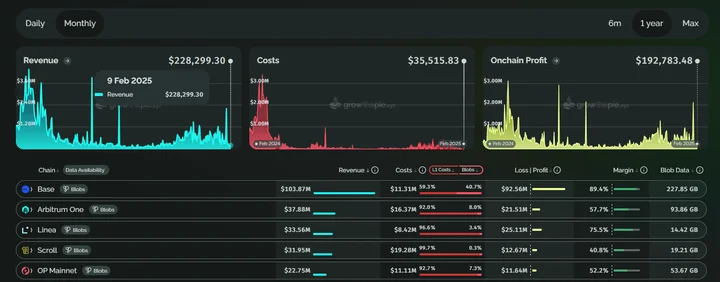
It also aims to solve fragmentation and broken incentives in other ecosystems with L2s giving little value back to the L1.
 growthepie.xyz
Another way to frame Initia is by asking: “If Ethereum had to rebuild the rollup roadmap with today’s knowledge, what would it look like?”
Ethereum rollups claim alignment with the L1, but the hard truth is that they are running businesses with their own incentives, providing little to no value to Ethereum L1. There are no incentives to collaborate with the L1 or other rollups, leading to liquidity fragmentation across rollups.
I think it might have been different if based rollups (L1 sequencing), the restaking narrative, and interoperability solutions like AggLayer and Espresso had emerged before the L2 roadmap took off; they might have aligned on a common standard. Now, it seems too late. L2s are unwilling to adopt a common standard or sacrifice revenue. Even worse, each team is building its own silo (Superchain, AggLayer, Elastic, Orbit).
Of course, this is easy to say in hindsight. All these solutions emerged as a response to L2 fragmentation, something few anticipated at the start.
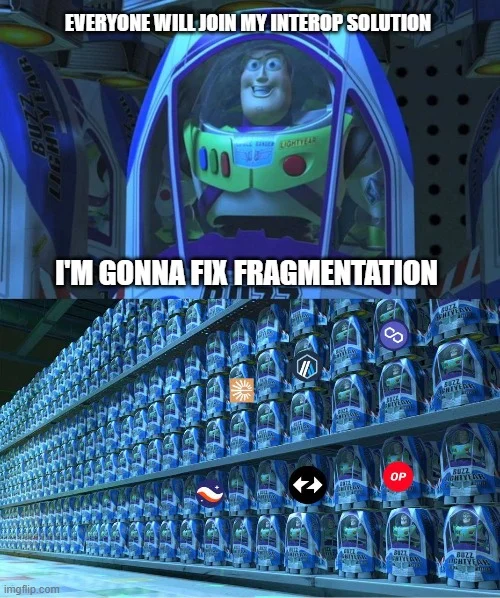
Asset issuers and L2 teams have a hard time trusting or using the multi-chain worlds of Ethereum because they either have different backend systems (interops, standards) or different types of rollups (meaning different security assumptions).
When you have an opinionated stack, with shared standards, you can build the UI/UX that lets you zip across all of these and rely securely in the trust assumptions since all the rollups are the same and cemented at the L1 le
Read the full report
This report is part of Delphi Pro.
- 800+ Pro reports across every major sector
- Talk directly with our analysts
- Private community of funds and builders
Already a Pro member? Log in
0 Comments