
Report Summary
Summary
This report shows how Avalanche is rapidly evolving into a leading hub for dedicated appchains — specialized, purpose-built Layer 1s that combine sovereignty, modularity, and plug-and-play interoperability. Driven by the Etna upgrade, Avalanche’s flexible architecture has attracted a surge of projects across gaming, DeFi, RWAs, and institutional finance, proving that appchains can deliver tailored user experiences while benefiting from shared security and liquidity.
Key Takeaways
1. Avalanche’s Appchain Momentum
-
The Etna upgrade removed costly validator requirements for subnets → now teams can launch sovereign L1s at low cost.
-
Daily L1 transactions now average 18 million, up 6× since January.
-
Smart contract deployments are up 250× YoY, averaging 250K/day.
-
Interchain messaging (ICM) volume grew from 7,500 in April to 219,000 in June, showcasing rising interoperability.
2. Gaming Leaders Going Onchain
• Gunzilla (Off The Grid):
-
Triple-A shooter with its own L1 for in-game items, invisible crypto UX.
-
$5,500 gun sale shows early traction.
-
Uses 10,000 Validator NFTs to decentralize minting.
• MapleStory Universe (Nexon):
-
$100M legacy gaming IP turned Web3-native on its custom Henesys L1.
-
1.3M wallets, $8M marketplace volume in 30 days.
-
Open dev APIs & more apps launching soon.
• Defi Kingdoms (DFK Chain):
-
Multi-year gamified DeFi ecosystem with PvE, PvP, NFTs, and a thriving DEX.
-
Uses JEWEL and CRYSTAL for gas, rewards, and gameplay.
-
Active player base with new features like Divine Essence and Colosseum PvP.
3. Major Brands Choose Avalanche
FIFA Chain:
-
Global sports giant migrated its collectibles platform to Avalanche.
-
Fully EVM-compatible chain with credit card onboarding → removes crypto friction.
-
Fans trade NFTs for IRL perks like World Cup seats.
4. DeFi Core: Dexalot
-
Purpose-built CLOB appchain for onchain spot trading.
-
$20–50M daily volume, $29.5B lifetime, with 800M+ trades cleared.
-
Next up: margin & perpetuals. Needs to deepen long-tail liquidity to compete with CEXs.
5. Institutional Use Cases Emerging
Kinexys (J.P. Morgan):
-
Tokenized portfolio rails for fixed income, FX hedging — ran on Avalanche for MAS Project Guardian.
VanEck PurposeBuilt Fund:
-
$ multi-million digital assets fund focused exclusively on Avalanche-native builders.
6. Real-World Assets (RWA) Traction
Balcony:
-
Tokenizing 370,000+ property deeds in NJ → $240B of real estate.
-
Avalanche L1 cuts settlement time from months to hours.
Intain:
-
Permissioned Avalanche L1 for tokenized ABS.
-
$20B+ in structured deals managed, with U.S. banks and trustees plugged directly into onchain operations.
Mogul:
-
Fractional real estate investing on Avalanche C-Chain.
-
$22M in rental homes tokenized → average IRR 18%, yields 10–12%.
-
Users invest from $250, own property NFTs, earn cashflow.
7. Appchains as Avalanche’s Edge
-
Fully custom environments for gaming, finance, collectibles, or RWAs.
-
Apps don’t fight for blockspace → better UX, no gas settings, no bridging hassle.
-
All chains still tap Avalanche’s validator infra, security, and tooling.
-
A new wave of bespoke L1s signals Avalanche is shaping up as the default appchain hub.
Conclusion
Avalanche’s big bet is paying off: the ecosystem’s pivot to sovereign, purpose-built L1s has unlocked real growth — in games, DeFi, RWAs, and even institutional pilots. Whether it’s a $5,500 in-game gun, a tokenized mortgage, or a World Cup NFT ticket, the pattern is the same: custom chains deliver tailored UX and real adoption, while Avalanche’s shared infra handles scale and security.
If Avalanche keeps onboarding more brands, builders, and institutional rails, it could cement its position as the leading appchain network — a modular home for the next billion users to touch onchain products without ever touching crypto UX headaches.
-
Introduction
Avalanche has long been working towards becoming the go-to platform for dedicated appchains. With the Etna upgrade live, the focus has graduated from designing a great foundational framework to onboarding enterprises and supporting new use cases. That pivot is already showing up in the ecosystem. More projects than ever are launching purpose-built Avalanche L1s, tapping right into Avalanche’s tooling, validator infrastructure, and ecosystem interoperability.
Instead of building on generalized chains, well-known projects like MapleStory Universe (MSU), Gunzilla (Off The Grid), and enterprises like J.P. Morgan and FIFA are opting for tailored Avalanche L1s. Each chain has been fine-tuned for its environment, ranging from multiplayer gaming to institutional financial services or sports collectibles.
A key differentiator for Avalanche lies in its ability to balance chain sovereignty with barriers to entry. While other ecosystems can provide shared security or deep customizability, Avalanche allows teams to launch fully sovereign L1s at an incredibly low cost and still benefit from native interoperability with a larger network.
With the proper foundation in place, Avalanche is entering a new stage of ecosystem growth. Through the next few sections, we’ll explore the rise of Avalanche L1s, teams building on Avalanche, and the push toward more real world use cases.
What’s Happening on Avalanche?
Continuing from 2024, activity on Avalanche has picked up significantly over the first half of 2025. While the broader market remains selective, Avalanche is seeing consistent growth across onchain usage, trading volumes, and new launches. The data tells the story best. Here’s how the core metrics have been trending across Avalanche:
Daily combined L1 transactions on Avalanche have averaged nearly 18 million throughout the past month. That’s a 6x jump from January, driven largely by launches from MapleStory and Off The Grid, putting Avalanche among the most used networks today.
Smart contract deployments have surged since 2024, when they averaged just around 1,000 per day. Over the past week, Avalanche has been averaging 250,000 new contracts deployed daily, with peaks like July 2nd hitting over 300,000. A strong signal that builder interest has exploded, with developers now shipping at a pace Avalanche hasn’t seen in years.
Interchain messaging (ICM) activity has also grown meaningfully alongside Avalanche’s expanding network of appchains. Monthly message volume jumped from just 7,500 in April to 219,000 in June.
Over 1,100 AVAX have been burned from ICM message fees alone, with message count now averaging 6,500 per day. Up nearly 25x from earlier this year.
Avalanche now supports 75 active L1s and over 845 total validators. Cumulative AVAX burned from appchain fees has surpassed 4,200 AVAX post-Etna, reflecting the growing base layer demand. The network is pacing towards 11,000 AVAX (~$200,000 USD) in annual fees burned if activity continues growing. Monthly revenue currently averages around 600–700 AVAX.
The Leading Avalanche L1s
From triple-A games and global brands to DeFi and social investing, the range of L1s live on Avalanche reflects how flexible the architecture is. Each one has been uniquely tailored at the validator, execution, or economics level to fit its own application. Some optimize for high-frequency orderbook trading and cheap transactions. Others build in permissioned controls, custom minting engines, and specific logic for in-game economies.
Many of these launches are coming from established teams like MapleStory, FIFA, Gunzilla, and others, each building on Avalanche to power a specific product experience.
Let’s take a closer look at these L1s, how they operate, and what kind of activity they’re seeing as the appchain thesis materializes.
Gunzilla
Starting strong, Gunzilla is one of the most ambitious attempts we’ve seen at onboarding the mainstream gaming community into Web3. Off The Grid (OTG) is a full-fledged triple-A “Extraction Royale” published by Gunzilla. It uses its own Avalanche L1 to power in-game item minting, ownership, and marketplace transactions. All NFT and blockchain functionalities are initially invisible to players. OTG can be played right away on console or PC without any wallets, gas fees, or other onboarding pain points.
As a key part of the long-term roadmap, Gunzilla recently began migrating OTG players and wallets from their testnet to mainnet. This mainnet rollout is in early stages with ~90% of players still on testnet, but activity continues to grow. As of writing, the mainnet L1 has settled almost 9 million total transactions (even with the relatively small number of users), while the testnet has settled 705 million to date. The item marketplace is also picking up. An in-game gun, the “Pioneer Tacoma”, just sold a few days ago for ~$5,500, marking the most expensive marketplace sale ever for Gunz.
At the core of the Gunz economy are HEXes, lootboxes that players need to locate and extract during the game. If extraction is successful, players can then pay a small amount of $GUN tokens to “decode” the HEX into a new in-game item NFT (weapons, skins, other cosmetics). This decode process is handled by a group of 10,000 Validator NFTs, whose holders earn GUN tokens and resale commissions for game items they decoded. The Validator NFTs were initially distributed to strategic partners of Gunzilla through private sales but will also be tradeable on the marketplace in the near future.
Beyond just OTG, the Gunzilla team is positioning itself as the go-to vertically integrated gaming chain. They have launched an impressive suite of products, including a custom wallet, validator dashboard, item marketplace, NFT minting engine, block explorer, OTG social app, and more. The team also has another mobile game as part of the OTG universe, Technocore, that uses the same Gunzilla backend infrastructure.
Avalanche’s architecture has been a key catalyst here, enabling Gunz to combine EVM compatibility with permissioned contract deployment and up to 4,500 TPS. As the core infra is now in place, the next phase will be about scaling both the player base and developer adoption across the Gunz platform.
MapleStory Universe
MapleStory Universe (MSU) is Nexon’s $100 million flagship introduction into Web3 and one of the first efforts to turn a legacy IP into a full crypto-native ecosystem. Their debut title, MapleStory N, launched back in May. It turns core gameplay experiences like upgrading gear and trading items into a tokenized format where players can interact with a real in-game economy powered by the NXPC token.
Maplestory N runs on Henesys, their own Avalanche L1 tailored for the MSU ecosystem. Henesys is fully EVM-compatible, but gives the team fine-grained control at the infra level. They can permit contract deployment, control game logic, and shape token mechanics however they want. Fast finality and seamless interop with the larger Avalanche ecosystem remain.
Nexpace, Nexon’s Web3 arm, moved quickly since launch and adoption picked up alongside. In the past 30 days alone, MSU and Henesys saw 1.3 million unique wallets, 21 million total transactions, and processed over $8 million in marketplace volume. Ecosystem revenue climbed 60% in June while token velocity (total txns/ecosystem circ. supply) tripled.
The initial launch back in May was nothing to scoff at, either. The first NFT mint pushed daily C-Chain transactions over 1 million twice in the same week, a feat that hasn’t been achieved since early 2024.
Nexpace is already working on growing its stack of mobile and web apps connected to MapleStory N. These platforms will let players upgrade their gear, manage inventory, and interact with other parts of the game without launching a full PC client. The first web-app is planned to come out later this summer, with Nexpace planning to release more than a dozen new apps by early 2026.
Expansion is focused on builders, too. Nexpace just released a public API in June and is preparing for permissionless deployment later this year. Outside teams will then be able to launch their own MSU-linked apps and games, tied into the same in-game economy.
With more apps on the way and the upcoming move to open up development, the player and builder base is poised to grow. Avalanche’s architecture has been a solid fit, giving the team both the control and flexibility needed to keep expanding MSU across web and mobile.
Defi Kingdoms
One of the most recognizable names from previous cycles is Defi Kingdoms (DFK). It was one of the breakout hits launched back in 2021 with its gamified DeFi mechanics and flourishing community-driven economy. Many similar projects from 2021 disappeared, but DFK keeps shipping at an impressive pace. Today, it runs a full multi-chain RPG ecosystem spanning across its Avalanche-based DFK Chain, Kaia, and Metis.
Each chain supports a different world. Crystalvale lives on the DFK Chain and handles the core PvE loop. Serendale is built on Kaia and focuses more on onboarding and early player progression. The Colosseum, hosted on Metis, brings head-to-head PvP tournaments with thousands of dollars in real rewards.
The DFK Chain itself is one of the longest-running Avalanche L1s, using JEWEL as both its gas and reward token. Gas fees are partially burned and funneled back into community rewards and incentives, keeping JEWEL central to both gameplay and the network. DFK also introduced a dedicated Power Token called CRYSTAL, for Crystalvale, used for most in-game transactions.
Players can use CRYSTAL to summon new heroes, hatch pets, purchase NFTs, level up characters, and more. All mechanics tie into the in-game DEX and marketplace, where items and tokens are traded seamlessly within the game.
And the team continues to ship new features. Recent updates include Divine Essence, a new prestige-like progression mechanic that lets players ‘transcend’ their heroes to reroll stats and unlock upgrades. The aforementioned PvP system recently launched in the Colosseum, bringing competition with seasonal tournaments, big prize pools, and leaderboard incentives.
Now multiple years into its lifecycle, DFK maintains a loyal user base and continues to push updates across all of its products. Its Avalanche L1 remains the core of the ecosystem, marrying gaming and DeFi in a way that feels functional and cohesive.
FIFA Chain
FIFA, perhaps the most iconic sports organization in the world, is now running its own blockchain for digital collectibles on Avalanche. The FIFA L1 officially launched in May and marks FIFA’s transition away from Algorand toward a more scalable and flexible stack that powers onchain fan experiences.
This new Avalanche chain is fully EVM-compatible and gives FIFA complete control over fan interactions, asset issuance, and game integrations. The move fixes issues from the previous products, like fragmented UX and isolated app experiences. Fans can now connect their existing wallet apps like Metamask to their FIFA account. Or start fresh without the need to directly onboard into crypto by connecting a debit or credit card.
FIFA Collect, the official digital collectibles platform, recently completed its migration to the new L1. All marketplace prices are listed in USD, so users don’t need to manage outside tokens or worry about volatility. Users are unaware they are using crypto, unless they were onboarded that way.
The marketplace features tradeable collectibles ranging from common to iconic rarities. Fans can buy cards tied to players, jersey kits, iconic soccer highlights, and even collectibles that grant the right to buy access for World Cup 2026 seats. These NFTs can be put to work in challenges that reward themed set completions (like 11 player cards from the same team) with leaderboard points, card packs, and IRL game tickets.
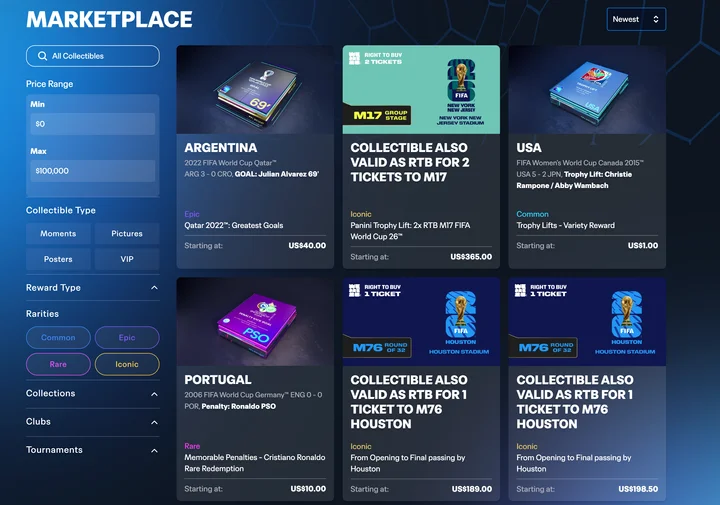
When fans are ready to claim their seats, they burn the NFT directly through FIFA Collect to redeem official match tickets. Or they continue holding them as tradable assets, selling the tickets on the market instead.
FIFA’s revamped crypto experience feels like a true step forward. The new L1 strips out the friction from earlier products while giving fans a much smoother way to collect and engage. It’s still early, as the chain debuted only a few weeks ago, but the foundation is solid as more fans start to show up.
Dexalot
Dexalot is Avalanche’s home for onchain central limit order book (CLOB) trading. While the broader Dexalot platform is integrated with multiple chains including the Avalanche C-Chain, Base, and Arbitrum, the Dexalot L1 remains the primary venue for trading activity today. Because Dexalot runs on its own appchain, it unlocks faster execution speed, lower fees, and a smooth trading experience. For now, Dexalot only supports spot markets. No leverage or futures are live yet but both are on the teams’ roadmap.
Trading volume on the Dexalot L1 has cooled off from the peak mania in Q4 last year and early Q1 this year, when it was topping $100 million daily. Activity is still consistent, with the platform averaging $20–50 million in daily volume and over 1.6 million transactions in the past 24 hours. That’s especially notable given Dexalot is spot-only with no leverage in the system. To date, Dexalot has cleared $29.5 billion in total volume across more than 800 million trades.
Dexalot’s core product is CLOB trading, with SimpleSwap available for quick, one-click swaps. While it resembles a standard AMM swap, under the hood, SimpleSwap is routing through the top of the onchain order book. Traders get tighter spreads and better execution for liquid pairs while using the simple UI everyone loves.
Stables like USDC and USDT are consistently the top markets traded on the Dexalot L1, with AVAX, ETH, and wBTC rounding out the top five by volume. The ETH/USDC pair has done over $24 million in weekly volume, closely followed by ETH/USDT and USDT/USDC. Outside of the top five pairs, trading volume falls off. The majors are active, but most other tokens see little volume. That said, other Avalanche ecosystem tokens like GUN and ARENA have had their moments during times of peak mindshare. If Dexalot can pull in more new listings with active communities, that long tail of volume could start to look a lot better.
With more products like spot margin and perp futures soon to come, Dexalot is clearly aiming to be more than just a standard DEX on Avalanche. The tech stack is solid but to scale meaningfully from here, Dexalot will need to solve the long tail problem and deepen liquidity across more pairs. If they can get that right, there’s a good shot at building a trading layer that holds its own.
Beyond Crypto: Real World Use Cases
Gaming chains and DeFi apps are just the tip of the iceberg for activity on Avalanche. Some of the most interesting teams in the ecosystem are pushing into real-world use cases like institutional asset management or fractionalized real estate.
These projects might not get the same attention as tokens with large communities, but they’ve been quietly building impactful products that truly drive adoption. In this section, we highlight a few key examples. Each tackles a different area of the real-world use case with Avalanche infra under the hood.
Brief on Institutional Adoption: Kinexys and VanEck
Most Avalanche activity today is still centered around crypto-native use cases. But a handful of institutions have shown what’s possible when traditional firms tap into Avalanche L1s.
Kinexys, developed by J.P. Morgan, was part of the Monetary Authority of Singapore’s Project Guardian, and was meant to serve as a proving ground for cross-chain portfolio management with tokenized assets. The pilot used three separate chains to simulate real-world portfolios, each handling a different asset class. The Avalanche L1 hosted fixed income products and facilitated functions like portfolio rebalancing and FX hedging. The other networks had varying responsibilities, such as tokenizing equities.
More recently, VanEck launched its PurposeBuilt Fund, a private digital assets fund focused entirely on Avalanche-native projects. The fund invests in both liquid tokens and early-stage projects across categories like DeFi, gaming, AI, and payments. Idle capital in the fund is deployed into real-world asset products on Avalanche, such as tokenized money market funds, to help maintain liquidity while also supporting onchain adoption.
The fund is managed by the same team behind the award-winning VanEck Digital Assets Alpha Fund, one of the best-performing digital asset funds in the market. Rather than chase hype or highly speculative projects, this team bets on serious builders creating useful and scalable onchain applications. This PurposeBuilt Fund reflects their long-term conviction in the Avalanche ecosystem and positions VanEck as a key backer for new founders launching on the network.
Balcony
One of the most notable real world deployments on Avalanche is happening right now in Bergen County, New Jersey. Through a recently signed five-year agreement with local governments, real estate infrastructure firm Balcony is tokenizing over 370,000 property deeds. Altogether, these records represent more than $240 billion in total real estate value.
The old, fragmented, paper-based recordkeeping system just doesn’t work anymore. Many counties and state agencies still rely on incredibly outdated tech infra like COBOL, leading to outages and cyber attacks. Over 20 towns in NJ were hit by ransomware in 2023 alone, with some paying millions of dollars to restore access.
The new system runs on its own dedicated Avalanche L1, streamlining processing, improving security, and cutting deed settlement times down from months to hours. County and property owners benefit from real-time, government-authenticated, searchable, and immutable record of property.
The Bergen deployment is the first phase of a larger rollout. Balcony has plans to roll this infrastructure out across other cities in New Jersey, including Camden, Orange, Morristown, and Fort Lee. In total, the firm is working to bring over 460,000 properties and $290 billion in value onchain across the state.
Intain
Another standout project leveraging Avalanche for real-world financial rails is Intain, an end-to-end platform for structuring, issuing, and servicing tokenized asset-backed securities (ABS). The firm runs its own permissioned Avalanche L1 tailored to two core products: IntainMARKETS and IntainADMIN.
- IntainMARKETS is the marketplace where issuers can list tokenized ABS products and onboard qualified investors.
- IntainADMIN powers the backend fund administration, enabling real-time reporting, payments, and reconciliation directly onchain.
Intain’s system is designed to work with institutions, not around them. Instead of cutting out intermediaries, Intain integrates them (trustees, underwriters, custodians) directly into the platform. Everything from loan verification to payments can be done onchain with full auditability and instant settlement.
Intain is managing over $20 billion across 88 structured finance deals, including partnerships with major trust banks like UMB and Wilmington Trust. Wells Fargo selected Intain as the only DeFi finalist in its 2022 innovation challenge before eventually piloting the system.
Avalanche’s L1 customizability enables Intain to tailor its chain for institutional needs, run entirely on U.S. infrastructure. All validators are KYC’d U.S. entities and network activity is priced in USD rather than a custom, volatile gas token. It provides full compliance and control, finally opening the Web3 design space to traditional institutions.
Mogul
Mogul is a fractional real estate investment platform built by ex-Goldman RE vets. It aims to simplify the process of investing in high quality single-family properties. Unlike the other projects, Mogul doesn’t run its own dedicated L1. It operates right on the public Avalanche C-Chain. Users can co-invest in institutional grade U.S. rental homes with as little as $250. No steep capital requirements, no landlord headaches, no licences.
Mogul takes care of sourcing, underwriting, and property management. Everything from seller negotiations to everyday rental operations is handled. Each home is structured under an LLC and investors receive their fractional ownership stake represented as an NFT. Ownership records, payouts, governance votes are all settled onchain.
For their portfolio of properties, short-term rental homes or co-housing setups like Airbnb and PadSplit are favored to maximize returns. Yet less than 1% of properties pass Mogul’s diligence process. Each successful deal includes detailed base, bull, and bear cases for investors to review. Returns are distributed monthly, with historical IRRs averaging ~18% and cash yields between 10–12%.
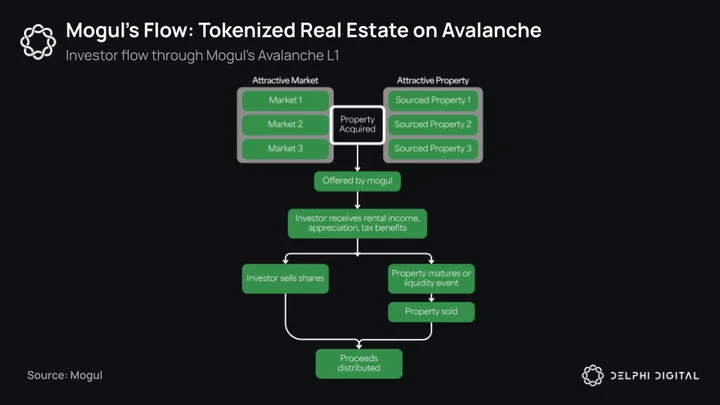
As of April, Mogul manages over $22 million in tokenized RE assets and has onboarded more than 10,000 investors. Properties are being added weekly, and their new community product, Mogul Clubs, brings a novel social layer to the experience. Users can join or create private investing communities, share ideas, and co-invest while earning bonus rewards.
It’s an incredibly clean execution of RWA investing, made possible through simple UX and Avalanche’s backend. By simplifying the entry process and curating a high-quality portfolio, Mogul is bringing a new generation of investors into an asset class that was traditionally inaccessible.
Appchains as the Future
Dedicated appchains are Avalanche’s biggest unlock. Unlike monolithic chains where everyone is competing for blockspace, Avalanche gives projects the ability to launch their own L1s. All with tailored economics, execution logic, and validator setups.
And a growing number of teams are choosing to build their own Avalanche chain from day one. The benefit: better value capture and a clearer path to scale. For users, it’s a much cleaner experience.
- Environments can be fully tailored to the app’s specific needs
- Apps run independently, but still plug into Avalanche’s liquidity, tooling, and interoperability
- No congestion or blockspace competition with unrelated apps
The design is proving itself across various categories. Gunzilla and MapleStory focus on smooth onchain gaming, Dexalot optimizes for fast trade execution, and FIFA reworks digital collectibles. The modularity gives builders more control and freedom. Teams can adapt quickly and evolve their chains as new needs emerge rather than waiting on shared infrastructure to make key changes or upgrades.
Most importantly, appchains dodge many of the UX issues that still plague crypto. Users don’t need to deal with gas settings, bridging between chains, or navigating fragmented ecosystems. When done right, the chain disappears into the background and the product takes center stage.
The momentum behind Avalanche’s appchain thesis is picking up. If they can continue to attract a wave of bespoke L1s, they are on track to become the default home for launching apps onchain.
0 Comments