
Introduction
In 2020, we had “DeFi Summer.” We witnessed the rise of core building blocks of an alternative, decentralized financial system. This includes Uniswap, Aave, and Curve.
In 2021, NFTs exploded into mainstream attention. Bored Ape Yacht Club and CryptoPunk NFTs were bought and sold for 6-figure sums; some even traded for millions.
In 2022, we see signs of a new emerging narrative: DeFi-type products that enable greater financialization of NFTs. Trend catchers should pay close attention to NFT finance.
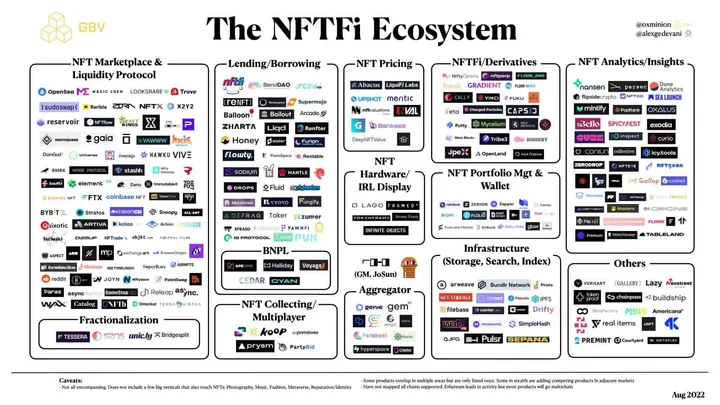
(Infographic h/t 0xMinion, Alex Gedevani)
The infographic above says it all. The space is booming. While a few protocols are already live with active users, dozens of startups are in building mode and will be launching their products in the coming months.
We’ve identified one vertical within NFT finance that is catching on quickly — NFT lending. This refers to protocols that enable NFT owners to take out loans against their NFTs, unlocking new avenues of liquidity. It creates demand for lenders who can earn interest by underwriting and providing loans. $300M+ in NFT-backed loans have been issued this year alone.
The creation of credit markets for NFTs adds a new utility layer for them beyond their primary use cases. This will bring new, financially-driven participants into the space. It is one step forward for NFTs to mature into a proper, investable asset class.
Market Size
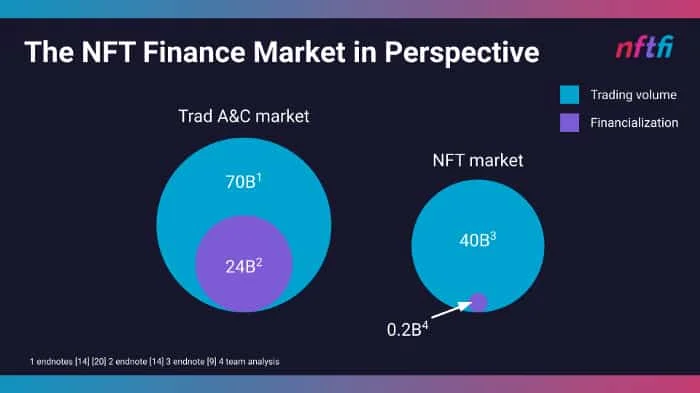
A brief market sizing analysis of NFT finance estimates it to be approximately $0.2B (according to research by NFTfi in Feb. 2022). This is just a tiny fraction (<0.5%) of the total NFT market size. In contrast, financialization in the traditional Art & Collectibles market represents approximately 1/3 of its total market size (according to the 2019 Deloitte Art & Finance Report).
If we take the view that:
-
The NFT market will continue to expand in size beyond $40B.
-
NFT financialization will grow closer to 1/3 of the total market.
It is easy to see how ample the growth opportunity is. It’s a potential 50X – 100X market expansion from where we are today.
Two Main Models for NFT Lending Today
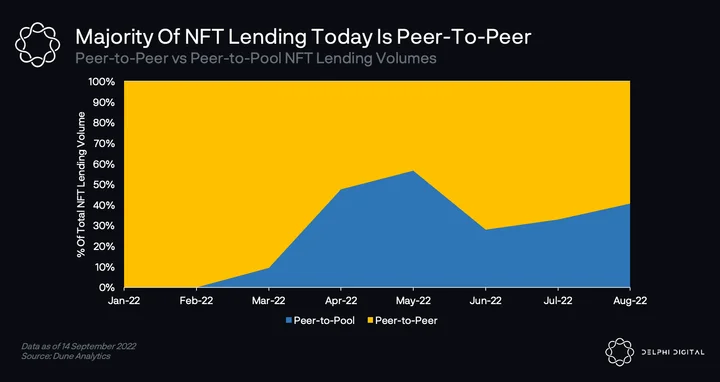
There are two main approaches to NFT lending. Peer-to-peer lending (via NFTfi) has been the primary model for years, but peer-to-pool lending has gained attention in recent months with the launch of BendDAO & JPEG’d.
-
In peer-to-peer lending, NFT owners obtain loans directly from other individuals. The product acts as a marketplace to match borrowers and lenders, functioning as a trustless middleman.
-
In peer-to-pool lending, NFT owners obtain loans from a liquidity pool instead. This can be governed by algorithmically-determined parameters or set by the pool owners.
Peer-to-Peer Lending
Typical Lending Model
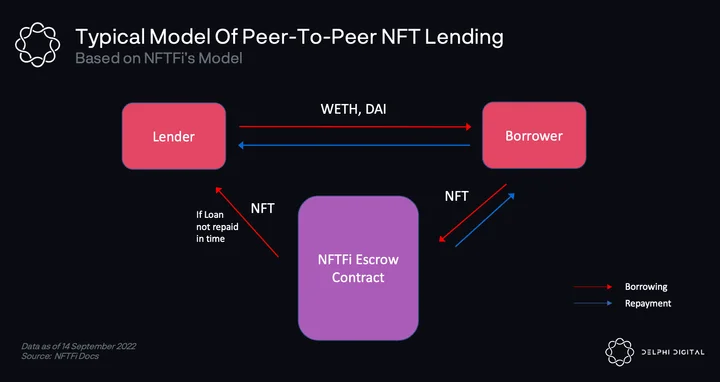
NFTfi became the first protocol to offer NFT-backed loans via the peer-to-peer lending model starting in June 2020. It remains the most prominent protocol in this space today.
NFTfi matches borrowers and lenders via its marketplace. It supports many top collections, including Bored Ape Yacht Club, Mutant Ape Yacht Club, CryptoPunks, Doodles, Art Blocks Curated, and more. Borrowers can list NFTs that they want to borrow against. Lenders place bids by offering loan terms — loan
Read the full report
This report is part of Delphi Pro.
- 800+ Pro reports across every major sector
- Talk directly with our analysts
- Private community of funds and builders
Already a Pro member? Log in
0 Comments