
Introduction
The ubiquity of smartphones and social media platforms has revolutionized visual storytelling, with photographs playing a central role in this transformation. NFTs have emerged as a potent resource for photographers, empowering them to safeguard and monetize their intellectual property.
The power of blockchain technology has enabled photographers to create unique, one-of-a-kind NFTs that are impossible to counterfeit, allowing them to bypass traditional distribution networks and expand their revenue streams. Moreover, photography has always adapted to new technologies, from film to digital images. Now, with NFTs, collectors can own rare and special pictures that were previously out of reach.
New opportunities on photography NFT platforms have made royalty fees and artist payments important topics of discussion. Royalty payments enable creators to earn a steady revenue stream for the lifetime of their NFTs. And as their popularity grows, so do their royalties. With users moving towards decentralized platforms built on blockchain technology, photography NFTs are democratizing art and creating new opportunities for creators to connect directly with collectors.
The success of early NFT photography projects such as Twin Flames and Where My Vans Go drove a flood of new projects into the market. However, the lack of innovation beyond just JPEG images has led to supply outstripping demand, causing a decline in sales volume. To keep growing, NFT photography needs to go beyond just images and include interactive experiences and creative storytelling that offer unique value to collectors.
NFT Photography Overview
In December 2021, OpenSea established a dedicated category for photography. This sparked competition among NFT photography platforms like Quantum (which Delphi has invested in) and Cheeze, each vying to establish themselves as the premier marketplace for established artists and newcomers.
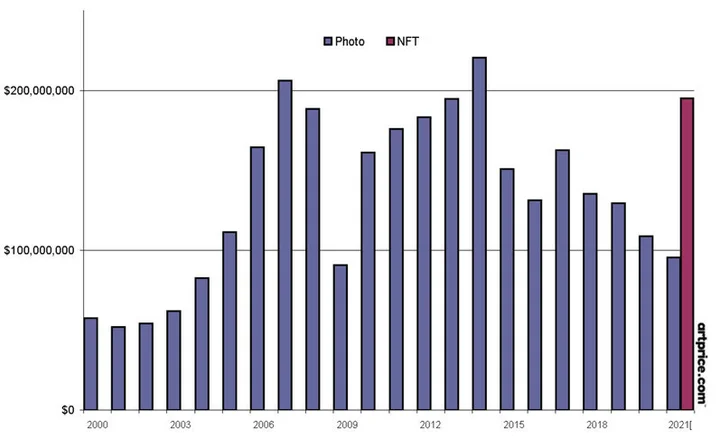
The NFT photography market grew to nearly $200M in 2021 alone, rivaling the size of the traditional fine art print photography market. This growth may only be the beginning, as the art world is currently witnessing a massive shift due to the convergence of significant cultural and technological changes. The rise of social media platforms has led to people spending more time online and displaying a higher inclination toward purchasing digital items such as art, collectibles, and in-game assets.
Moreover, NFT photography provides emerging artists with an opportunity to showcase their talent in a completely different medium. A prime example is Justin Aversano, whose Twin Flames #49 NFT sold for ~$3.8M in ETH at the point of sale, making it the fifth most expensive photo to be sold in all of photography history.
Although NFT photography shows great promise as an emerging field, it still remains a niche within the financially-driven world of NFTs. However, as more photographers and collectors become acquainted with this burgeoning market, it holds the potential for rapid expansion.
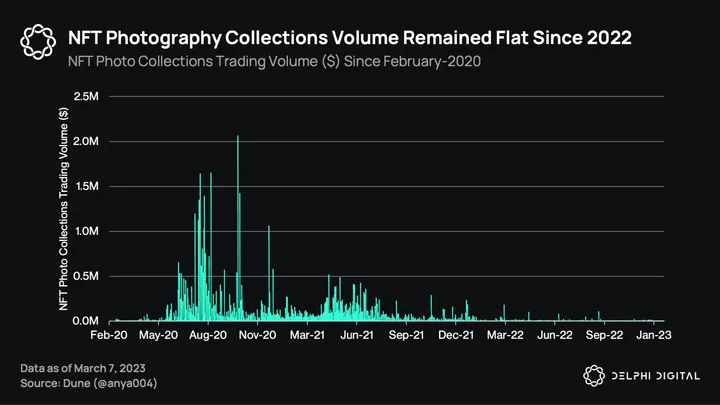
Despite the cumulative volume of 22,000 ETH (~$47M), NFT photography volume remained stagnant in 2022. While the volume of sales in comparison to previous years was lower, there are still active collectors and creators within the photography realm. The reduced price point presents an opening for creators to expand their communities and continue earning despite the broader market downturn.
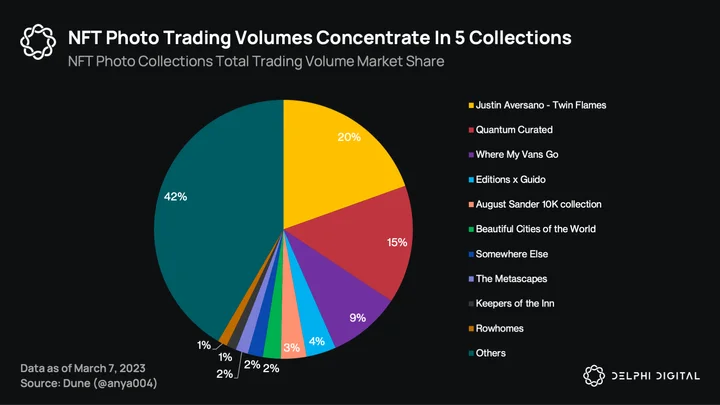
2022 was a difficult year for NFT photography collectors. Out of all the NFT photography collections, only 10 traded above their 2021 levels, while the remaining collections continued to grind lower as attention flowed toward other categories such as PFPs and generative art. The overall volume was dominated by three major collections — Twin Flames, Where My Vans Go, and Editions x Guido. While Quantum Art Curated has a 15% volume share over other photography NFT collections, they consist of more than 10 active collections worth of volume.
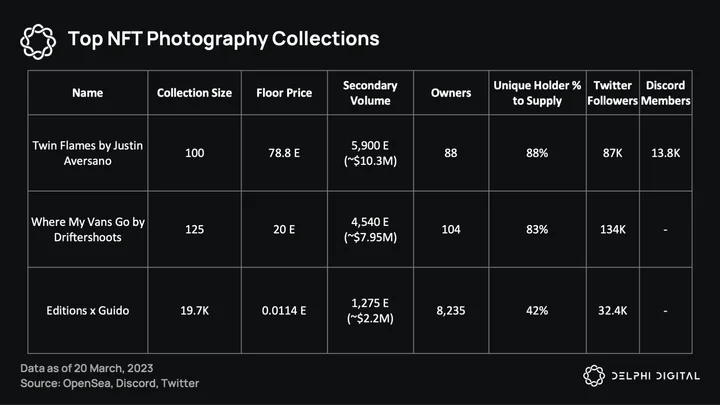
In particular, photograph #0 from DrifterShoots’ collection was auctioned off for 100.69 ETH, setting the record for the highest sale of Where My Vans Go.
The photography NFT collections that are usually successful tend to have a limited number of items, as the scarcity and the creator’s personal branding are major factors that determine the worth of the NFT. This differs from the typical 10,000 PFP collections, which function more like digital collectibles and social networks.
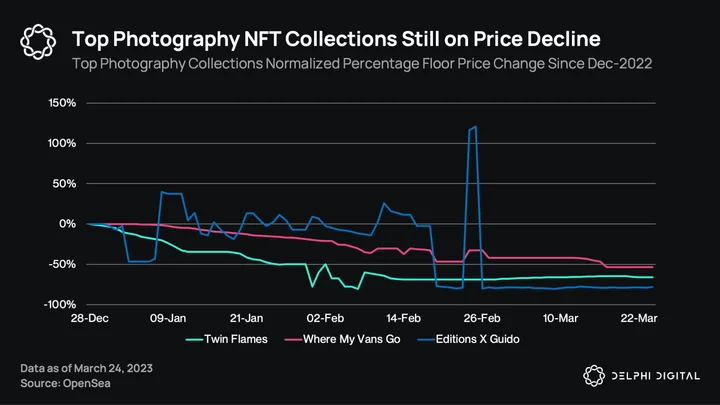
Despite their initial success, the top photography NFT collections are currently still underwater since the start of the year.
-
DrifterShoots’ Where My Vans Go is down 53% YTD
-
Justin Aversano’s Twin Flames is down 66% YTD
-
Editions x Guido collections are down 78% YTD
Further, the lack of volume is also a concern, with the 3 collections having combined 90-day volume
Read the full report
This report is part of Delphi Pro.
- 800+ Pro reports across every major sector
- Talk directly with our analysts
- Private community of funds and builders
Already a Pro member? Log in
0 Comments