Off The Grid - Web3 Gaming's Biggest Launch
OCT 11, 2024 • 18 Min Read

Introduction
Source: @Ninja OTG Stream Announcement – 6.5M Followers
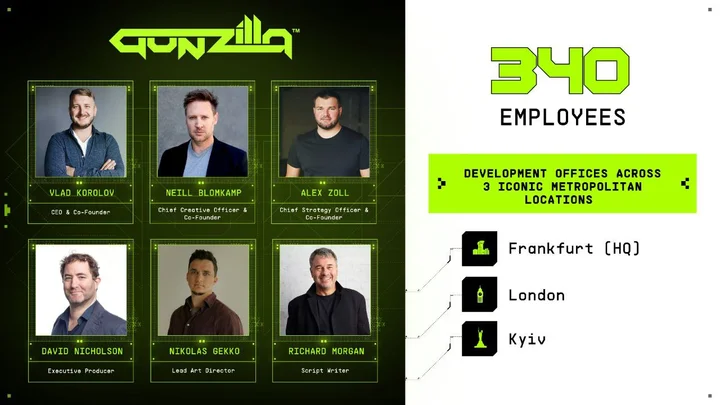
On October 8th, after five years of development, Gunzilla’s Off the Grid (OTG) finally launched in early access. This marks the first-ever AAA quality Web3 game to be released on both PC and consoles. Backed by over $90M in funding and developed by a team that has grown to more than 340 employees, OTG raises the bar for blockchain gaming. Featuring creative direction by District 9 director Neill Blomkamp and a narrative campaign by Altered Carbon author Richard Morgan, OTG aims to deliver an immersive experience that surpasses any Web3 game to date.
Source: https://x.com/pierskicks/status/1838950048769736961
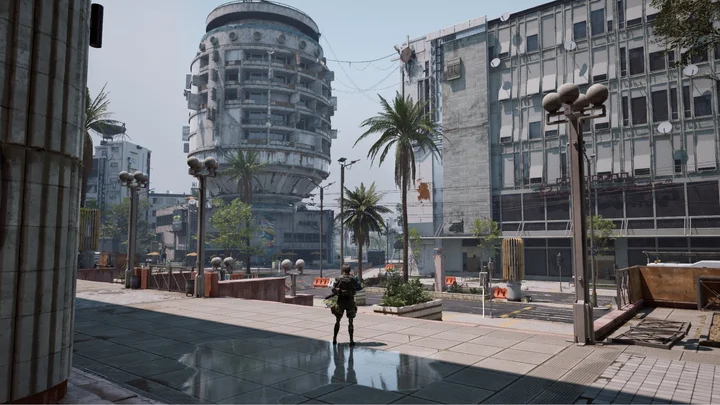
Set on Teardrop Island, the largest battle royale map ever created, OTG combines fast-paced PvP action with engaging PvE elements, including a free 60-hour narrative campaign. Players explore a dystopian Sci-Fi world utilizing replaceable cyberlimbs, advanced aerial movement, and an extraction-based loot system to compete for valuable in-game assets. Items are minted onchain, ensuring transparency and enabling a peer-to-peer marketplace.
Source: https://x.com/pierskicks/status/1838950051810513201
OTG’s blockchain integration is designed to be seamless, allowing players to enjoy the game without facing any crypto-related complexities. The GUNZ chain, wallet, and marketplace form the core of the Web3 ecosystem, while TECHNOCORE—a casual mobile game—aims to keep players engaged with the OTG universe when away from their desktops or consoles. With its blend of rich lore, innovative gameplay, and transparent onchain economy, OTG stands as one of Web3 gaming’s best chances to reach and resonate with a mainstream Web2 audience this cycle.
A Strong Foundation
Creating a AAA game requires a significant investment in both time and resources, and OTG is no exception. The game has been in development for over five years, involving a dedicated team that has expanded to more than 340 individuals ramping up to the game’s release. This level of staffing is typical for most major AAA titles, where highly specialized talent is needed to cover a wide range of disciplines. However, while their team size is amongst the biggest in Web3 gaming, it still pales when compared to franchises like Call of Duty which saw up to 3000 people working on Call of Duty: Modern Warfare 3 in 2022.
Source: @Scump Clip – 2.2M Followers
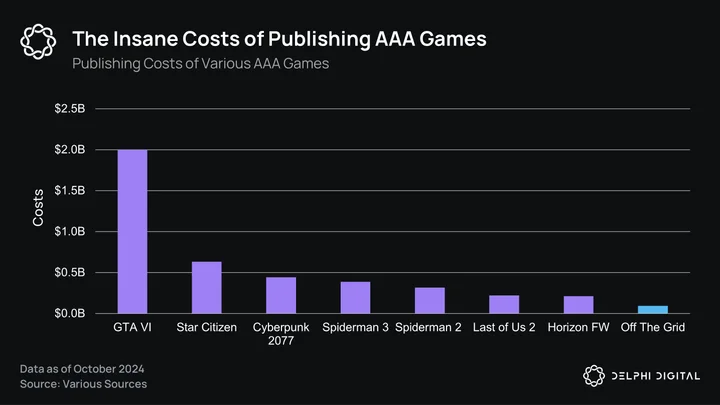
To make OTG a reality, Gunzilla Games has secured significant backing, raising over $90M from entities like Republic Capital, Delphi Ventures, Avalanche, and Griffin Gaming Partners. This scale of funding is crucial for AAA projects, as the costs associated with development—including high-quality graphics, advanced physics, detailed animations, and expansive world-building—are substantial. Nevertheless, while this level of funding is relatively high for Web3 gaming, it still doesn’t compare to the biggest Web2 franchises that see substantially larger development budgets and significant publishing support.
The development team’s significant genre-specific expertise is of particular note. Large parts of the development team previously worked on Warface, a highly successful shooter that reached over 140M players and generated over $1 billion in revenue. Additionally, one of G
Read the full report
This report is part of Delphi Pro.
- 800+ Pro reports across every major sector
- Talk directly with our analysts
- Private community of funds and builders
Already a Pro member? Log in
0 Comments