
Show Me The Money
New types of narratives are emerging in a maturing industry.
These narratives share a common denominator, one that is all too familiar to the traditional finance behemoths who seem eager to meaningfully dip their toes into crypto.
In crypto, many market participants value coins 1 of 2 ways. The first tends to be a big “what if” statement that imagines some sort of mass adoption of a blockchain, defi protocol or game. The second is a relative valuation where someone might say something like “well, if it hits half the value of this category leader, it can then be worth this.”
Market participants have been burned over and over again after being imagining speculative “what-ifs” for two straight cycles now. Part of the reason why many people think crypto is a scam, is simply because the industry is full of them. Sure, you can explain how blockchains are like the internet, and just because there are bad websites or scams on the internet, that doesn’t make the internet itself a scam. But, maybe the reason that *less* scams are able to achieve some level of success in the traditional finance world is because the suits have a very simple way of valuing things. They have balance sheets.
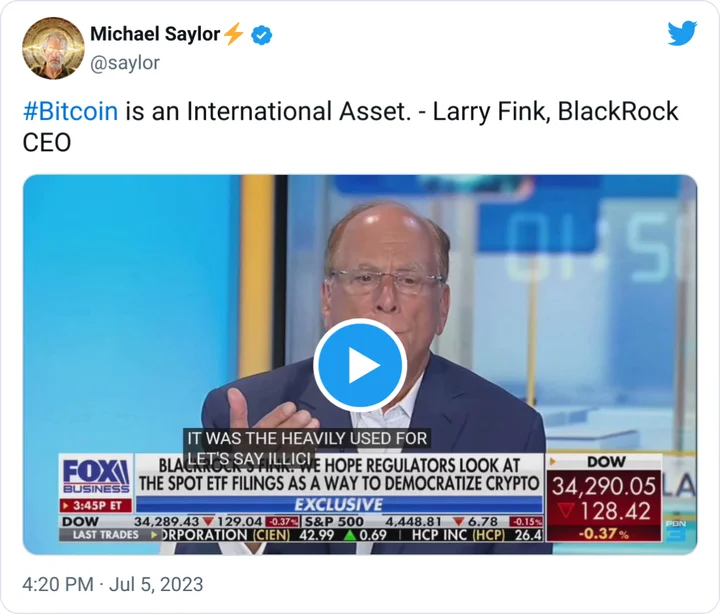
As Tradfi now becomes more entrenched in the industry (looking at you Larry Fink), it may make sense to just present this industry in a way that makes sense towards the liquidity we so desperately need. Generally, your average traditional fund manager can understand the value proposition of a decentralized fixed supply asset in bitcoin. Past that, they’re likely going to view protocols and applications the same way they would companies.
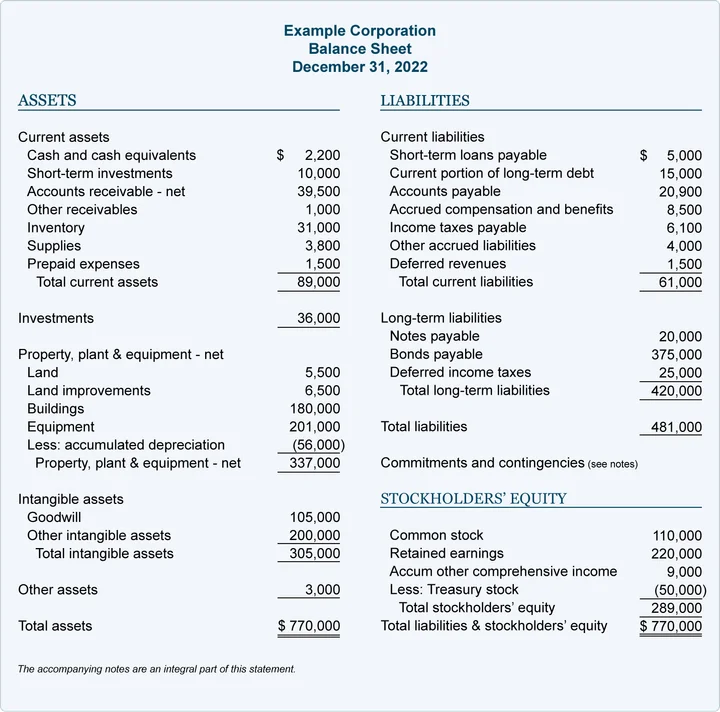
The common denominator of emerging narratives is one that reflects a maturing industry, with market participants abandoning storytelling for more traditional forms of valuation to meet the liquidity that is soon to enter the market. Today’s market values revenue.
Let’s look at 3 categories of tokens that have been performing well over the past month or so: RWAs, Casinos and UI/UX.
Real World Assets (RWAs)
MakerDAO, the protocol behind stablecoin $DAI is up 50% over the past month, and for a good reason. Rather than providing my own commentary towards makerDAO, i’m going to steal analysis from Aaron, who wrote “MakerDAO’s 2022 Fundamentals” back in March of this year.
MakerDAO’s business model is simple.
“The system creates vaults for assets with a set amount of mintable DAI attached. Users can deposit assets into these vaults to mint DAI up to a loan-to-value (LTV) ratio determined by Maker governance. This model is generally known as a CDP, or collateralized debt position, and is a popular mechanism for stablecoin issuance in DeFi. It allows users to post collateral and mint debt tokens (DAI) against it.
Collateral deposits in MakerDAO accrue interest, called a stability fee, which users pay when they pay down their loan. MKR token holders actively manage the stability fee — setting it lower or higher in response to DAI demand to help it maintain its peg to $1. If collateral drops in value and the LTV has reduced below the threshold of the vault, then liquidators can liquidate the position.
The CDP model has proven to be resilient and popular in DeFi. MakerDAO has a handful of competitors that copy their basic model but add in their own twists. MakerDAO remains the most popular protocol among its competitors. Notably, the protocol has expanded beyond crypto asset collateral to begin onboarding real-world assets.
MakerDAO has been a pioneer in bringing tangible assets on-chain. Originally, Maker was onboarding RWAs with Tinlake and Centrifuge, but has since shifted to onboarding more RWAs on their own.
In 2022, Maker’s RWAs have grown from $17M to almost $700M, or about 10% of total system collateral. This has been highly profitable for the DAO. In her RWA report, our analyst Gen pointed out that MakerDAO’s RWAs account for 58% of Maker’s revenue.”
The protocol has generated more than 1.5M in revenue over the past week.
Casinos
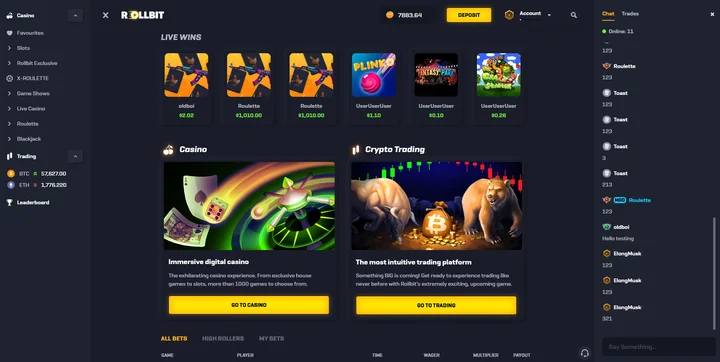
Casinos have been one of the more dominant and controversial narratives of the past month, notably with Rollbit at the center of it. Rollbit is a centralized “crypto casino” that leverages NFTs, kickbacks and innovative lottery games powered by the $RLB token. The token itself entitles users to cheaper fees, better edge against the house and can be used to enter the $RLB lottery that receives 20% of the house winnings.
Delphi Ventures Analyst Duncan Reucassel has projected them to easily clear 9 figures in yearly revenue in a recent Alpha Feed post.
It’s worth noting that Rollbit has received criticism around its owners, customer service and margin trading methodology.
UI/UX
As much as crypto has progressed over the years, it still lacks a simple and intuitive user experience for regular people to go on-chain. Enter protocols or “bots” that are intended simply to demystify the on-chain experience.
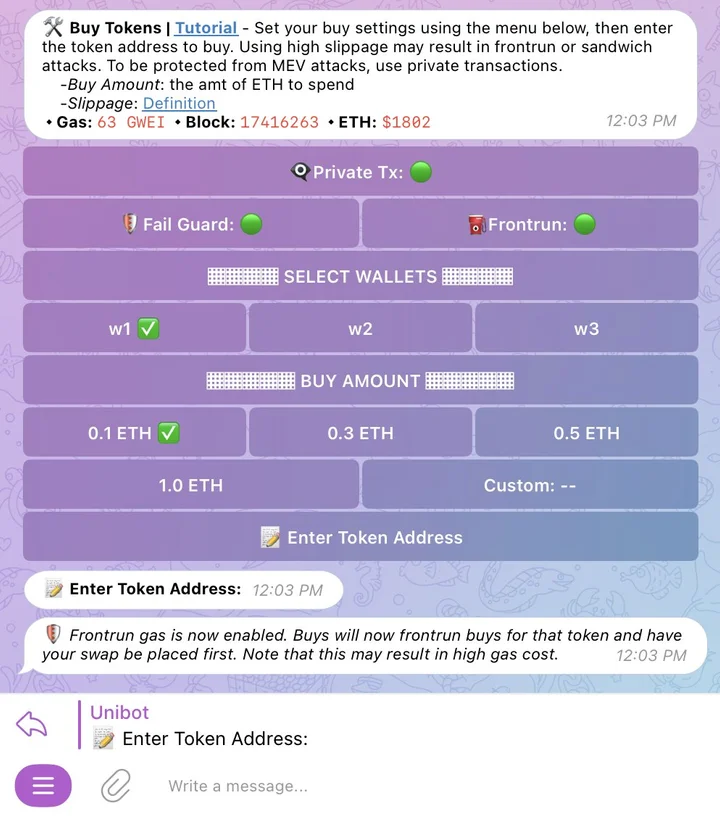 The category leader is currently Unibot, an on-chain trading tool that you interact with in Telegram. It acts as a user interface towards DEXs, providing users with functionality that they couldn’t access beforehand. Some of the features include limit orders, protection against MEV, copy trading and a new launch screener. Each transaction done through Unibot can occur up to a 1% fee, with 40% of those transaction fees going to holders of the token. Unibot is also currently rolling out Unibot X, an on-chain terminal that lives in your web browser.
Conclusion
RWAs, Casinos and UI/UX all have one thing in common: revenue. MakerDAO generates revenue from the T-Bills it uses to back $DAI. Casinos generate revenue from the edge that they maintain over their users. UI/UX protocols generate revenue from the percentage fees they charge their users.
For an industry that has been built on what-ifs, I’d argue it’s healthy for real revenue to become a bigger part of the conversation. With revenue focused protocols being rewarded by the market, revenue generation itself is being incentivized for the next wave of builders.
“What-if” has gotten this industry far enough to the point that Tradfi is interested. To access the trillions in liquidity waiting to be unlocked, a strong focus on revenue is a natural progression for this maturing asset class. The next time you hear some wild futuristic crypto idea, you really should be saying “Show me the money.” At least that’s what the suits will be doing.
📖 Delphi Reads (Alpha Feed Unlocked)
Window(s) to the Future.
Ever since OpenAI dropped chatGPT’s Code Interpreter, I’ve been playing around with it pretty much non-stop. It’s an awesome and powerful tool. And I highly recommend every analyst pay the $20/month to familiarize yo-self with the competition.
Anyways, manipulating data and creating visualizations is cool and all, but making money is, uh, ice cold. And Code Interpreter got me thinking: How can I make money off this thing?
Dissecting Arkham Intel’s Airdrop
Token airdrops are one of the most celebrated events in the crypto space, and for good reason: they reward users (and Sybil attackers) for their usage/promotion of the platform.
After Arbitrum’s airdrop in Q1 2023, ARKM is perhaps the most notable one. That said, let’s dive into some analytics to try and unearth what’s happening behind the scenes.
Tides Are Turning
The US ISM is one of the best indicators for forecasting asset price trends, and it looks like its getting closer to the bottom of its two-year downtrend.
Markets are forward-looking, and heading into this year equities were already pricing in a pretty significant slowdown – if not a full-blown recession.
0 Comments