The Why of DeSocial
If you have been using social media platforms in the last decade, you have probably noticed that they are fumbling. This has been most apparent on Twitter. From arbitrary censoring of competitor links in tweets, to nonstop bots and spam across platforms, to arbitrary banning or sudden changes in API access — using Twitter has never been so miserable.
We don’t even want to single out Twitter. The problem is not about Elon acting as the world’s richest troll. The root of these problems is fundamental; one that has to do with centralized applications’ monopolistic nature.
When you use a centralized social app, your social graph (the entirety of your experience on the platform) exists at the whims of those who control the platform. Users feel locked into that application even when the app’s interests clearly don’t align with theirs. Unfortunately for centralized social media companies, this state of affairs will probably never change. The incentives to control the platforms are too powerful to resist. Thankfully, DeSocial protocols may offer users a way out of this arbitrary mess of social feudalism.
Protocol vs. App
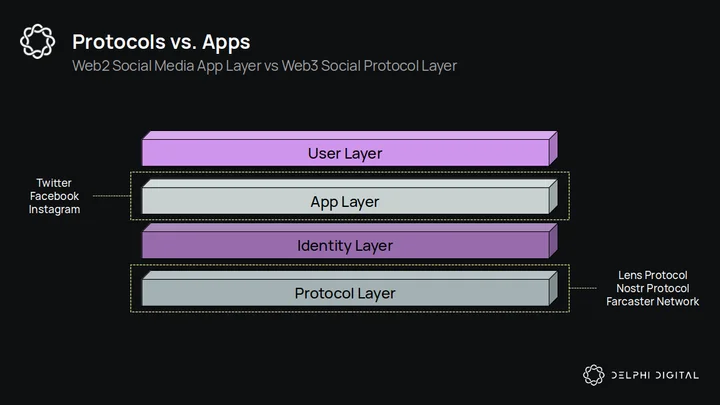
It’s essential to explain that the protocols we will look at in this report are just that, protocols. Nostr, Lens Protocol, and Farcaster are communication protocols rather than centralized apps. While they each have differing architectures, they have some common aspirations.
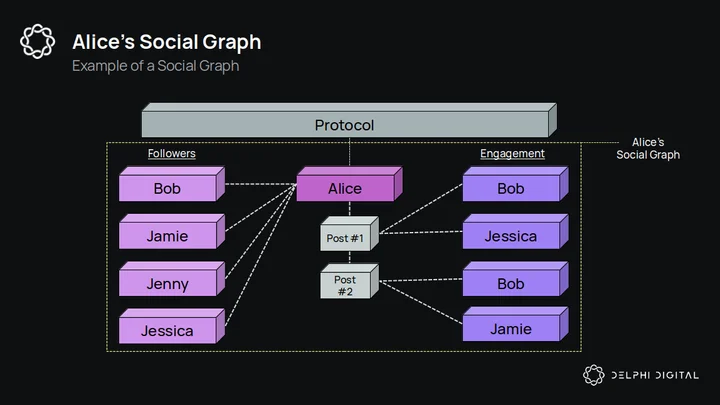
Unlike today’s apps, where signups happen via email/phone numbers, in DeSocial protocols, registration happens via private-public key pairs that users have full control over. When sending messages, users sign them using their private keys, which enables everyone to easily verify that they are the true originator of the message. This allows every user action to be identified by a public key, tying their social graphs back to their keys.
When the user ID and content are secured by credibly neutral protocols as opposed to clients/apps, the power structure shifts from clients/apps to users. If a user dislikes an app, they can move their followers, content, and entire experience to another app easily. Suddenly, apps have to compete for users who can leave for better competitors at any time. Apps can no longer ignore their users or keep rug-pulling third-party apps through arbitrary changes to APIs. Instead, they will feel the need to cooperate and keep innovating to offer the best UX.
Content moderation dynamics also change. Users should no longer expect applications to be credibly neutral, and apps no longer need to act like it. In a DeSocial world, protocols will be credibly neutral, which in turn enables apps to be authentic and innovative with their content distribution policies and algos. The final say will lie with the users who can freely exit if they disagree with the ToS or policies of any app.
It’s hard to overstate the difference between an open protocol and a social media app. DeSocial protocols are not replacing Twitter or Facebook. They are building open networks to host more equitable versions of those entities.
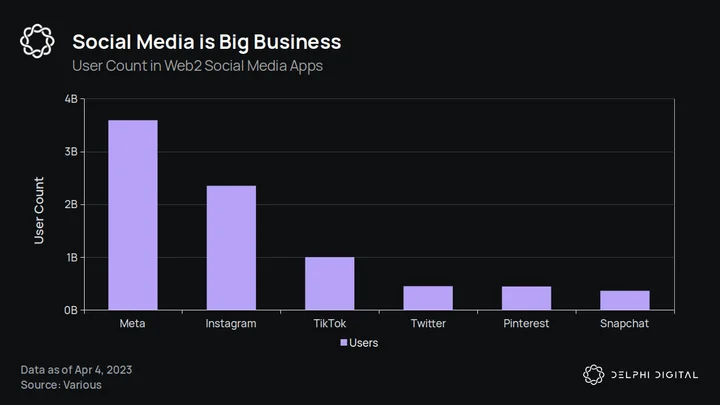
That said, we acknowledge that this will be a long journey. DeSocial protocols are going up against behemoths. Bootstrapping a new social network is difficult, as the incumbents already benefit from significant network effects. Even with the DeSocial advantages, it is a long shot that these protocols will ever gain enough traction to take off. However, there is a tremendous opportunity in the early stages of social media platforms.
We want to examine how a few of these protocols work, the tradeoffs their designs require, what these mean to the end user, and, most importantly, whether people use them. For these protocols, we are most interested in a select few which use blockchain tech and have meaningful data to display, so this list is not exhaustive. There are dozens of protocols out there beyond these three we are looking at. Most of the protocols are still very new and in the early stages of development, but hopefully, through understanding how they work, we can compare their strengths and weaknesses and even see how they stack up against centralized services.
Nostr
The first social media challenger we want to analyze is Nostr. Brought to the zeitgeist by Jack Dorsey, Nostr is an acronym for “notes and other stuff transmitted by relays” and hints at its underlying architecture. Created by an anonymous dev called fiatjaf in
Read the full report
This report is part of Delphi Pro.
- 800+ Pro reports across every major sector
- Talk directly with our analysts
- Private community of funds and builders
Already a Pro member? Log in


0 Comments