
A Different Way To Earn Yields
Decentralized Option Vaults (DOVs) are a relatively new product in the world of DeFi. These vaults offer users the potential to earn yield in a way that differs from the standard token emissions on liquidity mining that we typically see. In essence, DOVs help users sell options in an automated fashion, allowing them to *potentially* earn a real return via the premiums.
The basic concept behind DOVs is nothing new to the world of finance. In TradFi, these are called “structured products”, and they’re essentially a method of asset management that involves combining several instruments into a single financial product, thus creating new payoff curves.
In this report, we examine how DOVs work, where the yields come from, outline the risks of participating in DOVs, and analyze recent data.
How do DOVs Generate Yields?
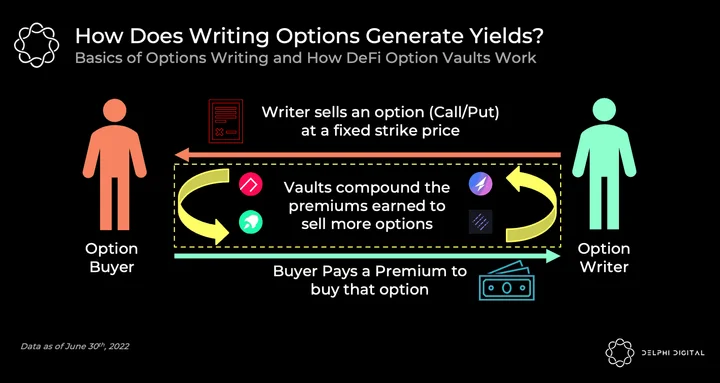
The core use case of DOVs is automating the process of writing options on behalf of depositors. DOVs mainly have two strategies – 1) writing Covered Calls and 2) Cash-Secured Puts. To put it simply, it’s just selling options and earning the premiums paid by buyers (i.e., selling real risk).
For covered calls, depositors own risk assets like ETH, SOL, AVAX, AAVE, and others. For cash-secured puts, users are required to deposit stablecoins. A covered call is a strategy where one is long a spot asset and sells out-of-the-money calls against it to generate cash flow. On the other hand, a cash-secured put is a strategy where one holds stablecoin/cash and sells out-of-the-money puts against it.
DOVs sell out-of-the-money options as the goal is to minimize the risk of the option expiring in-the-money. If the options expire without any worth, depositors keep the premiums earned (to their benefit). This strategy utilizes the short time frame to earn premiums from theta decay – the phenomenon of an option losing value over time.
These protocols help depositors sell options to market makers through an auction process that determines the price. Once the options are sold, the premiums gained are then redeposited back into the vault and compounded to sell more options in the next cycle. The options sold by DOVs usually expire weekly (every Friday), with some protocols offering bi-weekly and monthly expiries.
Although DOVs provide good yields on paper, we need to understand what goes on behind the scenes and the underlying risks.
The risks associated with these vaults are usually not well understood by the average crypto retail investor trying to earn high yields. Most products also fail to highlight and educate users on the risks of options writing. We will highlight some key risks everyone should know
Read the full report
This report is part of Delphi Pro.
- 800+ Pro reports across every major sector
- Talk directly with our analysts
- Private community of funds and builders
Already a Pro member? Log in
0 Comments