
The AI-designed drug pipeline has grown to more than 170 in clinical development today, with 15-20 expected to reach pivotal trials this year.
AI doesn’t have to improve clinical success rates for a bull case to play out in the AI-aligned biotechs. If it makes shots on goal cheaper by reducing the time and cost of identifying a preclinical target, then the market would deserve a rerating. If it also improves later-stage outcomes, then it is a much larger story although we don’t have the data on this quite yet.
Insilico’s numbers are some of the most comprehensive datapoints we have on generative end-to-end design in the industry. Across 20+ in-house programs from 2021 to 2024:
- 12-18 months from program start to preclinical candidate, against a 4.5-year traditional average.
- 60-200 molecules synthesized per program, against thousands.
- Rentosertib’s preclinical work came in near $2.6M against a conventional $15-25M
A preclinical candidate that costs 8x less and arrives 3x faster means attrition can stay exactly where it has been for fifty years and the economics of drug discovery still improve.
Jayatunga et al. analyzed the early clinical data in 2024 and found AI-originated candidates are clearing Phase 1 at 80-90% against a historical ~52%. They note that Phase 2 results were broadly in line with the historical average, but this is on a small sample size and analyzing first-generation programs designed before the current model stack existed.
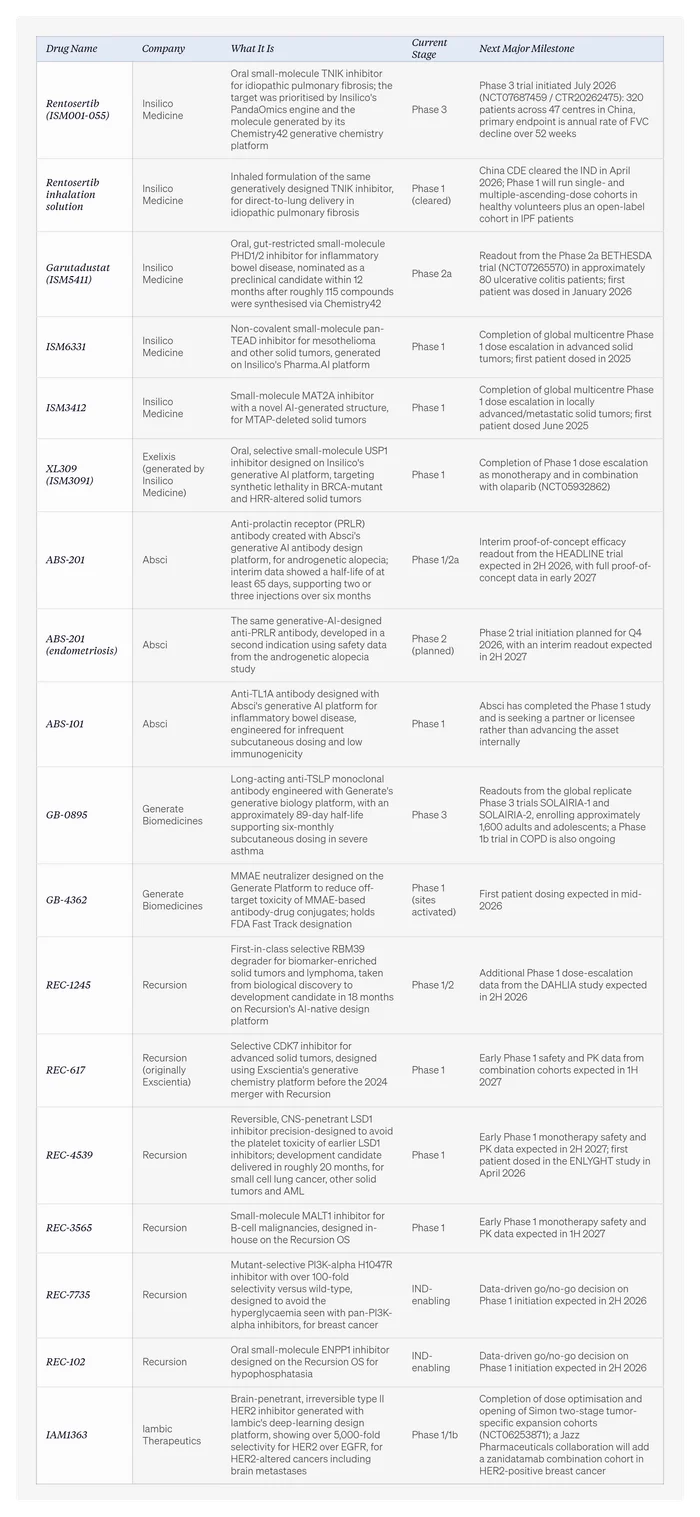
Some of the upcoming AI drug programs to watch are below. There is currently no standard for “AI-discovered drug” (everyone tends to lump all the techniques from de novo generative design to ML-assisted screening together), but I’ve tried to focus this specifically to techniques where AI identified the target and/or generated the molecule.
I remain very excited about what this means downstream. I think the wave of AI-discovered drugs hitting headlines will result in an uptick of investment into self-driving lab infrastructure, specifically hardware for new lab builds, consumables for each physical run (specifically consumables not impacted by miniaturization such as biological inputs), and CDMOs manufacturing drugs cleared for market (on a longer time horizon).
You can check out the full report on self-driving labs here for more on the investment implications and market map.