Report Summary
The report titled “An Ode To Bitcoin” reflects on Bitcoin’s journey, its value proposition, and the potential future of the cryptocurrency as it reaches $100,000 per coin. Below are the key takeaways:
1. Bitcoin’s Evolution:
- Origins: Bitcoin was introduced in 2008 as a peer-to-peer electronic cash system, evolving over the years into digital gold and a hedge against global financial instability.
- Adoption Waves:
- Retail: Early adoption by individuals.
- Corporate: Businesses adding BTC to balance sheets (e.g., MicroStrategy).
- Nation-States: Countries like El Salvador and Bhutan adopting Bitcoin as legal tender or mining reserves.
2. Key Drivers of Value:
- Hedge Against Inflation: Bitcoin is seen as a safeguard against currency debasement, offering disinflationary properties that attract investors seeking protection from excessive money printing and geopolitical instability.
- Digital Gold: Offers the scarcity and durability of gold but with added benefits like being digitally native and easily transactable.
- Portfolio Diversification: Studies show even small allocations of BTC (2.5%-10%) significantly enhance risk-adjusted returns in traditional portfolios.
3. Major Milestones:
- $100K Price Milestone: Bitcoin’s market cap now exceeds $2.1 trillion, reflecting increasing mainstream and institutional adoption.
- Global Impact: Bhutan’s mining operations, supported by hydroelectric power, demonstrate how Bitcoin can reshape national economies, with its holdings worth half its annual GDP.
4. Challenges and Missed Expectations:
- Payments Network: Bitcoin’s adoption as a peer-to-peer payments system has been slower than expected, with stablecoins and modern Layer 1s taking the lead in this space.
- Scaling Limitations: Despite advances like the Lightning Network, Bitcoin has prioritized being a store of value over transactional scalability.
5. Future Outlook:
- Broader Adoption: Expectation of increased corporate and nation-state adoption, driven by the potential for Bitcoin as a reserve asset.
- Strategic Bitcoin Reserves: Proposals like the U.S. creating a Bitcoin reserve fund could prompt other countries to follow suit.
- Energy and Bitcoin: Energy-rich countries are likely to explore Bitcoin mining as a means of economic growth, following Bhutan’s example.
6. Strategic Implications:
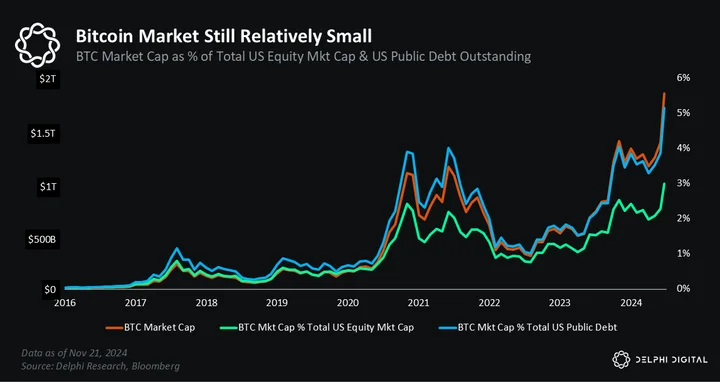
- Global Asset Comparisons: Bitcoin’s market cap remains a fraction of major asset classes like U.S. equities or global debt, signaling room for growth.
- Catalysts for Growth: Rising inflation, geopolitical instability, and broader crypto adoption create a strong tailwind for Bitcoin’s continued rise.
Conclusion:
Bitcoin’s journey to $100K underscores its transformation into a global macro asset. It serves as a check against government overreach, an alternative reserve currency, and a hedge against financial instability. As geopolitical and economic challenges persist, Bitcoin’s role as a life raft for individuals and nations is expected to grow.
100,000 Reasons To Celebrate
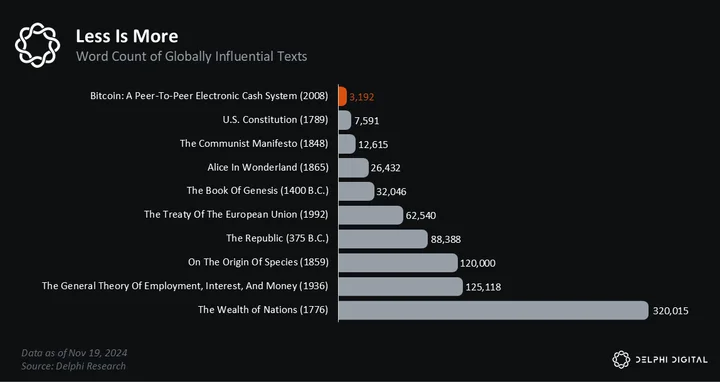
Sixteen years ago, Satoshi Nakamoto published Bitcoin: A Peer-to-Peer Electronic Cash System. At just over 3,000 words, many overlooked it as another obscure Cypherpunk blog post. But Bitcoin’s simplicity belied its brilliance.
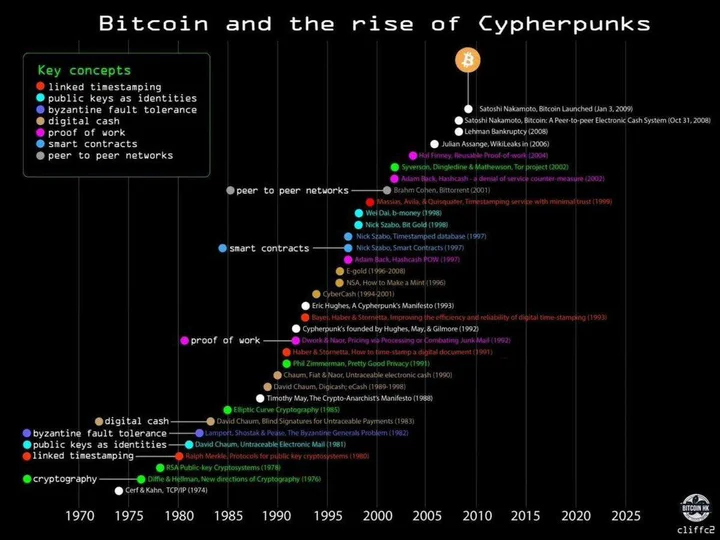
Bitcoin was the culmination of decades worth of research across domains like engineering, cryptography, computer science, philosophy, and game theory.
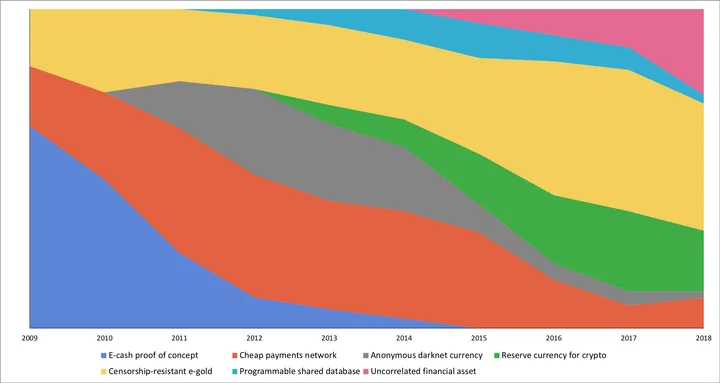
Aside from the technical breakthroughs it represents, at a more fundamental level, Bitcoin is an idea. And like all ideas, it’s subject to change over time. In the beginning, Bitcoin was electric cash. Then, Bitcoin was the preferred currency of the dark web. Later in life, Bitcoin was deemed the future of finance. Today, Bitcoin is digital gold. It’s a World World III-resistant asset that protects holders from power-hungry politicians and profligate central bankers.
Along with the ebbs and flows of Bitcoin’s narrative, Bitcoin the asset has gone through three distinct waves of adoption:
- retail
- corporations
- nation-states
Delphi’s research mirrors these shifts over the years. We went from analyzing UTXOs and HODL waves, to forecasting corporate adoption, to now parsing the statements of world leaders and global central bankers. It’s been a wild ride, and this report serves as an ode to the asset that birthed our industry.
How It Started
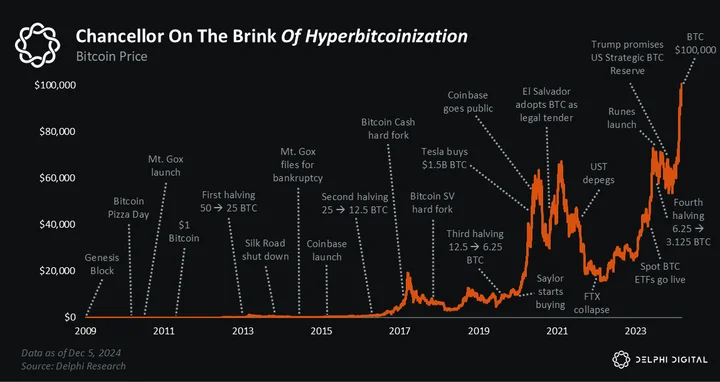
Delphi published our first report in the depths of the 2018 bear market. Bitcoin was down ~85% from its highs, sentiment was in the gutter, and the ink on our TradFi resignation letters was still drying. The hangover from the 2017 ICO boom and bust still lingered, and the pessimism surrounding Bitcoin and crypto was deafening.
At that time, XRP had a larger market cap than ETH, and XLM and EOS were among the top five largest crypto assets. Uniswap was less than four weeks old. DeFi Summer was still 18 months away. No one had heard of FTX yet, because it didn’t exist. And Solana was still 15+ months away from its mainnet launch. All this was yet to come, but at the time, the vibes were bleak.
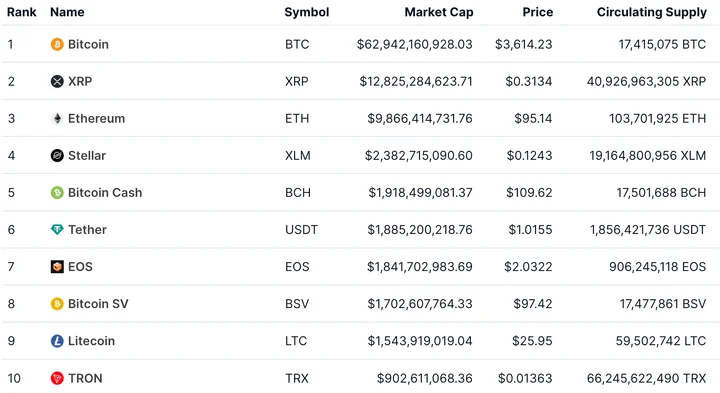
Historical snapshot of top 10 largest crypto assets (Dec. 2018)
In other words, we thought it was the perfect time to drop a 60-page deep dive outlining our bull case for BTC — so that’s exactly what we did.
The catalyst for publishing our original “State of Bitcoin” report was two-fold.
- In the short term, we strongly believed BTC’s price was finally bottoming.
- In the long run, we had even stronger conviction that BTC’s price would go much higher.
Back then, our core beliefs around BTC were relatively straightforward.
In formal speak, we believed BTC represented a first-of-its-kind, censorship-resistant, disinflationary asset that could facilitate peer-to-peer transactions without needing a trusted, centralized intermediary.
But more simply, Bitcoin was the most unique macro asset we had ever seen — the ultimate form of cross-border capital — and it sat at the heart of one of the biggest secular trends of our time.
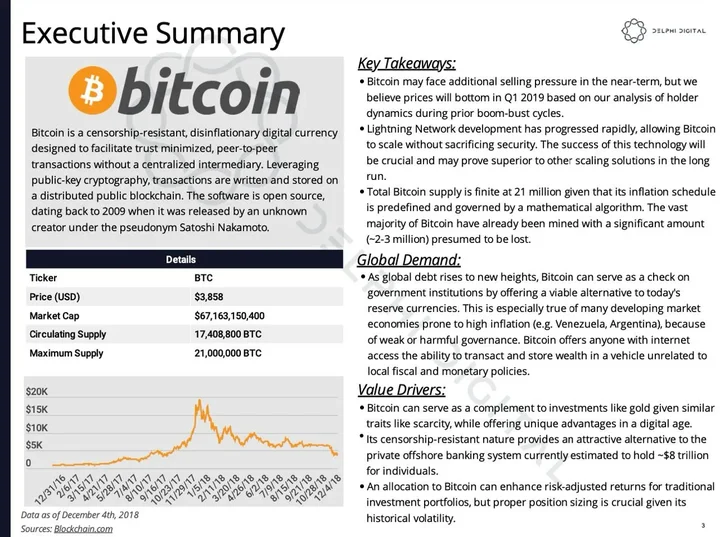
“As global debt rises to new heights, Bitcoin can serve as a check on government institutions by offering a viable alternative to today’s reserve currencies.”
Our bullish conviction in Bitcoin wasn’t rooted in blind faith or hopium. Our thesis was the secular trend of global currency debasement would continue — if not accelerate — and BTC offered the purest hedge against that future. If global currency debasement was the virus, bitcoin was the most effective antidote.
It wasn’t the only asset — or asset class — that would perform well in this scenario either. Stocks, real estate, and gold would all be beneficiaries of this trend, too, but BTC offered the highest beta exposure if our thesis proved correct.
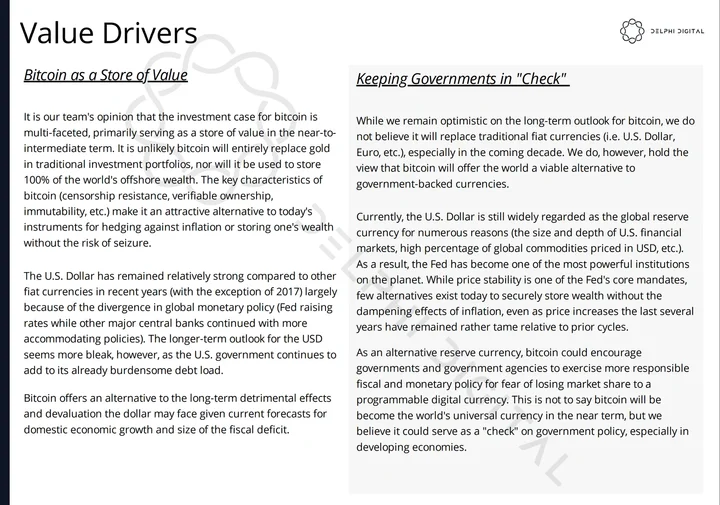
Despite our excitement, we were pragmatic. At the time, we didn’t say Bitcoin would replace all fiat currencies or that it would somehow circumvent the US dollar as the world’s global reserve currency. We didn’t say it would steal all of gold’s market share in investor portfolios or replace central bank’s foreign reserves.
Instead, we positioned Bitcoin as a viable alternative to the incumbent system — a “check” on governments and policymakers who grew increasingly dependent on debt to finance today by borrowing from tomorrow.
Our valuation approach was equally straightforward. Given one of the primary ways to value assets is through a multiple or income approach, it stood to reason that an asset like BTC, which had no cashflows, would be more comparable to something like gold. So, we began by comparing BTC’s potential market value to that of the investible gold market.
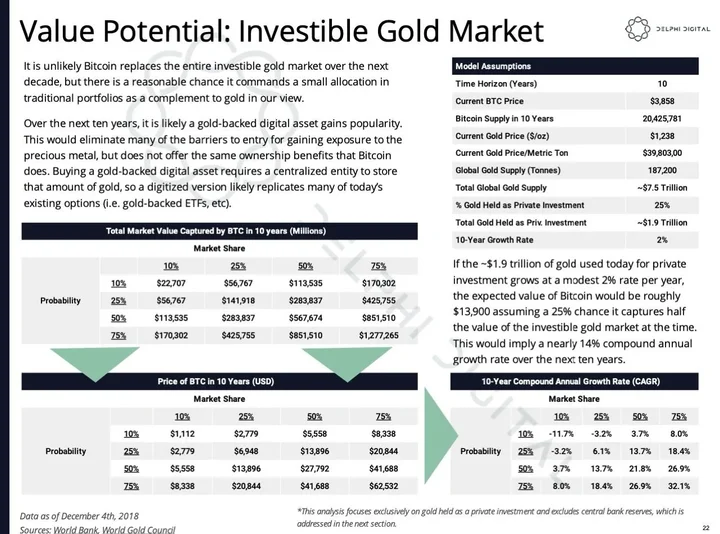
We then extended this analysis to include capital inflows from other potential sources, like individual wealth held in offshore accounts (which, at the time, was estimated to be >$8 trillion).
We also believed there was a decent chance that eventually, many central banks would come to view BTC as an attractive reserve asset for many of the same reasons they favor gold — “lack of credit risk, independence from any country’s economic policy, the limited size of resource, physical features such as durability and imperishability.”
“Over the long run, we foresee bitcoin serving as a staple allocation in traditional investment portfolios, central bank reserves, and as a suitable alternative for a portion of assets held in offshore accounts.”
The more we distilled down the potential sources of demand for BTC, the less fantasy-like our projections started to seem. We knew these didn’t represent all sources of possible demand, but they confirmed that if we were even directionally right, BTC would grow immensely valuable.
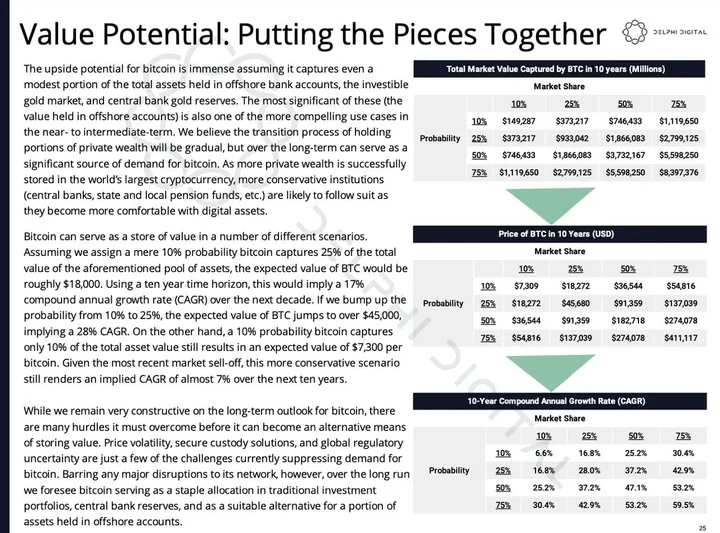
When we put the puzzle together, the size of the opportunity became clear.
We saw an asset that boasted the most attractive properties of gold (scarce, self-custodial) but was digitally native and cheaper to transact in and store; that had the potential to attract large pools of capital (investors/funds, offshore wealth, central banks, company treasuries, etc.); that if successful could one day mature into pristine collateral for wider use in financial transactions, and had the potential to even disrupt and reshape the traditional financial system altogether with its first-of-a-kind decentralized censorship-resistant network for global peer-to-peer transactions and value transfers.
What could an asset like that eventually be worth? It had all that going for it, and yet its total market value at the time was 1/12th the size of Microsoft or 1/6th the annual GDP of Denmark. Sure, it was volatile, but volatility cuts both ways. Given BTC’s relatively small size, we saw its outsize volatility as a defining feature, not a bug.
Little did we know less than 18 months later, a global pandemic would take the world hostage, and the crux of our bullish thesis would be turbocharged into high gear.
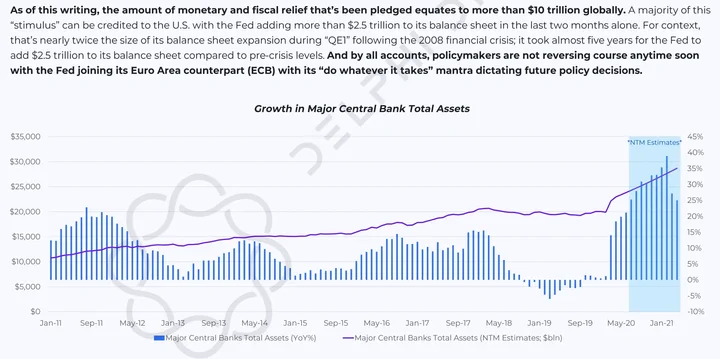
How It’s Going
Six years after our original “State of Bitcoin” report, that asset is now worth ~$100,000 per coin and has a total market value north of ~$2.1 trillion.
One hallmark section of that report focused on portfolio diversification and the benefits even a small allocation to BTC could generate.
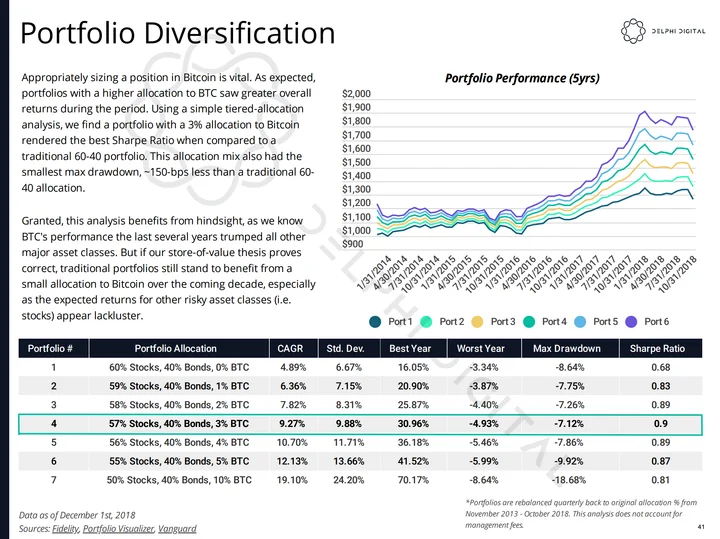
So, what impact would a small allocation to BTC had since then?
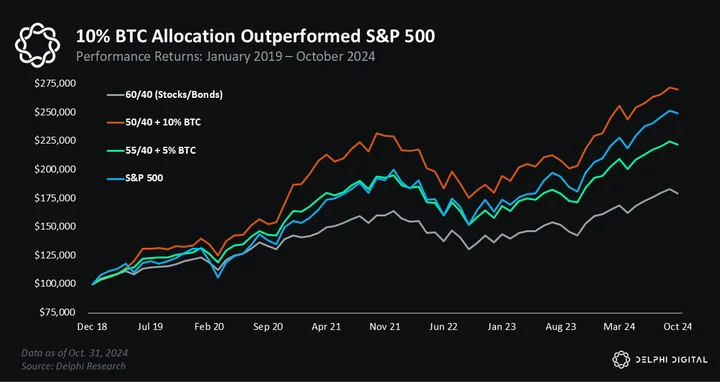
The analysis below shows the risk-return profile of several allocation scenarios, measured from January 2019 to October 2024, with quarterly rebalancing and dividends reinvested. We used a standard 60/40 portfolio as the benchmark to compare it to our original analysis.
As expected, portfolios with a higher allocation to BTC saw the highest returns overall.
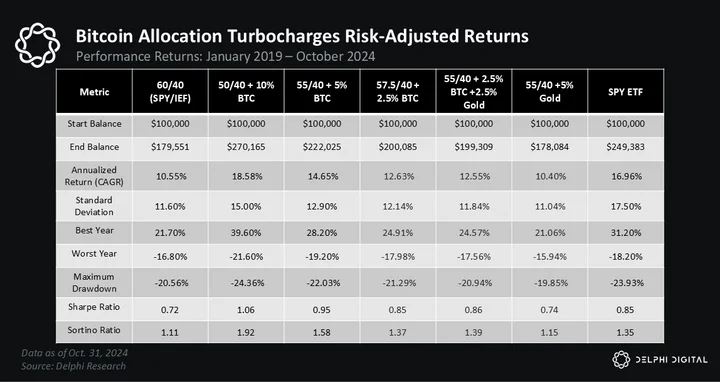
Unsurprisingly, a 10% BTC allocation outperformed all other portfolios. Notably, however, this portfolio also outperformed the total return of the S&P 500 outright by over 20 points — and did so with roughly the same max drawdown risk (~0.4% differential)!
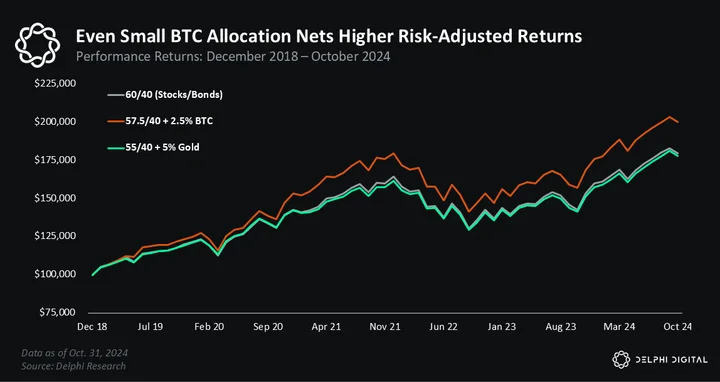
Even a 2.5% allocation to BTC would’ve generated superior risk-adjusted returns with a CAGR over 200bps higher than a standard 60/40 portfolio (equivalent to ~21% higher total returns).
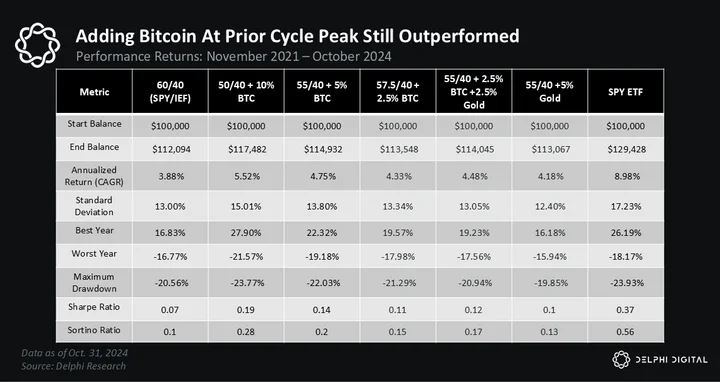
Hypothetically, even if you added an allocation to BTC at its November 2021 price peak, you would still outperform a traditional 60/40 portfolio.
Keep in mind this doesn’t even include BTC’s November 2024 gains, which, as of this writing, are >40% MTD!
And it still has more room to run. For starters, BTC continues to track its typical price cycle.
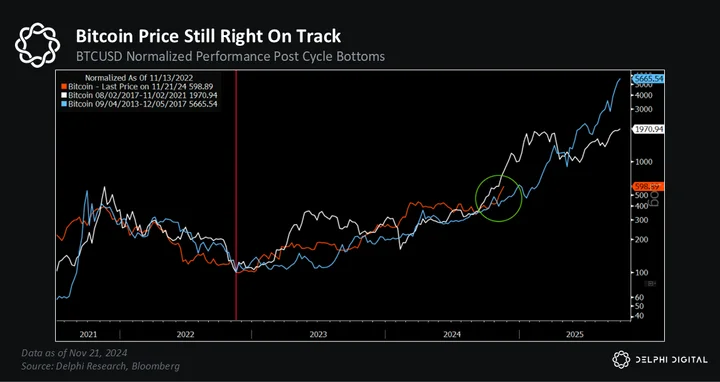
For more detail on why that’s the case and the real drivers of BTC’s price (hint: it’s not Bitcoin halvings), our past reports include much more in-depth analysis and supporting evidence on this topic (examples here, here, here, and here).
Even today, Bitcoin is still relatively small compared to conventional asset classes. BTC’s total market value is only 3% of total US public equity market cap (1.5% of global), 5% of total US public debt outstanding, ~12% of total global foreign reserve assets, and <30% of AUM held in money market funds.
BTC is creeping up the leaderboard, though…
At $91,150 Bitcoin flips Saudi Aramco
At $109,650 Bitcoin flips Amazon
At $107,280 Bitcoin flips Google
At $156,700 Bitcoin flips Microsoft
At $170,900 Bitcoin flips Apple
At $179,680 Bitcoin flips NVIDEA pic.twitter.com/6Ls81CRVbK— Creeper (@DegenCreeper) November 12, 2024
Having said all that, we certainly didn’t get everything right. Perhaps our biggest whiff was our early bullishness on the Lightning network and Bitcoin as a payments network. Back then, P2P payments were the main focus among Bitcoin developers, and the scaling challenges were less clear. Stablecoins hadn’t yet exploded onto the scene, and modern blockchains like Solana and Sui hadn’t been invented yet. So, payments seemed like a natural use case for the Bitcoin network.
Despite Bitcoin flopping as a payments network, we believe it ultimately optimized for the right thing — store of value. Bitcoin is now seen as a digital-gold-like asset that, similar to gold, doesn’t change a whole lot year over year. It’s more akin to a commodity than Ethereum, Solana, and most other crypto assets, which are more technology-like. Some may consider Bitcoin rigid and boring, but others see it as stable and safe. Larry Fink, the BlackRock Chieftain, happens to fall into the latter camp.

So far, investors seem to share Mr. Fink’s view on BTC as the Bitcoin ETFs have seen unprecedented demand.
iShares Bitcoin ETF (IBIT) has now surpassed iShares Gold ETF (IAU) in assets…
Did this in 10mos.
IAU launched in January 2005.
Absolutely wild. pic.twitter.com/dLi16A28Gc
— Nate Geraci (@NateGeraci) November 8, 2024
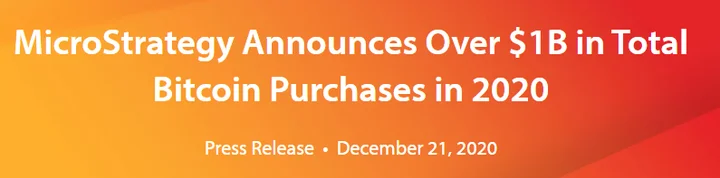
Alongside the passive ETF bid, Michael Saylor of MicroStrategy continues to make what is perhaps the greatest trade in financial markets history. He is leveraging his entire (relatively small) software company to buy as much Bitcoin as possible. It’s an extreme example of corporations adding BTC to their balance sheets, but it does shift the Overton window and make adding a few bps of exposure seems almost boring.
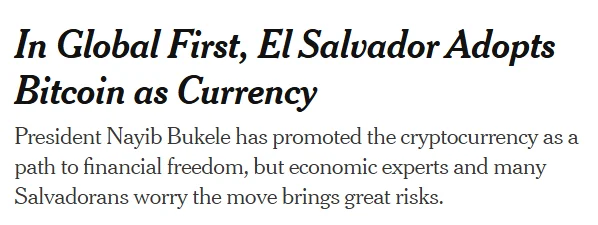
Further down South, President Nayib Bukele of El Salvador is also making history on the nation-state level with his investment strategy. Mr. Bukele has been buying BTC since last cycle and even made Bitcoin legal tender in 2021.
We believe this trend of corporations and nation-states adding Bitcoin exposure will only accelerate. The long-term catalyst here is just the steady growth and adoption of other crypto technologies like stablecoins, Layer 1 blockchains, memecoins, etc. A rising tide lifts all ships, and Bitcoin will benefit from the innovations across space. However, a more short-term catalyst is President-elect Trump. The Don has promised nothing short of a regulatory overhaul for crypto once he retakes office. Mr. Trump has also promised to create a strategic US Bitcoin reserve fund and open an official crypto role within the White House.
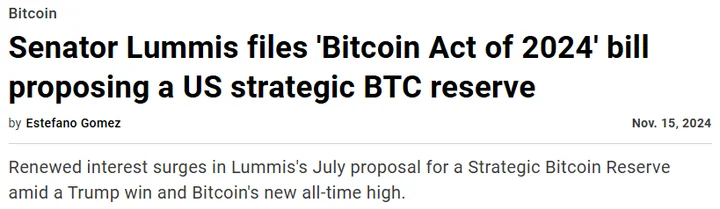
The recent price action has largely been driven by optimism over Trump’s pro-crypto agenda. How far he will go remains to be seen, but a US strategic reserve looks increasingly likely. This creates an interesting game-theoretic scenario for other countries. If they expect Trump to create a reserve fund and potentially go out into the open market and buy BTC, that creates an opportunity for them to front-run the US in buying Bitcoin. Whether any country is actually this agile remains to be seen, but it’s something to watch closely over the coming months.
One case study for future nation-state adoption is Bhutan. While El Salvador tends to get all the headlines, we believe Bhutan is the more interesting story. The small Himalayan kingdom is blessed with abundant hydroelectric resources, which it has leveraged to run a large-scale Bitcoin mining operation in recent years.

Bhutan discreetly started mining in 2019 through the government’s investment arm. And as of mid-November, the country holds 12,573 BTC, worth over $1.1 billion.
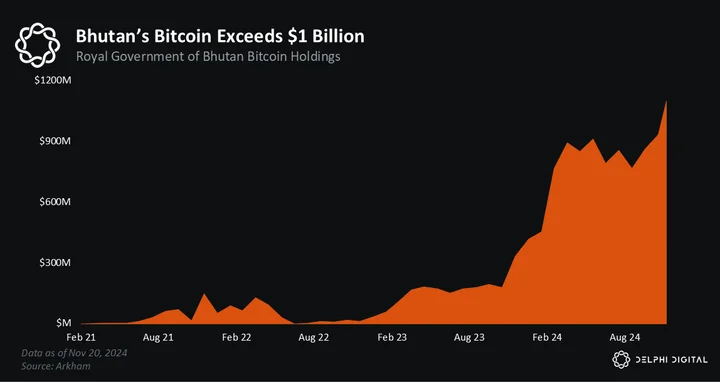
$1 billion may not sound like a lot, especially given Saylor’s stack. But the interesting angle here is how much $1 billion is in the context of Bhutan’s economy. Bhutan’s current Bitcoin balance is worth roughly 2x their foreign reserves and nearly half their annual GDP. The government made a generational bet on crypto and, in just a few years, changed the country’s trajectory.
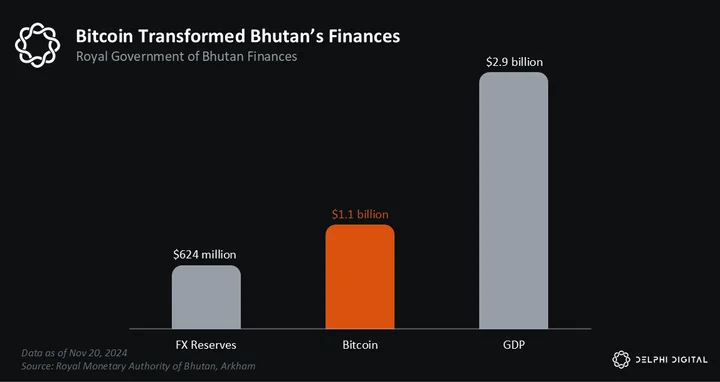
If other states replicate Bhutan’s strategy of converting excess energy to BTC, we could see a significant shift in how governments think about Bitcoin. Right now, most view Bitcoin (and crypto more broadly) as an asset to be taxed. But Bhutan has shown that Bitcoin can uplift an entire nation and offers an asymmetric bet on the future.
Going forward, we expect other small, energy-rich countries to adopt the Bhutan blueprint. The three places we are watching most closely are the Middle East, Africa, and Latin America. We expect at least one nation to join Bhutan and El Salvador in stacking Bitcoin in 2025, but we wouldn’t be surprised to see several nations embrace Bitcoin.
100k and Beyond
The future of Bitcoin is bright. Bitcoin, the network, knows what it wants to be and has largely calcified. Bitcoin, the asset, is being adopted at an unprecedented pace. And the underlying drivers of BTC’s rise — money printing, inflation, and geopolitical instability — show no sign of abating. In fact, we expect these global trends to only worsen over the next decade. Bitcoin offers a life raft. Millions of people worldwide are using Bitcoin to protect against these dangers. And a few forward-thinking leaders like Bukele, Bhutan, and Senator Lummis see Bitcoin’s potential to change the trajectory of entire nations.
Wherever Satoshi Nakamoto is these days, he’s probably smiling. The revolution he quietly started 16 years ago has set the world on fire.




0 Comments