
Report Summary
Summary
Somnia is building a network for virtual worlds and the open metaverse, where assets, experiences, and identities can move seamlessly across applications. Instead of siloed games and platforms, Somnia enables interoperability, composability, and shared ownership through blockchain infrastructure.
By combining creator tools, a virtual machine (SVM), and asset standards, Somnia aims to onboard both developers and users into a metaverse economy that is decentralized, scalable, and user-owned.
Key Takeaways
1. Interoperable Virtual Worlds
-
Current metaverse apps (Roblox, Fortnite, etc.) are walled gardens.
-
Somnia introduces open standards for assets, identity, and interactions so users can carry items/avatars across worlds.
-
Composability allows devs to remix and build on each other’s content.
2. Somnia Virtual Machine (SVM)
-
A specialized VM optimized for 3D environments, NFTs, and metaverse logic.
-
Built to support low-latency, high-throughput applications like gaming and real-time virtual events.
-
Provides cross-world interoperability, ensuring items minted in one game function in another.
3. Creator Economy Enablement
-
Provides tools for developers, artists, and communities to build virtual experiences.
-
Asset templates, SDKs, and low-code environments reduce barriers to creation.
-
Marketplace integration enables monetization of assets and experiences.
4. Modular Architecture
-
Somnia is structured as a layered, modular stack:
-
Base layer: SVM and core blockchain infra.
-
Middle layer: Identity, asset standards, interoperability protocols.
-
Top layer: Consumer-facing apps, games, and virtual spaces.
-
-
This modularity makes it flexible for both indie devs and enterprise-level projects.
5. Economic & Social Design
-
Incentivizes creators and users through tokenized economies.
-
NFTs serve as portable identity, assets, and credentials.
-
Governance designed to be community-driven with decentralized decision-making.
6. Market Position
-
Positioned as an “open alternative” to closed metaverses like Meta’s Horizon or Apple’s Vision ecosystem.
-
Leverages Web3-native strengths: ownership, interoperability, and decentralization.
-
Focused on scalability and mainstream onboarding, not just niche crypto audiences.
Conclusion
Somnia is building the infrastructure layer for the open metaverse, where digital identity, assets, and experiences are interoperable, composable, and user-owned. By combining a specialized virtual machine, developer/creator tools, and strong asset standards, it aims to empower creators while giving users freedom across virtual worlds.
If successful, Somnia could unlock the true vision of the metaverse: not a set of corporate-controlled silos, but a shared, decentralized, and thriving digital economy.
-
Web3 gaming is well past its speculative glory days. In 2021, the hype around novel onchain mechanics and the metaverse pumped early-stage games to billion-dollar valuations. This cycle, the mandate was different. Games need to evolve in design and scope to stand beside traditional titles, with blockchain as part of the tech stack, not the defining feature.
At the start of 2024, teams rushed to release their tokens. Later that year and into 2025, things got tougher as gaming tokens repeatedly painted the same bearish charts. Their poor performance meant teams could no longer reliably use their token generation event (TGE) to extend their runways. At the same time, pressure continued to mount as the market grew tired of the same playbook and rightfully demanded scale from these studios.
In January, we flagged that capital would be scarce for the long tail of games still awaiting their TGE. What followed was continued narrative fatigue, a shrinking crypto-native player base, and an onslaught of subpar game releases. The writing was on the wall. This year, several studios announced their closure, citing some combination of depleted cash reserves or failure to find product-market fit. As of May 2025, new gaming tokens had an average market capitalization of just under $19 million (a generous figure, considering it includes the Maplestory U and Gunzilla launches), with an average decline of 69% from their peak.
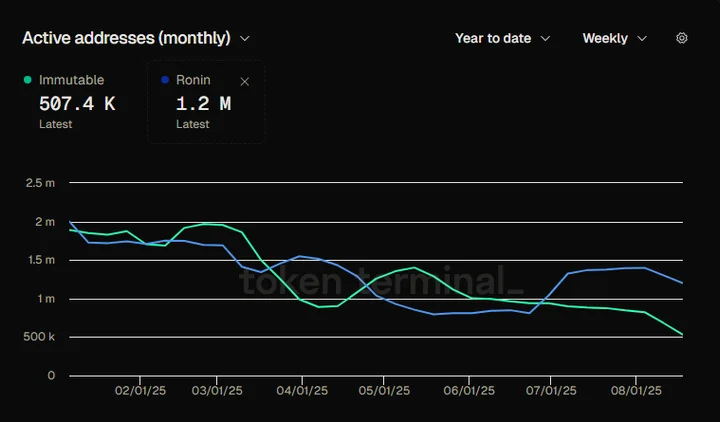
Top gaming blockchains were also caught in the crossfire. Ronin’s number of monthly active wallets fell 40% from 2 million to 1.2 million year to date. Immutable experienced an even worse decline, down ~70% in the same period. Many then turned to flagship launches like MapleStory U (MSU) and Gunzilla, hoping they would spawn vibrant ecosystems and optimistic price charts. MSU opened strong, peaking slightly above $3 per token and $3B FDV, now down to $0.80 with stagnant (but steady) daily activity. Gunzilla, despite a Binance listing and a budget in the region of AAA, continues to range around $250M FDV, falling short of market expectations.
Despite the lack of mindshare, underwhelming launches, and declining metrics, the core thesis remains the same. Games are powerful vehicles for introducing and showcasing blockchain technology. But for that to matter, the games need to be good enough to generate substantial revenue at scale. Blockchain mechanics and speculation alone aren’t enough, especially now that the crypto-pilled player base has shrunk. Web3 needs better content, not just more of it. To that end, we’ll explore why content is the best Trojan horse for adoption, where games fit into this process, and how new players like Somnia can carve out a piece of that pie in an age where blockchain technology is being commoditized and apps are leading the charge.
Content Remains King
The App Era
Content being an indicator of success shouldn’t surprise anyone who has tracked crypto over the last year. Applications (especially those in crypto) that either allow their users to engage with or consume the most content will win the attention battle and, by extension, generate the most revenue.
One way this has been expressed is through Pumpfun, which ultimately facilitates interaction with an uncapped amount of past and future content. What began as just a meme launchpad morphed into the marketplace for tokenizing trends and attention itself. As a result of finding PMF in a highly financialized environment, such as crypto, they’ve managed to generate over $800 million in revenue. Polymarket is another app in this category that periodically occupies significant mindshare.
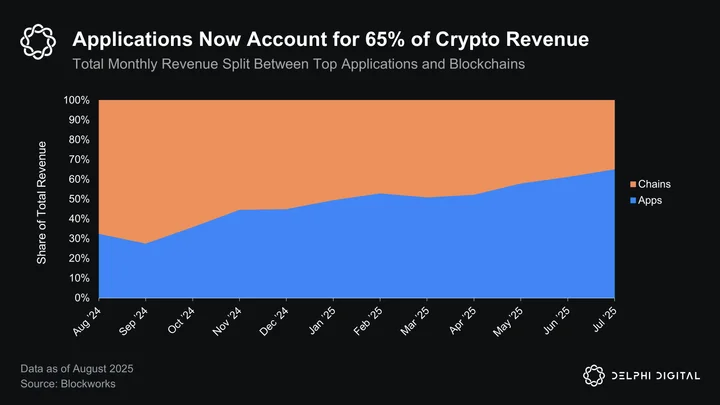
A second way is through apps that create their own content, rather than tapping into an existing stream of content. The key difference is that instead of latching onto known topics that already occupy the zeitgeist and are often tied to real-world events, these fresh content wells and stories exist in a self-contained environment. Trading apps dominate the first category, but entertainment apps, for example, games, are best suited for this category.
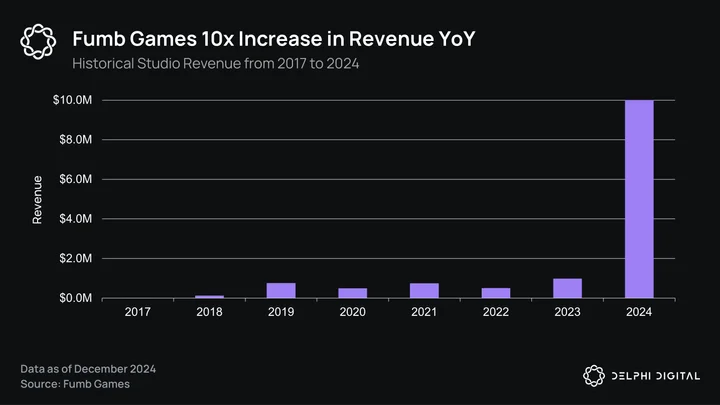
A key example here is Fumb Games. The idle game studio feeds a percentage of its revenues back to players in tiny amounts of Bitcoin. It leverages this engagement mechanic to subsidize user acquisition (UA) and boost retention. Focusing on its flagship titles Bitcoin Miner and Idle Mine, the studio reached over fifteen million total users and saw a 1000% YoY increase in revenue to $10m in 2024.
Similarly, the Mythical Games team has been executing on the same premise across its portfolio of games. Today, their roster is led by NFL Rivals ($5.4 million in 2024 revenue) and FIFA Rivals, which recently entered soft launch in July ahead of the upcoming football season and the 2025 World Cup.
Blockchain’s Value Add
Integrating blockchain features into these applications and creating entirely new subcategories allows for a unique set of advantages to crystallize:
- Global Liquidity Unlock
Stablecoins have slashed the cost of cross-border payments. They’ve created accessible and composable digital currency equivalents available to anyone at any time. Gaming uniquely benefits here. In our investigation of the Global South, we cited countries and regions such as India, Southeast Asia, LATAM (specifically Brazil), and MENA as key markets for unlocking further growth.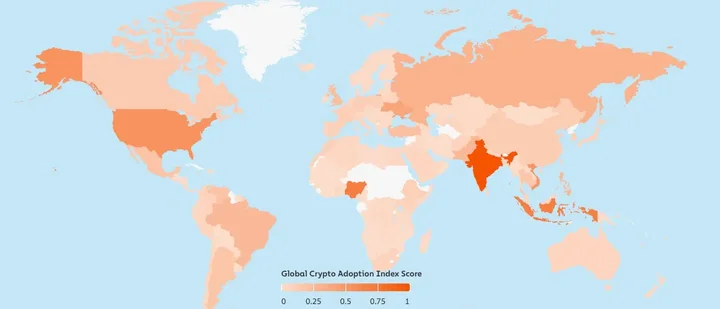 According to Chainalysis’s crypto adoption report, many of these same countries feature among the top 10 in adoption rates (India at #1, Indonesia at #3, the Philippines at #8, and Brazil at #10). Developers now have a unique opportunity to tap into these pockets of increasing liquidity, generating revenue from an expanding number of players with rising disposable income.
 - Subsidizing early User Acquisition (UA)
On the surface, crypto incentives can kickstart early user acquisition. However, the caveat here is that correct user targeting is crucial. What we’ve witnessed over the past two years, from ‘play to earn’ to ‘play to airdrop,’ is developers relying on a band-aid solution (some financial incentive) to garner any amount of attention they can. The problem is that most of the initial cohort attracted by these games are very extractive, only interested in selling their rewards as soon as possible before moving on to the next opportunity. - Composability and Creator Economies
Since a blockchain can publish game state, asset ownership, and economies into a shared layer with provenance and programmable liquidity, anyone, including developers, can read, write, and build on that information without requiring permission.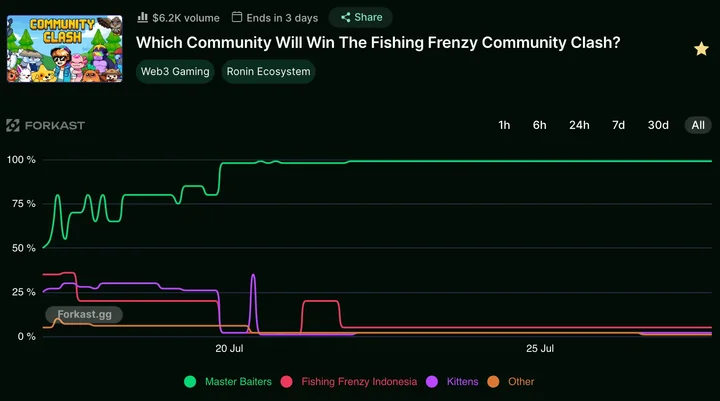
In broader trading and DeFi, this is widely understood, as trading bots like Axiom and Photon build upon launchers like Pumpfun. Similarly, Phantom recently announced its perpetual offering, which was made possible by tapping into Hyperliquid’s liquidity. In gaming, this could mean prediction markets, similar to Forkast, built on top of game event data, such as onchain leaderboards. - Token Flywheels
Done right, tokens create a virtuous circle by providing the initial impulse to kickstart a growth flywheel. Users earn rewards through play, staking, or proof of contribution, as well as product promotion. Ideally, they then spend, trade, or reinvest most of those rewards for the betterment of themselves and the protocol.similar.
– 3% fee on every coin (uniswap v4 pool)
– 1% to creator
– 1% to zora
– 1% to LP (thickens LP over time!)creator coins are paired with $ZORA, and content coins are paired with creator coin
This is the basic fee / flywheel system. https://t.co/U7Q5vZ4XSU pic.twitter.com/k9RNnh3pjC
— AzFlin 🌎 (@AzFlin) July 27, 2025
As is the case with subsidizing UA mentioned earlier, 1) relevant contribution metrics need to be set that promote the growth of the product, and 2) demand for the product needs to exist outside of being a vehicle for the acquisition of token rewards.
Crypto Gaming Today
Looking at crypto gaming today (distinctly different from “traditional” games using blockchain), the only ones maintaining real mindshare are variations of GameFi. Their primary purpose is to serve as gamified wrappers around speculation, built to engage crypto power users.
They’ve become standard tools for teams trying to bootstrap new ecosystems, functioning as mini-games within the broader social MMO that crypto has become. Alongside InfoFi, these experiences dominate the attention game because they offer the most efficient path to what drives their mercenary behavior: money.
Over two million dollars in wages on @playdegenarena in just a couple of days on Abstract.
Great products + distribution = PMF
No better place to build than @AbstractChain. pic.twitter.com/hFRO43Dkv5
— cygaar (@0xCygaar) August 19, 2025
In this context, gaming has shifted from being a leading differentiator to a supporting piece of a chain’s go-to-market strategy. Abstract housing two of the more popular GameFi applications (Gigaverse and Onchain Heroes) is proof of this theory. By leveraging a points system (referred to as XP), the Abstract team encourages engagement from its users and then pushes said metrics to signal a vibrant ecosystem.
Somnia’s Approach
Now enters Somnia, a team trying to bring blockchain to the uninitiated on both the infrastructure and application fronts. Somnia is a high-performance L1 built from the ground up to support massive, fully onchain applications that are not restricted to but especially suited for games and virtual worlds. They’re positioning themselves as the rails for the fully onchain world of tomorrow, signaling strong alignment with a narrative (onchain gaming and virtual worlds) that is going through its toughest period in crypto to date.
Team and History
For most of Improbable’s existence, the company has been obsessed with one of the most complex problems in gaming: scaling concurrent players. In a report we published last year, we explored the challenge of hosting a large number of simultaneous players in a single shard. Maintaining visual fidelity, low latency, physics, and other systems at scale has long been costly, ultimately constraining the experiences developers can build. Every time you double the number of players in a shard, you can roughly expect to quadruple the amount of data that needs to be shared.
Since 2012, the team has been working on tech to bend that cost curve. The effort resulted in SpatialOS, a platform that addressed the data problem by dividing a large world into smaller, interconnected shards, which are processed across individual servers. Combined with the acquisition of Multiplayer Guys (MPG), Improbable was now able to extend into live service operations and get closer to the action.
Translating Improbable’s knowledge of multiplayer architecture into MPG’s services put the company in a position to work on huge franchises like Call of Duty, Grand Theft Auto, and Fall Guys, where they handled parts of the engineering for their multiplayer infrastructure. That business unit was quite successful, and within four years, it saw roughly ten times revenue growth before being sold in 2023 for £76 million.
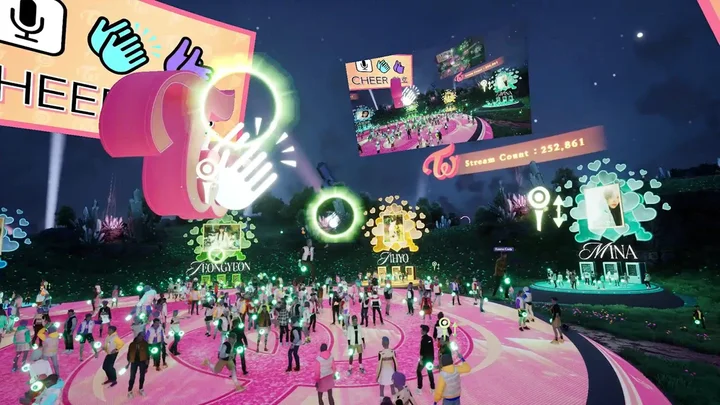
The team realized that while they had pushed the tech frontier, they had not broken through on the experience layer, and MSquared was formed to close that gap, raising $150 million in 2022. Said entity now operates Morpheus, the spiritual successor to SpatialOS. A virtual‑worlds‑as‑a‑service platform reportedly capable of hosting up to 30,000 people simultaneously. Morpheus helped them secure collaborations with Major League Baseball and power virtual listening parties for a well-known K-pop group. According to Herman Narula, cofounder of Improbable and Somnia, the unit scaled up from hosting about 30 events in 2023 to more than 100 in 2024.
As many Improbable units have been shut down, sold off, or spun out as independents, one realization becomes clear. Improbable has spent years building technology to varying degrees of success and has come to recognize the importance of creating and leading with content, in addition to the infrastructure. That two-lane strategy is what led the company to fund the creation of Somnia, as it positions itself not only as a blockchain but also as a game publisher and platform for onchain experiences.
Improbable once addressed the multiplayer bottleneck of coordinating tens of thousands of players in real time. Somnia is now targeting the onchain equivalent of processing a high volume of interdependent transactions without breaking under load. That’s where one of its key architectural implementations, accelerated sequential execution, comes in.
Accelerated Sequential Execution: Scaling the Hot Path
One of the great fallacies of blockchain scalability is that parallel execution can solve everything. If CPUs have multiple cores, and blockchains process many transactions, why not run those transactions in parallel? The problem is that parallelism only works when transactions don’t touch the same state.
In practice, the opposite is often true. Load spikes in blockchains are usually correlated events and not random, disjointed activity. During the Otherside Otherdeed mint on Ethereum, nearly all transactions attempted to mint from the same contract, hammering the same state slots. A DEX might process a variety of trading pairs, but true load spikes occur when volatility concentrates on a single asset, e.g., a USDC depeg, where everyone races to the same liquidity pool. This leads to every transaction converging in on the same state, forcing parallel execution paths to serialize anyway. The image below contrasts blocks that have few vs significant sequential dependencies.
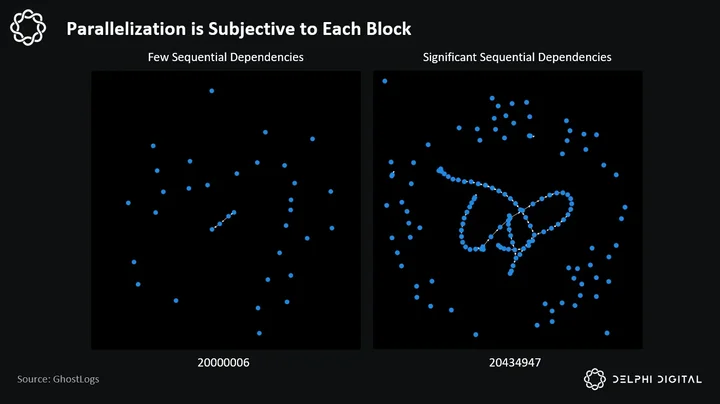
Amdahl’s law states that the theoretical speedup you can achieve with parallel execution is limited by the fraction of the workload that is inherently sequential (cannot be parallelized). Based on Paradigm’s historical analysis of Ethereum data, 80% of storage slots are accessed independently. This could theoretically result in a 5x improvement in execution.
Parallel Execution is no holy grail, as most marketing teams portray it. Parallelizing the EVM alone will not result in breakthrough scalability. Optimizations across state growth and state access need to be made. Otherwise, just maximizing transaction execution will lead to uncontrolled state growth, higher fees, and greater centralization due to heavy hardware requirements.
Solana’s Sealevel and Sui’s MoveVM employ parallelism through upfront account declarations or object ownership models, but shared state still forces sequential fallbacks. Monad attempts speculative parallelism in an EVM-compatible setting, predicting independent transactions and rerunning conflicts. Yet, all these methods either constrain the developer or waste compute in retries.
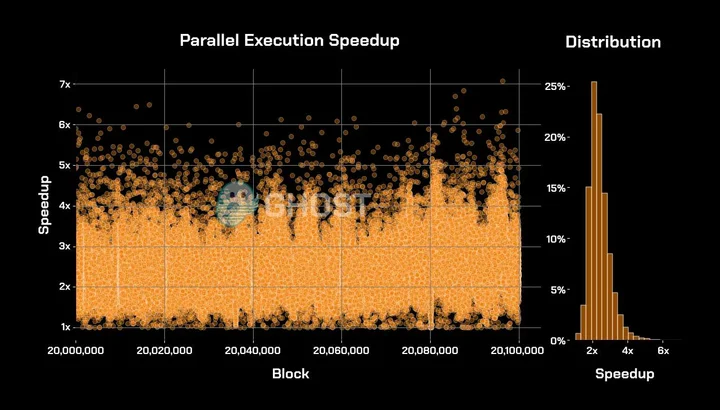
Somnia’s Contrarian Approach: Make Sequential Execution Fast
Somnia optimizes for the only path every blockchain transaction must take in the worst-case sequential execution. The premise is simple: if you can’t avoid serialization under load, then make that serialization as fast as physically possible.
Somnia achieves this via Accelerated Sequential Execution (ASE), compiling EVM bytecode directly into native x86 instructions. Most EVM chains, including Ethereum, use an interpreter that loops through EVM opcodes, maintaining an artificial stack in software. This is inherently slow. The EVM itself, being stack-based, also introduces runtime inefficiencies like redundant operations and runtime constant generation.
Somnia’s custom EVM compiler translates this bytecode into native machine code, optimizing away redundancies, inlining constants, and collapsing operations. The outcome is near-native performance, comparable to handwritten C++ implementations of the same logic.
Benchmarks show Somnia can execute ERC-20 transfers in hundreds of nanoseconds, pushing the upper bound to millions of TPS on a single core. Somnia’s max theoretical TPS stands at 1,000,000 in contrast with other chains.
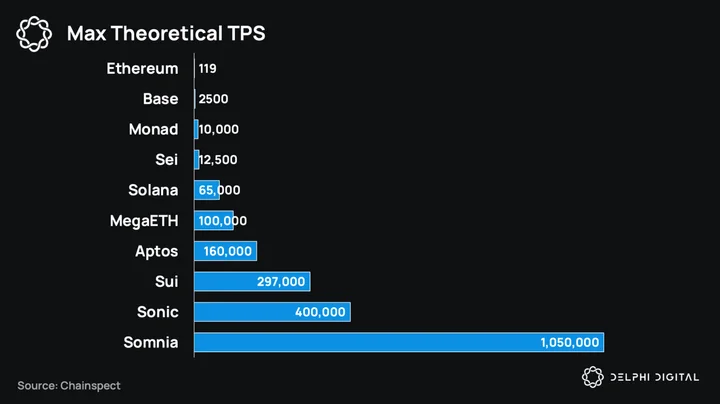
Hardware-Level Acceleration, Not Software Speculation
Somnia also leverages the hidden parallelism baked into CPUs. Despite appearing sequential, modern CPUs execute instructions out-of-order, pipelining operations like memory fetches and arithmetic in parallel within a single core.
For example, an ERC-20 transfer typically involves:
- Hashing the sender’s address
- Fetching the sender’s balance
- Hashing the recipient’s address
- Fetching the recipient’s balance
Interpreted EVM would process these sequentially: step 1, then 2, then 3, then 4, total ~500ms. But compiled native code allows the CPU to pipeline steps 1 and 2 alongside 3 and 4, halving latency to ~250ms.
IceDB
The State Access Bottleneck
Blockchain performance has always been constrained by more than just how fast you can execute transactions. State access is the real bottleneck. Every transaction reads from and writes to state, and the underlying databases that most chains rely on, such as RocksDB and LevelDB, were not built for the access patterns of a blockchain. These general-purpose databases optimize for write throughput, but read latency is unpredictable. A read might resolve in RAM or fall through to SSDs, but the performance delta between the two can be as wide as 1000x. That is not sustainable when finality is measured in milliseconds.
Ethereum is the classic example of the problem. State on Ethereum is stored in Merkle Patricia Trees layered over LevelDB. Every read or write involves multiple random accesses compounded by the need to propagate changes up the tree to compute a new state root. With Ethereum’s state size clocking in at 245GB and growing by 14GB per week, the gap between theoretical throughput and practical latency widens as the chain ages. Scaling execution alone does not fix this. Without efficient state access, blockchains remain stuck.
IceDB: Determinism at the Storage Layer
Somnia approaches the state access problem differently than other chains. Its custom-built IceDB is designed to remove variability in how data is read and written. The database tracks every read and write, whether it comes from RAM, cache, or disk, and ties those operations directly to resource consumption. This allows Somnia to price gas based on actual hardware load rather than relying on an arbitrary cost model. IceDB delivers deterministic latency for reads and writes in the range of 15 to 100 nanoseconds, an order of magnitude faster and more predictable than generic databases.
IceDB also includes native snapshotting. While most blockchains reconstruct Merkle trees to produce verifiable state, IceDB can generate snapshots on demand, reducing the computational overhead of state proofs and improving network responsiveness.
In Contrast to MonadDB and SeiDB
Other teams tackle state access differently. Monad leans into speculative parallel execution, which requires a database that can juggle multiple reads and writes at once. MonadDB handles this with Linux io_uring for async I/O and a Patricia Tree built directly into memory and disk. It even supports writing straight to block devices, cutting out filesystem overhead and reducing SSD wear. These choices make MonadDB fast under parallel load, but they don’t give each transaction predictable latency or tie gas pricing to actual hardware use the way IceDB does.
Sei takes another path, focusing on operational efficiency. Its SeiDB keeps an active state in a memory-mapped IAVL tree (MemIAVL) and pushes older state into a pluggable backend like PebbleDB or RocksDB. This shrinks the active state footprint by 60%, slows historical data growth by 90%, speeds up state sync by 12x, and cuts block commit latency by 287x, effectively doubling TPS. But like MonadDB, SeiDB optimizes for throughput rather than deterministic performance. Gas fees are still disconnected from hardware load, which means it doesn’t use the resource-priced model IceDB introduces.
Multistream Consensus: Scaling Through Decoupling
Most chains also couple data production and consensus, which means blocks carry both the data and its proposed order and are finalized step by step. Ethereum, Solana, and most Cosmos chains work this way. It limits throughput and introduces latency swings under congestion.
Somnia separates the two with Multistream Consensus. Each validator produces its own data chain, an independent sequence of transaction blobs that can move at its own pace, even if it forks or publishes bad data without threatening safety. Consensus runs separately on a consensus chain that finalizes only the heads of these data chains, then merges them into one global execution stream via a deterministic ordering algorithm.
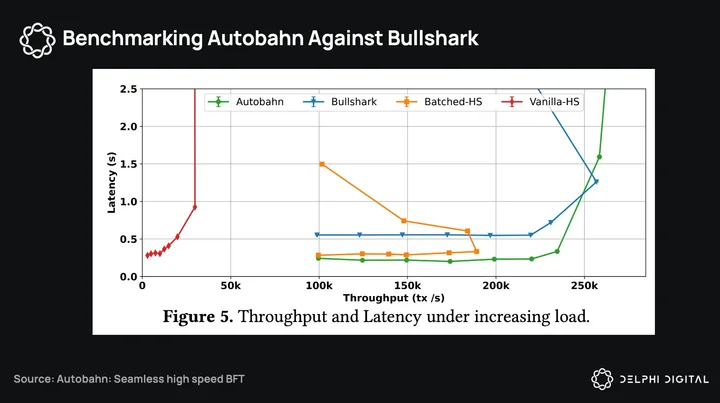
This design has three clear payoffs:
- Validators can push data at 1 Gbps, fully saturating hardware without waiting for consensus.
- Network slowdowns or validator outages don’t stall the protocol.
- Compression layers across data chains reduce bandwidth and storage costs.
Sei’s consensus also uses the Autobahn model with the same core idea of separating data from ordering, using multiple proposers and Proof of Availability (PoA) to certify data without full replication. Somnia skips PoA and instead focuses on raw throughput and compression, ordering everything after the fact. Both aim to break the single-proposer bottleneck, but Somnia optimizes more aggressively for bandwidth and deterministic execution, aligning with its broader design philosophy seen in IceDB, tying network performance and resource pricing directly to the underlying hardware.
Strategic Positioning
Somnia’s core philosophy is straightforward. The chain that wins is the one with the most activity, not just the boldest technical claims. So far, every design decision points to the same goal of developing and sustaining a robust, lively onchain ecosystem.
To get there, think of onchain data as the raw material of composability. The team urges developers to record and publish far more than NFT asset relationships. They want match results, leaderboards, quest completions, and social interactions recorded and published to the chain.
In their view, the richer and more varied the shared state, the easier it becomes for other builders to spin up new experiences. The more the network knows about what’s happening inside its apps, the more personal and bespoke tools, applications, and entertainment layers can bloom on top.
Somnia is also trying to relieve developers of the cumbersome parts of bringing a game onchain. If they want to facilitate the idea of a flourishing, interconnected world of experiences, wallet abstraction, cross-game identity, and asset standards cannot be forced upon the studios. Somnia has to make those primitives simple to integrate. If they succeed, developers can focus on creating something gamers want to spend money on. Players, along with their items and progress, then ideally flow between games or find themselves interacting with a myriad of apps while remaining largely unaware of the underlying mechanics.
Somnia also understands that a studio’s need for outside help expands beyond integrating a smart contract wallet. If they genuinely want teams to focus on the game, then marketing, advisory, and distribution capabilities need to be integrated into the stack for them to be genuinely competitive. It’s easy to see why. The gaming sector is undergoing a transition phase as economic pressures increase across multiple fronts:
- Contracting growth: Global games revenue in 2024 grew just 3.2% year over year (compared to a CAGR of 9.9% from 2017-2019). This stagnation reflects the lack of significant platform, distribution, or content innovation following the post-COVID growth spike. Slower top‑line growth would be manageable if costs were flat (they are not).
- Rising budgets: From 2017 to 2022, development budgets climbed at roughly 6% CAGR, driven by higher Western labor costs and escalating marketing spend as studios fight for attention outside the top six “forever” games.
- The cost of discovery: Steam still dominates PC digital distribution, with roughly an 85% share of the market. Teams are therefore forced to drive marketing spend to wishlists, which, although effective, are seen as relatively inefficient due to the limited visibility into the nature or path to a wishlist. Mobile had similar problems, as Apple made it much more challenging to target whales, and, by extension, made advertising less effective, driving up demand for limited ad slots.
- Playtime concentration: Player numbers continue to rise on platforms like Steam, yet playtime is consolidating around a select few names. Older live service titles (the same forever games) account for more than 67% of hours, and that number climbs to 92% if you include games that are at least 2 years old.
Varying combinations of the above factors, coupled with subpar production value, have led to some colossal failures like Concord (rumored $400 million budget) or the first of its kind, “AAAA” game, Skull and Bones, from the French giant, Ubisoft. The result is both an increase in risk aversion among publishers and VCs and a heightened focus on squeezing more from existing players. Typically, this is expressed as more aggressive monetization via a mountain of microtransactions.
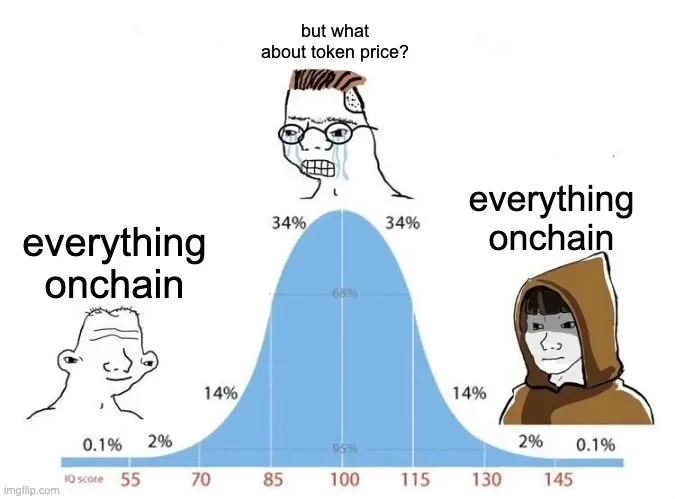
Therefore, if a publisher can create alternative ways to accrue value, that publisher becomes an attractive partner for teams trying to launch into a crowded market. That is the opening Somnia is chasing. The unlock occurs when they discover how a chain can engage and distribute in a novel manner while enabling new experiences and revenue streams that do not rely solely on selling millions of supplementary add-ons. In their words, Somnia does not win by fixating on token price but “through sheer traffic, transactions, and users.”
Ecosystem
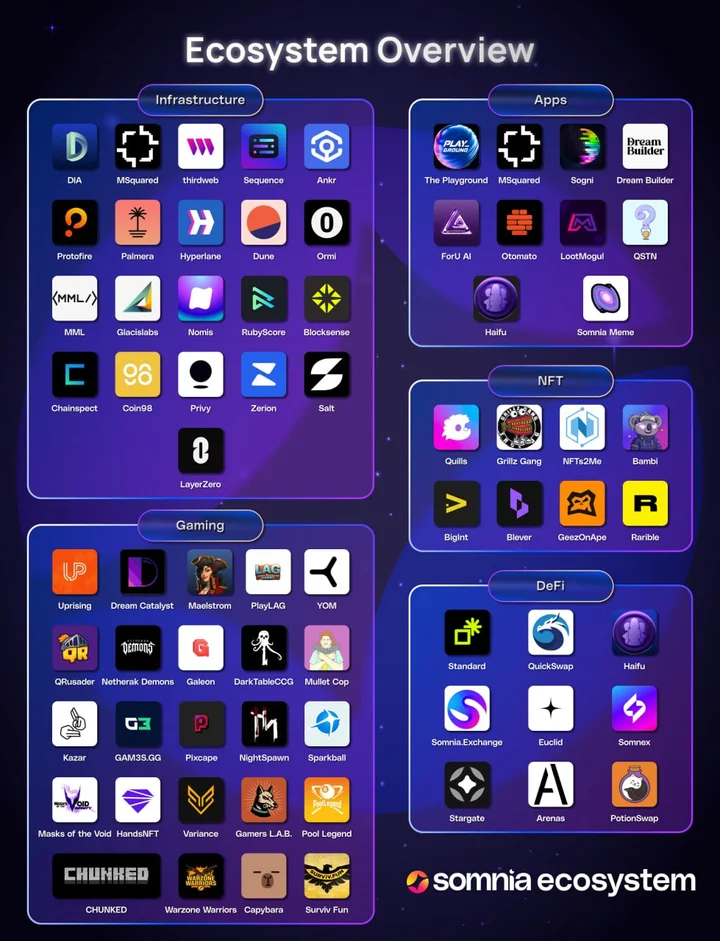
Somnia’s ecosystem rests on three key pillars: the tools and protocols that are created, then streamlined for all partners, the accelerator to ensure key parties utilize the full capabilities of the Somnia stack, and the applications themselves, which bring theory into practice and validate their strategy at scale.
Tools
The Somnia team has demonstrated its understanding of the need to simplify blockchain mechanics for game developers. To this end, they continually go through a cycle of creating new tools and perfecting their design with a core set of partners. Once everyone is happy, these are then shared with the broader network.
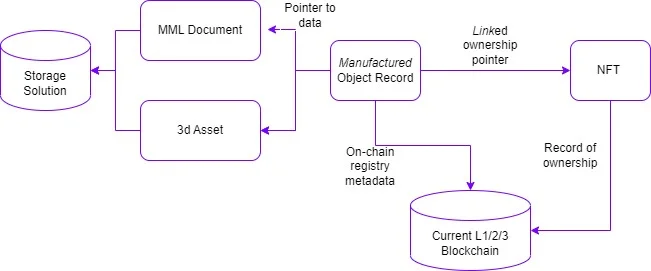
SOM0 (shown above) standardizes the creation of virtual objects and the storage of their metadata. In essence, they’re making it easy for people, places, and objects to be addressed, referenced, or transferred. SOM1 then extends this vision from just the objects to the virtual worlds themselves. It breaks down a virtual environment into its constituent addresses, groups of smart contracts, and the required data storage. Every space can now be viewed as a combination of these three categories of Legos. Any entity (address) can be added to any world, and so can any ruleset (smart contract), and it may reference the data about any or all objects inside that world or any other.
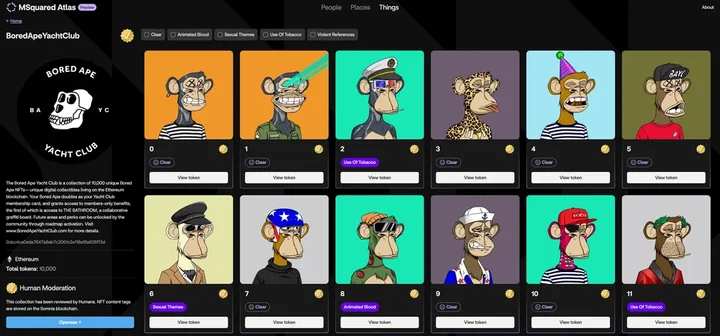
MSquared recently launched Atlas, which appears to be an evolution of the two aforementioned cornerstones of Somnia. Currently, it’s a cross-chain NFT indexer with intentional systems designed to protect and enforce creator rights. Looking ahead, they plan to expand their capabilities to ingest data from virtual worlds and global user activity.
If the first three names are centered around enabling novel onchain interactions, these last two exist predominantly to make Web3 less daunting for new developers. Somnia Builder, powered by Sequence, is a low-code solution that enables teams to create onchain games or apps. Anyone can now easily set up game logic, drag and drop assets, and hit publish. Similarly, Etherbase makes it easy for traditional game devs to have bilateral communication with a blockchain. Reading and writing inputs won’t require knowledge of Solidity and will feel like interacting with just another API.
Accelerator
Somnia’s Dream Catalyst Accelerator, launched in collaboration with Uprising Labs, serves as a tangible demonstration of the close working relationship between the two entities. Rather than wait for studios to wander in and build on the L1, Somnia is seeding the chain. The basic idea is that many game developers are curious about blockchain yet lack one or more of the three key inputs: time, capital, or in-house Web3 expertise.
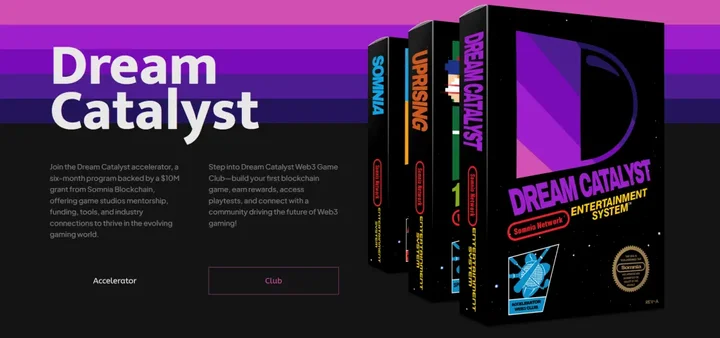
The accelerator effectively closes those gaps. Funding, hands-on mentorship, and development support are packaged with Uprising’s knowledge in community management, tokenomics design, and token go-to-market strategies. Speaking with one of the teams from the initial cohort of games, it appears the accelerator is doing a good job of opening the teams’ eyes to what’s possible onchain. According to the same review, both Uprising and Somnia have been very hands-on from the start, immediately delivering results, particularly in seeding their community with an initial group of power users. It remains to be seen how sticky these users will be, however, since a questing system is currently built into the Somnia testnet experience, and the game has yet to implement monetization.
One reference point is Epic’s MegaGrants program. The program grants recipients a capital injection of $5,000 to $500,000 to support projects built on Unreal Engine. Recipients keep complete control of their IP and are also allowed to publish wherever they choose. Among them was, for example, a 2021 grant recipient, SHIFTUP and their Project Eve, now better known as Stellar Blade, which recently surpassed 3 million copies sold. In Web3, Sky Mavis launched its Ronin Forge program to recruit external studios into the Ronin ecosystem. Accepted teams received grants of up to $50,000 (paid in RON), as well as direct access to Ronin infrastructure and community channels.
Applications
Somnia’s application layer is mostly centered around gaming, with most projects either being games themselves or protocols designed to enhance the experience of those games. Beyond gaming, the ecosystem is starting to check many of the boxes expected of a network in 2025 while still having room to broaden its scope.
Quickswap, Somnia Exchange, Somnex, and Standard Protocol together cover core trading needs, giving users the choice between an AMM or a more sophisticated central limit order book (CLOB). For easy NFT distribution, creators can launch collections through Blever. With AI-driven narratives emerging as one of the stronger themes this cycle, Somnia also supports platforms such as Haifu, a crowdfunding protocol for AI-managed funds, and Otomato, which enables automated DeFi strategies.
Once all current Somnia ecosystem games are live, they will have a broad enough portfolio to gain a clear understanding of how different play patterns and asset models add value to the network. In wanting to cover a wide range of apps, it also makes sense why they haven’t leaned into any AAA titles and have honed in on a few mobile and indie titles to AA titles. Currently, most games are still months away from a public release, and their web3 implementations are relatively early, having either issued a set of NFTs or begun publishing in-game events on the blockchain.
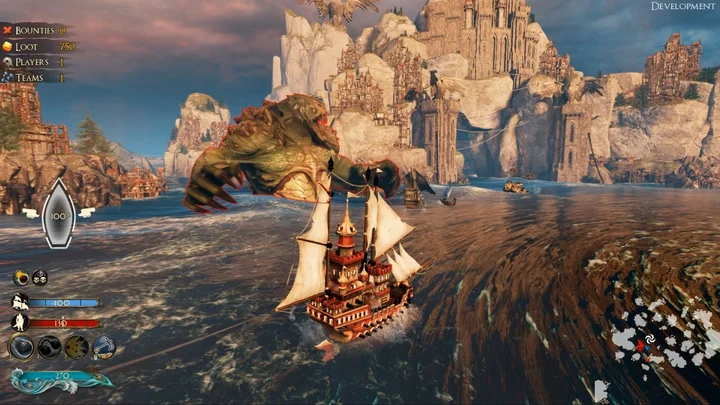
Maelstrom is a fast fantasy naval battle royale where Orc, Dwarf, Human, and Undead ships fight, grab loot, and try to outlast each other as the dangerous sea zone closes in. Dark Table offers a four‑player collectible card game that thrusts players into engaging with politics and the art of war. Every single card and deck in the game, as well as the marketplace they’re traded on, will be onchain.
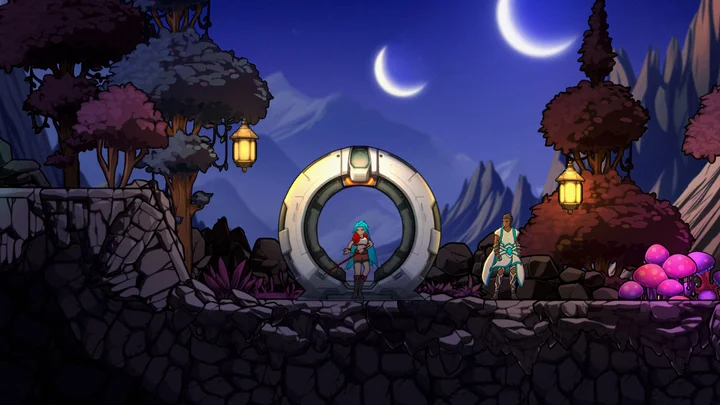
Roguelike loops are a visible subtheme within the ecosystem and for good reason. From 2024 hits like Balatro to long-standing favorites such as Hades or Slay The Spire, the genre has become increasingly popular due to its endless replayability. Somnia features Masks of the Void, where you play as Iret fighting to prevent a “Neverending Night”, Variance (shown above), an anime roguelike with RPG progression, and QRusader, where scanning any QR code puts players in a unique run where they’ll dash and slash their way to the end before doing it all over again.
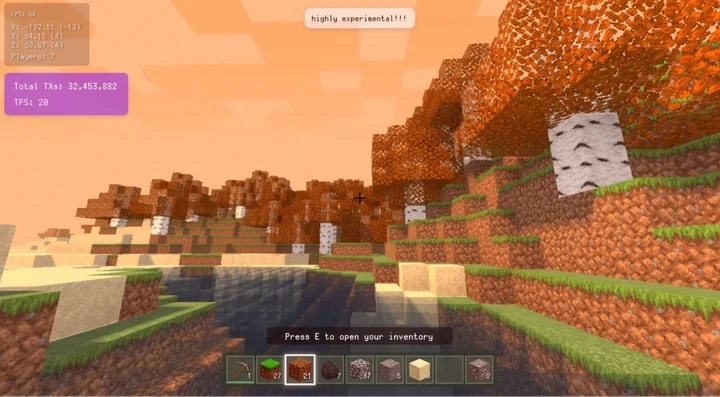
Chunked rounds out their offering as a voxel sandbox MMO similar to Minecraft. The key difference is that everything is on chain, from player actions such as mining or crafting to user inputs as simple as moving from one coordinate to the next. The prototype was shipped by MSquared within 3 weeks and generated 250m transactions during a 5-day event. The team leveraged their Etherbase infrastructure to strip out the traditional game server, register world logic and data directly on Somnia. Consequently, every block, event, and inventory change is now an open, composable primitive that anyone can query, fork, or extend.
The Web3 Publisher
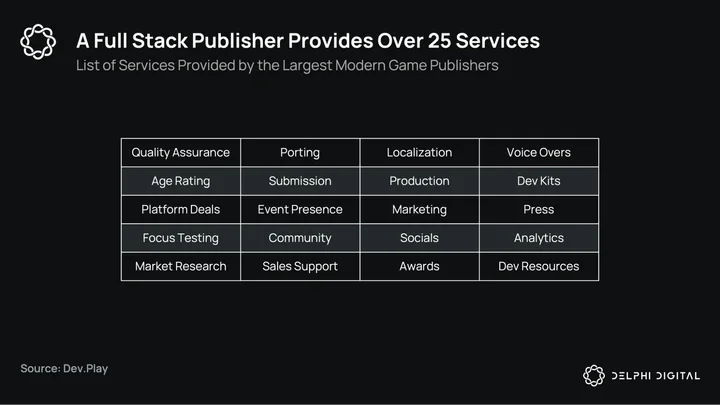
Traditional publishers typically provide a combination of capital, development expertise, marketing reach, distribution ties, and ongoing operational support. Should Somnia become essentially a service provider and publisher for their ecosystem, you’ll be able to group their efforts generally into one of the three main buckets: financial, marketing/distribution, and development/production support.
Funding
Publishers usually provide financial support at different stages. Some arrive just before the initial marketing campaign, while others support development from the outset. Structures vary, although milestone-based relationships are common to keep projects on schedule and ensure incentives are aligned.
Because the team isn’t obsessed with pouring all their resources into one type of blockchain application, they’ve spread bets across titles, genres, and geographies. They are not necessarily interested in fishing from the current pool of web3 games. Instead, they want studios that have already shipped (or at least proven they can ship) and are curious about what web3 tooling, combined with their funding, can enable.
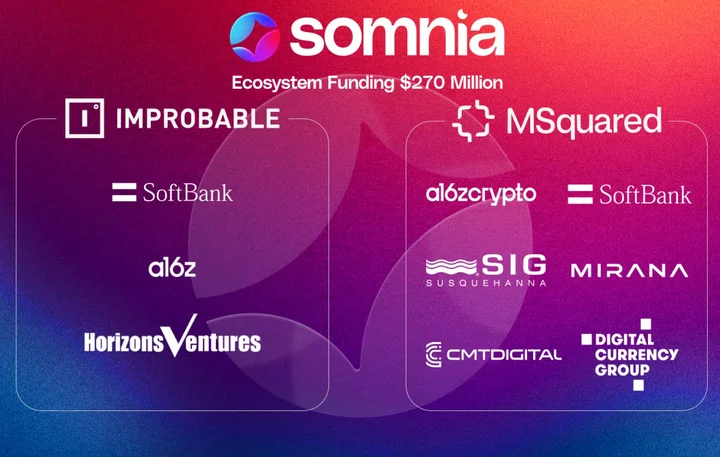
Funding for this initiative primarily comes from two sources: an approximate $270 million ecosystem fund co-funded by Improbable, MSquared, and the Somnia Foundation, and a more hands-on Dream Accelerator, which has $10 million in initial capital.
Development and Production Support
This bucket is the unglamorous grind of helping teams develop, launch, and run the game. It encompasses steady production oversight, realistic milestone planning, quality assurance to catch bugs and performance issues early, localization to maximize global reach, age ratings and platform submissions, as well as practical tasks such as porting to additional platforms and setting up analytics.
On the Web3 side, it could mean a seamless wallet and transaction flow for first-time users, tokenomics design, and ensuring that any blockchain features don’t trigger platform policy issues. Handled early and in parallel, these services pull forward launch timing instead of triggering numerous delays, which has become all but standard in web3.
Out of the three buckets, this is arguably the most challenging to service at a high level due to the numerous systems required to execute well. In our eyes, the short- to medium-term goal for Somnia is not to be the best, but to be adept at providing as many of these services as possible. In an ideal world, a game studio would have very few areas requiring third-party support once they’ve entered this ecosystem.
Marketing and Distribution
The publisher’s role here can be simplified into two main functions. Getting the game onto the right platforms and getting people to play it. Exact deal terms vary, but the marketing portion typically spans campaign strategy, trailers, press beats, digital or physical event placement, and creator activations. The more established the relationships across press, platforms, and creator networks, the less the studio has to build up from scratch.
This is where Uprising fits into the frame. Uprising describes itself as a Web3 publisher in its own right, staffed by a mix of Web3 and traditional gaming professionals who together have helped launch over 100 games. Thus far, their team has been doing most of the heavy lifting in vetting and approving the current Somnia games portfolio. At least five of the titles now associated with Somnia were first introduced by Uprising when it was positioned as a gaming-focused Ethereum Layer 2.
Having a publishing partner with experience in the traditional game industry could give Somnia a leg up. As competing chains realize the addressable market for crypto native games is minuscule, it should then become clear that meaningful scale lies in targeting a more traditional audience. If the tweet below is accurate, we’ve already seen signs of chains issuing user acquisition grants to teams in the hopes of driving value back to the chain.
It’s refreshing to see @avax back @playoffthegrid with the massive marketing campaign they are doing right now. It shows that Avalanche is serious about being the top gaming chain. 🫡
— Gabriel Leydon (@gabrielleydon) October 11, 2024
Distribution is the second half. Historically, publishers fought for the best physical shelf space inside a Walmart or GameStop. Today, the equivalents are storefront listings (Steam, Epic, PlayStation, Xbox), subscription deals (Game Pass), and app store approvals. Getting onto Epic and mobile app stores has become commonplace with modest adjustments or clear “blockchain” labeling. Steam and the two major consoles remain the most elusive platforms. If Somnia and Uprising can help ecosystem games clear those hurdles, that is real differentiation for them as a publisher force. Conversations with the team suggest they get this. They have been explicit that a strong in‑house publishing capability matters to them as they continue to advance.
A Win-Win Situation
Because Somnia’s objectives differ from those of a traditional publisher, they can be more flexible in structuring their deals. Standard publishing agreements typically recoup investment from game revenues (often from the publisher first, until the investment has been recouped, then a revenue split or a fixed split from the outset).
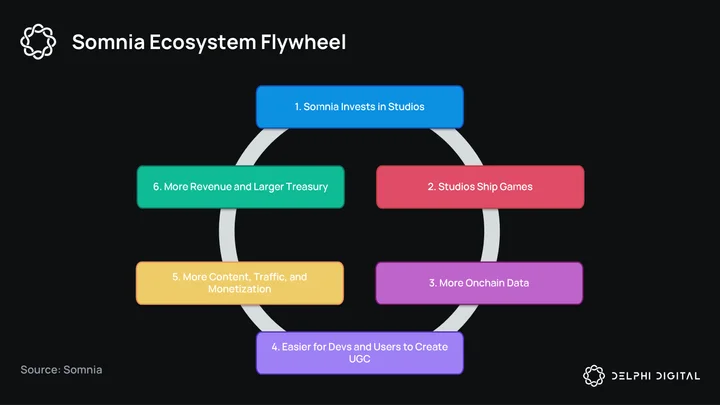
Suppose Somnia can operate profitably solely from the sheer volume of onchain activity. A new type of deal can be made where the goal shifts from squeezing the end user to pushing more of the game state onchain. Funding grants, fee rebates, or even better commercial splits could scale with the degree to which the game is onchain and the size of the player base. This would be in line with the general direction of their tokenomics, which are both deflationary in nature (50% fee burn) and plan to feature up to 90% gas unit price reductions for applications that post high volumes of transactions to the chain.
Tokens also unlock an additional angle to capture value. If Somnia expands beyond gas into a broader ecosystem token, they could attribute portions of their stakes in the games they’ve funded back to token holders. In that framing, the token represents a claim (economic, governance, and or reputational) on a basket of ecosystem assets. Each game is a business aiming to generate a positive bottom line, and its aggregate value can help support the network’s fundamentals.
In the same way that improbable is a company of companies, Somnia becomes the vessel that has a meaningful stake in its entire ecosystem. Should a studio wish to focus entirely on Web2 or even migrate chains when their deal expires, Somnia (and, by extension, its community of token holders) could retain an equity, token, or claim to a portion of future revenue. A model where a percentage of game revenue is distributed to token holders is the most extreme expression of this idea, although it is unlikely to occur.
Closing Thoughts
The beginnings of this cycle made it clear that something had to change. Games in Web3 need to reach a level of polish so that they can be played for their entertainment value above all else. The game of shopping around a half-baked game loop with inorganically juiced metrics to launch a low float token is over. Relying on your TGE to extend your runway in place of rapidly finding PMF is over. We’re now in an era where applications powered by crypto have become more effective at solving problems and generating revenue. Historically, crypto games have been notably lacking in this regard, despite having the potential to benefit from a list of features uniquely enabled by blockchain.
Somnia and its parent company, Improbable, are well-versed in building technology while recognizing the need for an experience layer to realize its vision fully. Instead of just flaunting tech, they’re orienting the system around experiences → users → onchain data, and setting the stage for compounding effects to kick in: faster worst‑case execution (ASE), low‑latency state reads/writes (IceDB), and higher‑throughput transaction ordering (Multistream), and a publishing stack that can assist in bringing games to market. Their philosophy is grounded in pushing more of the experience onchain, reducing the integration burden for studios, and letting composability handle the rest.
Today, much of this remains to be proven, as the chain is currently still in testnet. The games in their portfolio are between 3 and 18 months away from release, and for the purposes of validating their thesis, are still a ways away from achieving the required scale of users, transactions, or revenue. What we’re looking forward to next is their mainnet launch as a first step to see what activity and retention are like when users are transacting with ‘real’ assets.
Within 6-12 months, we’d like to see both more titles entering their public release and live operations cycles. Ideally, many of the apps are showing early signs of profitability while laying the groundwork for more builders to create additional protocols that leverage the now-populated onchain state. If done right, this would mean they’ve kickstarted a flywheel that allows their network to be at the center of the fight for attention by excelling at the content game while partially being independent of the cyclical nature of crypto.
We’ve laid out a few cases where the chain and its token not only serve to fuel transactions as the currency for gas but also become a proxy for the gross domestic product (GDP) of the chain. While being net deflationary from hundreds of millions of daily transactions will be beneficial, tying the token to the aggregate value of their ecosystem’s business will make an even stronger case for the token’s value. They’re also clearly taking steps to become a better publisher, which will be a key advantage in the increasingly competitive race for survival among the gaming chains.
Ultimately, it comes down to the volume and quality of the content their applications produce. We’re now in a market where games and apps at large simply need to deliver what they promise their communities and investors: a product worth spending money on. If they solve for entertainment, even simple tokenomics will yield positive-sum outcomes for Somnia and revive the broader web3 gaming narrative.
0 Comments